A single-story black board-and-batten house with a dark metal gable roof, wood porch posts and stone bases, surrounded by pine trees, dry grass and a gravel foreground under an overcast sky.

Furnace Repair in Ogden, UT

Tell us about the job

Takes about a minute. No obligation.

RepairFurnace or heatingWeber County, UT
Step 1 of 2

What ZIP code is the job in?

Ten months of heat a year

Furnaces in Weber County run from September through June. Overnight lows average 19°F through December, January and February. That's most of the year asking the furnace to hold a house against real cold, not just taking the edge off a few times a season.

What that means for a repair call

A furnace running nearly year round wears sooner than one that only kicks on a few months at a time. The igniter or the blower motor acting up now has likely been working close to its limit since September. Find out what actually failed before deciding whether it's worth fixing.

10 months
September through June, your furnace is on duty
19°F
the average winter night it heats against
83%
of homes here heat with gas, so most furnaces here burn gas
60 winter storms
in ten years, the nights a failure hurts most
Isometric line illustration of a cutaway house showing interior rooms with furniture and a furnace with ducting and a flue pipe extending through the roof.
Your furnace works hardest from November through April.

NOAA nClimDiv, 1991–2020 normals

Half the houses in Weber County were built in 1984 or later.

A furnace that came with a newer house still has years in it, and that's usually a reason to repair rather than replace.

September is when a weak furnace fails first

Heat runs September through June
Winter nights average 19°F
60 winter storms from 2015 to 2024
Ogden, UT furnace repairNatural gas ran $12.55 per million Btu in Utah in 2024

Weber County has had 60 winter storms between 2015 and 2024, heavy snow and ice among them. Those are the stretches when a furnace can't cycle off and rest, it just runs, hour after hour, trying to keep the house warm. A part that's already worn from the long season tends to fail right in the middle of that kind of run. If your furnace quit during or just after a storm, that's less bad luck than a weak part finally giving out under the load. Worth having it looked at before the next storm comes through.

A newer furnace is usually worth repairing

If your house went up in 1984 or later, the furnace that came with it likely still has good years left. Get the actual problem diagnosed before you decide it's not worth fixing.

Find a contractor
A gray high-efficiency gas furnace installed in an unfinished basement, surrounded by gas lines, a condensate drain, and sheet-metal ductwork.

Why letting it keep running makes it worse

A furnace that's struggling doesn't fix itself by staying on. A cracked heat exchanger gets more exposed to heat and cold cycling the longer it keeps running. A blower motor with worn bearings heats up and grinds harder under a continuous call for heat than it would cycling normally. A limit switch that's already tripping from restricted airflow will keep tripping, and each time it does, the heat exchanger goes through another cycle of heating and cooling that it doesn't need. Ignition components are the clearest case. An igniter that's cracking or a flame sensor coated with residue will keep trying to light the burners every time the thermostat calls, and each failed attempt is another cycle of wear on a part that's already going. None of this gets better with more runtime. The honest move is to shut it down and get it looked at rather than let it keep trying.

What you can check yourself

Check the thermostat is set to heat and the setting is above room temperature. Check the furnace switch, it looks like a light switch on or near the unit, and make sure nothing bumped it off. Check the breaker it runs on. Check the air filter, if it's gray and packed with dust, swap it before you do anything else. A clogged filter restricts airflow enough to trip the limit switch and shut the burners down.

What tells you it's past a filter swap

If the furnace runs but blows cold air, or if it starts and shuts off again almost as soon as it kicks on, that's not a filter problem. A furnace that clicks but never lights, or lights and then cuts out, is telling you something failed inside, the igniter, the flame sensor, or the gas valve. That's a call for a licensed contractor, not another look under the hood.

An unfinished basement containing a forced-air furnace with metal ductwork, exposed wooden ceiling joists, a hanging Edison bulb, and bare concrete floors.

A new furnace would cut about $130 a year off heating for a typical Weber County home.

  • A new high-efficiency furnace$510 a year
  • An older furnace$640 a year

Estimates for a typical Weber County home, compared with an older unit built to the previous federal minimum, from EIA household energy data, Utah fuel prices and NOAA climate normals. Your home will differ.

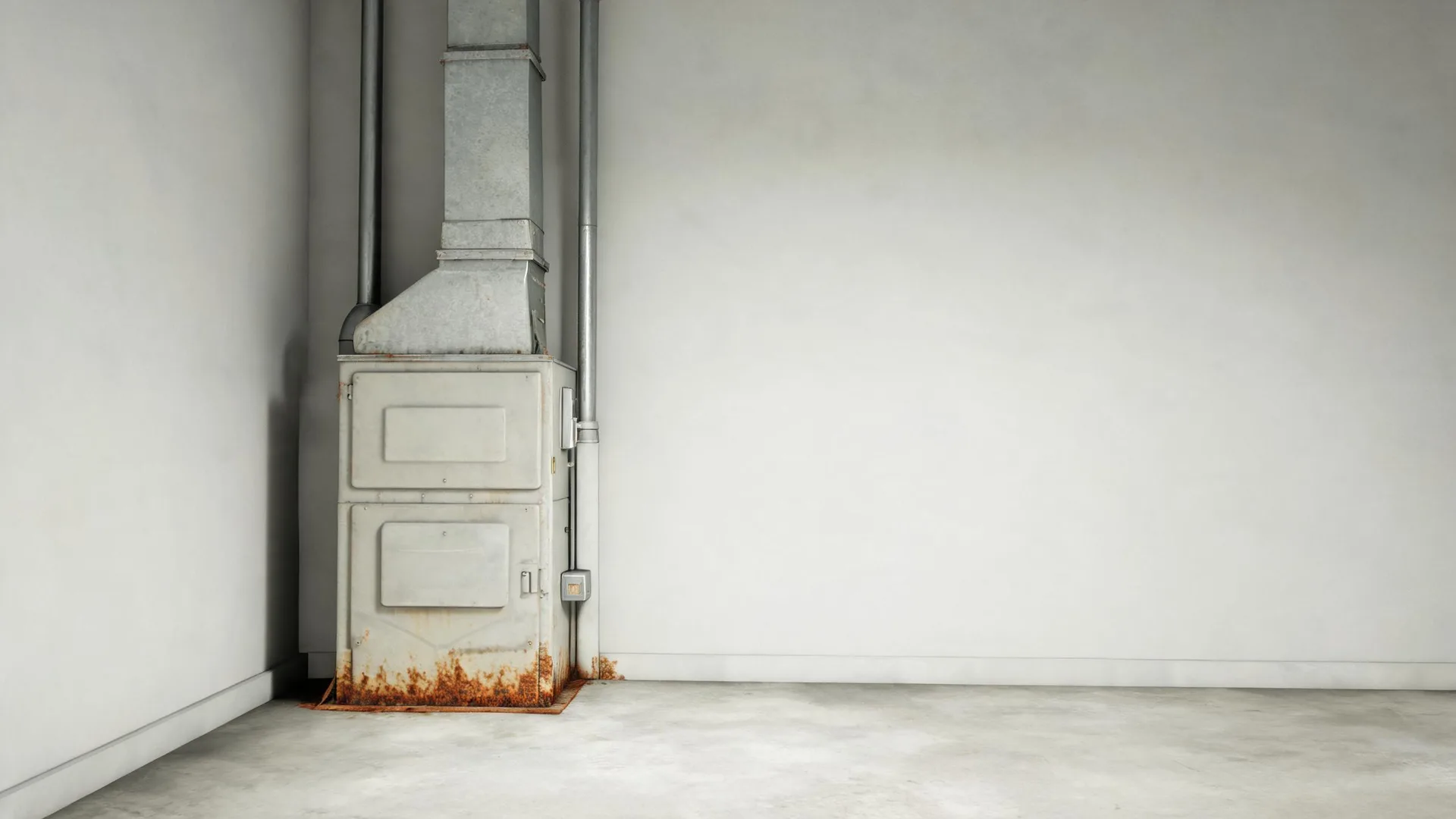
Repair makes sense when one part has failed and the heat exchanger is sound.

Replacement makes sense when the heat exchanger is cracked or the furnace keeps needing parts.

A diagnostic call starts with a question, not a screwdriver. The contractor asks what the furnace was doing right before it quit. Blowing cold, short cycling, or not firing at all, each points somewhere different. From there it's a sequence. Check that the thermostat call reaches the control board. Check that the igniter glows or sparks. Check that the flame sensor reads a flame once the burners light. Each step rules something out. A furnace that fires and shuts off quick usually has a flame sensor that isn't sensing, not a gas problem. One that never fires points back to the igniter or the gas valve. Following the fault this way is what tells you whether you're looking at a part swap or something bigger.