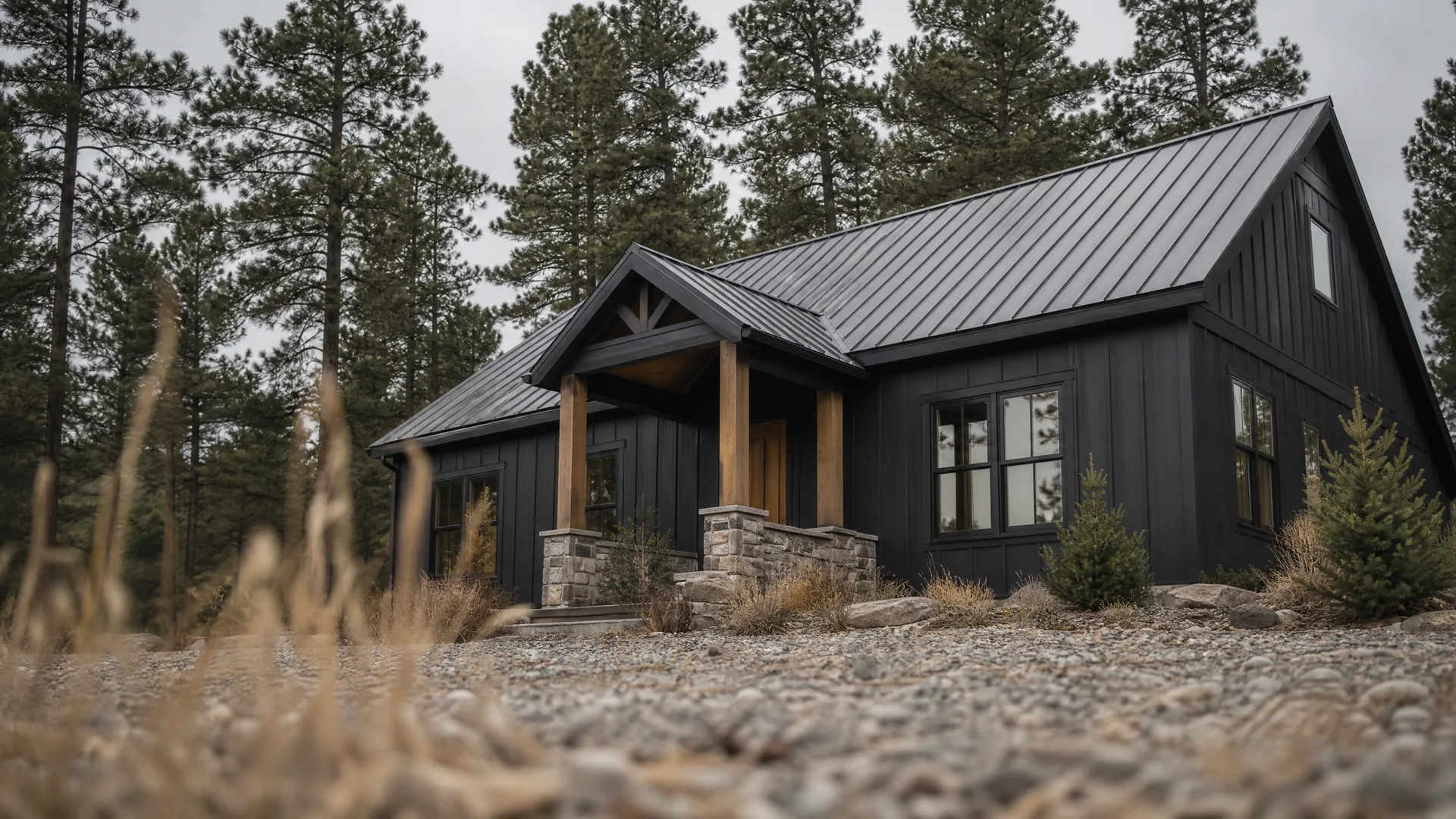


A single-story black board-and-batten house with a dark metal gable roof, wood porch posts and stone bases, surrounded by pine trees, dry grass and a gravel foreground under an overcast sky.

Furnace Repair in Nephi, UT

Tell us about the job

Takes about a minute. No obligation.

RepairFurnace or heatingJuab County, UT
Step 1 of 2

What ZIP code is the job in?

Furnaces in Nephi run about eight months a year, October through May. Overnight lows average 20°F through December, January and February, so the furnace is working its hardest on the coldest nights, not just a few mild ones in between. On top of that, the county sees regular winter storms, heavy snow and ice that keep the system cycling longer than it would on a calm night. That kind of use wears down an igniter or a blower motor sooner than it would somewhere milder. When a furnace here is acting up, it's usually because it's been working long and hard, not because something freak happened.

8 months
October through May, your furnace is on duty
20°F
the average winter night it heats against
74%
of homes here heat with gas, so most furnaces here burn gas
72 winter storms
in ten years, the nights a failure hurts most
Isometric line illustration of a cutaway house showing interior rooms with furniture and a furnace with ducting and a flue pipe extending through the roof.
Your furnace works hardest from November through March.

NOAA nClimDiv, 1991–2020 normals

A furnace that keeps coming back for the same problem is past the point of a quick fix.

At that point the question isn't what part failed, it's how many more are close behind it.

Half the homes in Juab County were built in 1982 or later, so a lot of furnaces here still have years of work left in them.

Half the homes here were built by 1982
Climate zone 5B
Heat runs October through May

A newer furnace is usually worth fixing

If your house was built more recently, there's a good chance the furnace in it still has plenty of life left. Get it looked at instead of planning to replace it.

Find a contractor
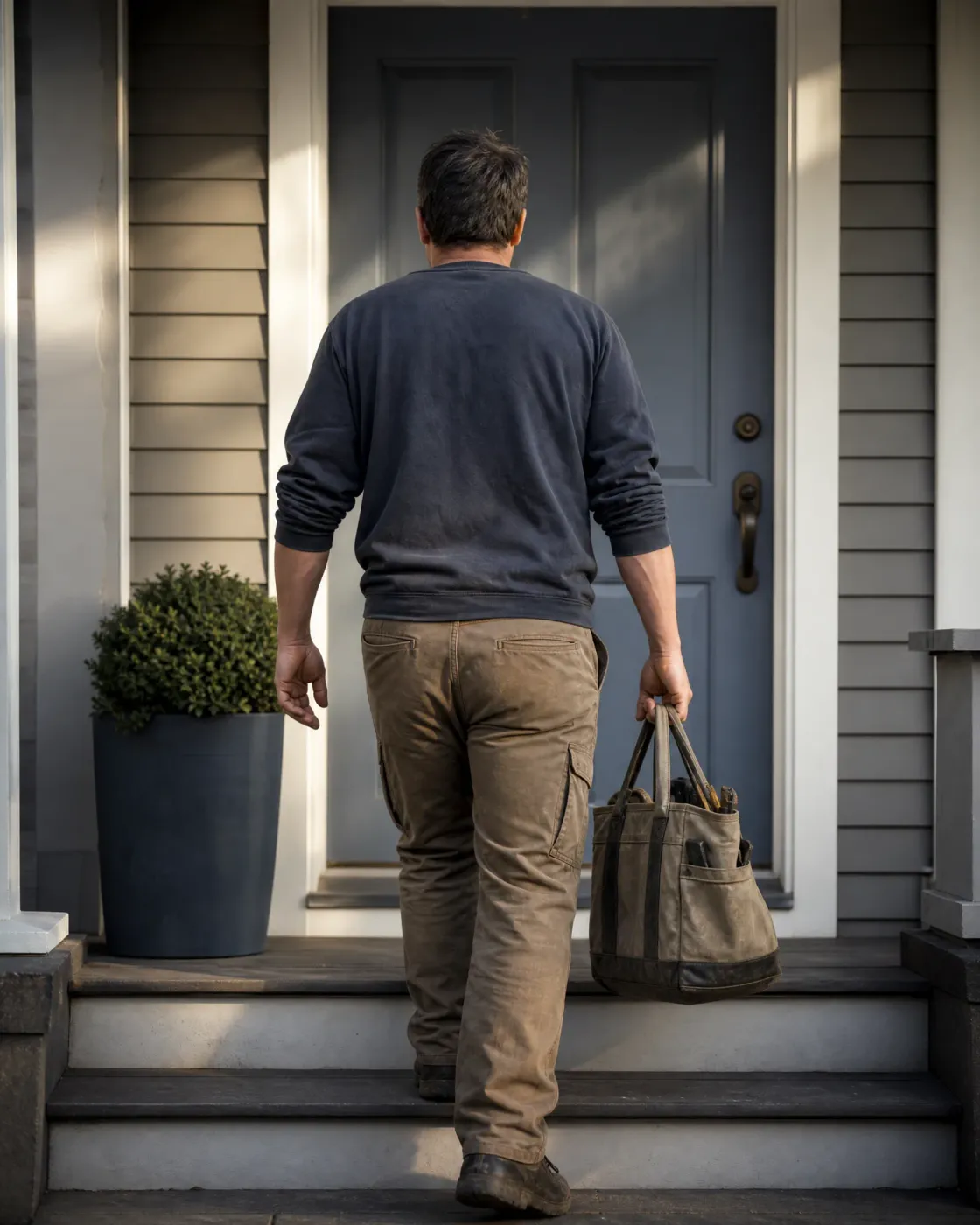
A man seen from behind in a dark sweatshirt and tan work pants climbs porch steps toward a gray paneled front door, carrying a canvas tool bag in his right hand, with a potted shrub to the left.
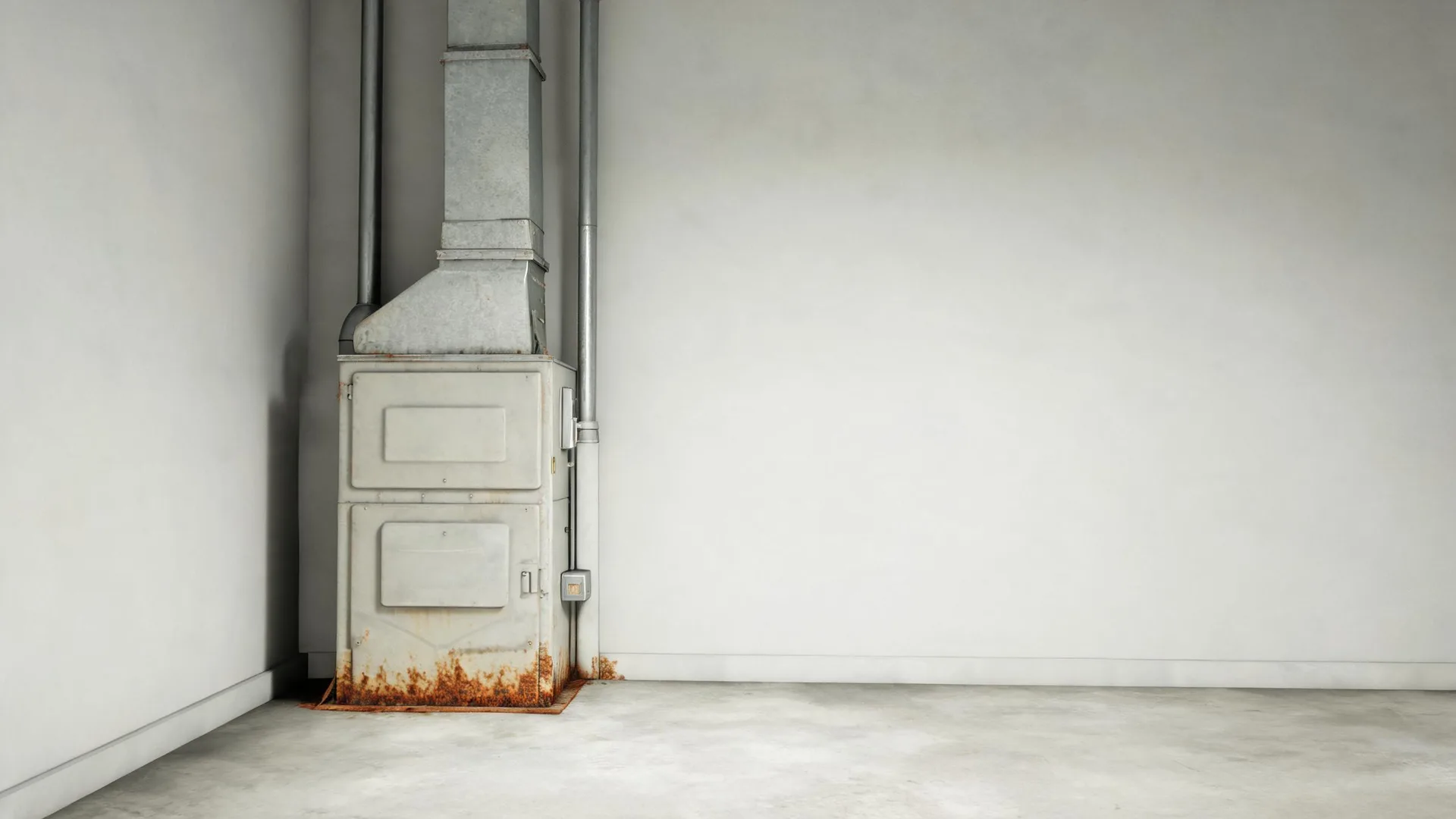
A gray high-efficiency gas furnace installed in an unfinished basement, surrounded by gas lines, a condensate drain, and sheet-metal ductwork.

What to check before you call

Before anyone comes out, check the thermostat first. Make sure it's set to heat and the set temperature is above room temperature. Swap the batteries if it uses them. Go look at the air filter next. A filter clogged with dust chokes off airflow and can cause the furnace to shut itself down as a safety measure. Check that the furnace switch, the one that looks like a light switch near the unit, is flipped on. It gets bumped off more often than people expect. Walk down to the breaker panel and look for a tripped breaker while you're at it. If the furnace has a standing pilot, see if it's lit. If it uses an electronic igniter instead, you won't be able to relight anything yourself, but you can still listen for what happens when it tries to start. Look at the vent hood outside and make sure nothing is blocking it, no snow drift, no debris piled against it. None of this fixes an electrical or gas problem, but it rules out the simple stuff before anyone has to take the cabinet apart.

Short cycling wears out the parts that start it

A furnace that fires up, runs a few minutes, then shuts off and tries again is usually fighting a cracked heat exchanger, a dirty flame sensor, or a limit switch tripping from poor airflow. Each restart puts a load on the igniter. One that's already weak will fail on one of these cycles instead of lasting the season.

A smell or a sound means stop and call

A burning dust smell in the first run of the season clears on its own. A gas smell, a scorched smell that doesn't fade, or a new rattle, screech, or booming noise when the burners light does not. Those point to a cracked heat exchanger, a failing blower bearing, or delayed ignition, and running the furnace while you wait isn't worth the risk.

An unfinished basement containing a forced-air furnace with metal ductwork, exposed wooden ceiling joists, a hanging Edison bulb, and bare concrete floors.

A new furnace would cut about $100 a year off heating for a typical Juab County home.

  • A new high-efficiency furnace$440 a year
  • An older furnace$540 a year

Estimates for a typical Juab County home, compared with an older unit built to the previous federal minimum, from EIA household energy data, Utah fuel prices and NOAA climate normals. Your home will differ.

Repair makes sense when one part has failed and the heat exchanger is sound.

Replacement makes sense when the heat exchanger is cracked or the furnace keeps needing parts.

A diagnostic call starts before any panel comes off. The tech runs the furnace through a full cycle, off to on to off, and watches how it behaves at each step. How long ignition takes, whether the flame looks right, whether the shutdown is clean or the furnace struggles. From there it's a set of checks in order. Gas pressure, flame sensor, igniter current, blower amp draw, so the problem gets found rather than guessed at. Voltage and resistance readings on the control board and the safety switches tell a lot, since a furnace will refuse to run at all if one of those switches senses something wrong. Airflow gets checked too, static pressure in the ducts and across the filter, because a furnace starved for air trips the same limit switch as a cracked heat exchanger. Only once all of that lines up does the real repair get named.