

A lit mountain lodge-style home at night with evergreen trees, stone accents, and snow-capped mountains in the background.

Furnace Repair in Moab, UT

Tell us about the job

Takes about a minute. No obligation.

RepairFurnace or heatingGrand County, UT
Step 1 of 2

What ZIP code is the job in?

Furnaces in Moab run about eight months a year, October through May. That's most of the calendar, not just a cold snap here and there. Overnight lows average 20°F through December, January and February, so the burner is cycling on hard and often, night after night. Add in the winter storms this county sees, and a furnace here is doing more work than one in a milder climate ever has to. That kind of use wears down igniters, flame sensors and blower motors sooner than you'd expect. When something acts up, it's worth having it looked at properly rather than guessing at the fix.

8 months
October through May, your furnace is on duty
20°F
the average winter night it heats against
75%
of homes here heat with gas, so most furnaces here burn gas
92 winter storms
in ten years, the nights a failure hurts most
Isometric cutaway illustration of a single-story house in gray tones, showing interior rooms with furniture, ceiling ductwork, and an exterior furnace unit with a tall flue pipe.
Your furnace works hardest from November through March.

NOAA nClimDiv, 1991–2020 normals

Gas furnaces here run on the same parts as anywhere else.

A furnace that won't light or keeps shutting off is usually a worn igniter or flame sensor, not something stranger.

September is worth a quick check before you need the heat at all. Furnaces here start up in October and keep running clear through May, so this one isn't warming up for a cold snap, it's about to settle into eight months of steady work. The first cold nights put real load on whatever was already borderline, and that's usually when an igniter or flame sensor that was limping along finally quits. Catching it in September means you're not without heat on the night you need it most.

Get the furnace checked before it quits on you

A furnace running eight months a year through winters this cold doesn't give you much warning before an igniter or flame sensor finally gives out. If yours is acting up now, get it diagnosed rather than guessed at, so the fix actually holds for the rest of the season.

Find a contractor
A gray high-efficiency gas furnace installed in an unfinished basement, surrounded by gas lines, a condensate drain, and sheet-metal ductwork.

One worn part doesn't mean the furnace is done

A furnace doesn't wear out all at once. Each part has its own life span, and they don't run out together. An igniter can fail while the blower motor keeps going without complaint. That's why one bad part is rarely a sign the rest are failing too. A flame sensor usually just needs cleaning, not replacing, since it's residue rather than wear that stops it reading the flame. An igniter is different. It's a fragile piece of ceramic or silicon that cracks a little more each time it heats and cools, until it doesn't survive the next cycle. A blower motor fails on its own schedule too, usually bearings wearing down over years of spinning, and that one tends to get loud before it quits outright. The real question with any repair is whether the rest of the furnace is sound. If the heat exchanger is solid and the other parts are holding up, fixing the one that failed is the right call. It's a different conversation if a tech finds rust or cracking on the heat exchanger itself, since that part doesn't get patched piecemeal. Short of that, a furnace that's been looked after usually has more life left in it than its owner expects.

A handful of parts cause most no-heat calls

An igniter cracks or weakens with age and stops glowing hot enough to light the gas. A flame sensor coated with a thin layer of residue stops sensing the flame and shuts the burner down as a safety measure. A blower motor wears out its bearings and either runs loud or quits outright. None of these mean the furnace itself is failing.

What it's doing tells you which part

A furnace that sparks and then shuts off almost always means the flame sensor isn't reading a flame. One that never tries to light usually means the igniter is dead. A furnace that runs but barely moves air points toward the blower motor or a clogged filter choking it off. Telling the tech what it's actually doing, not just that it's broken, helps them bring the right part on the first visit.

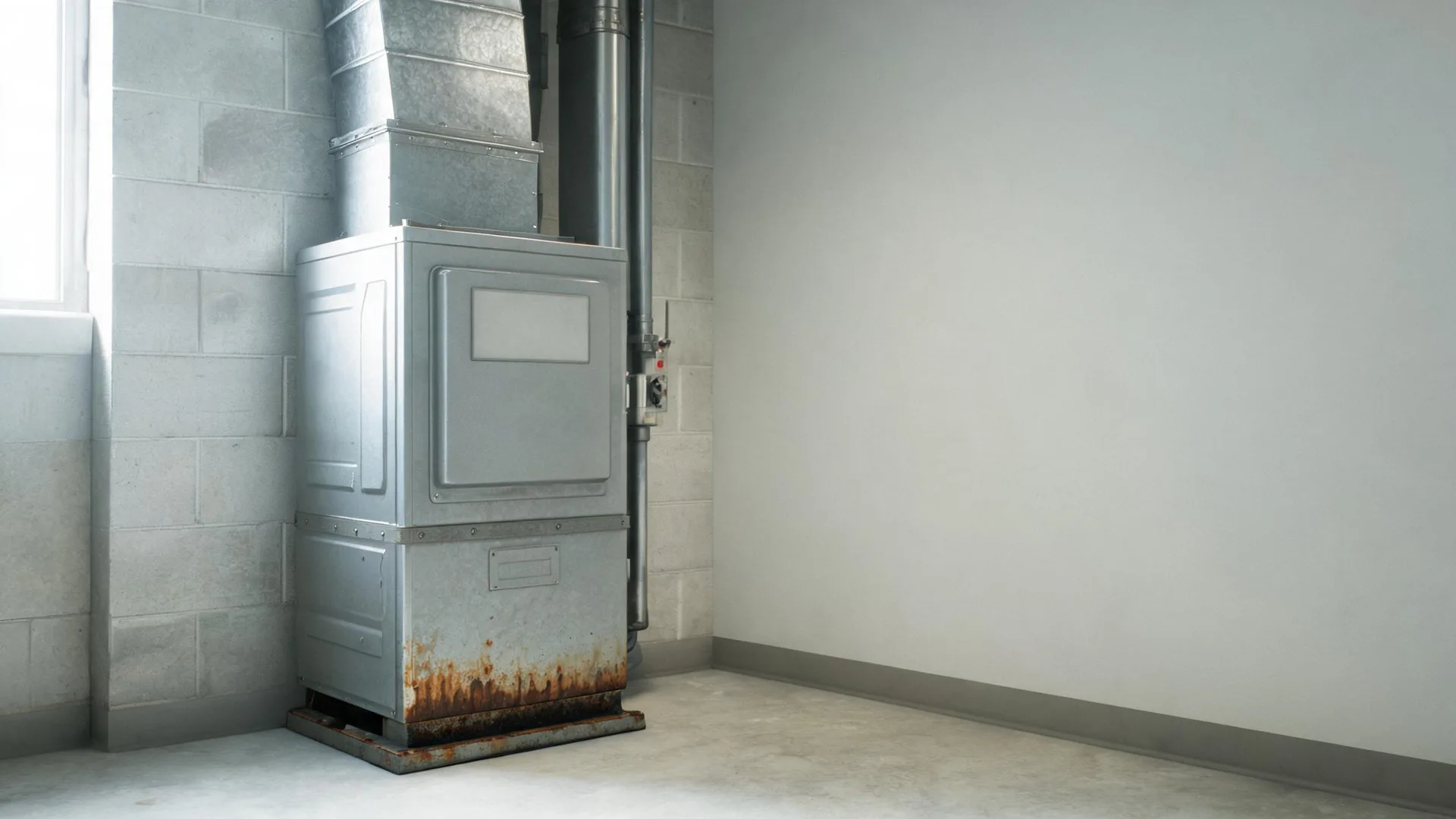
A gray forced-air furnace with ductwork stands in an unfinished concrete basement surrounded by storage items and clutter.

A new furnace would cut about $100 a year off heating for a typical Grand County home.

  • A new high-efficiency furnace$410 a year
  • An older furnace$510 a year

Estimates for a typical Grand County home, compared with an older unit built to the previous federal minimum, from EIA household energy data, Utah fuel prices and NOAA climate normals. Your home will differ.

Repair makes sense when one part has failed and the heat exchanger is sound.

Replacement makes sense when the heat exchanger is cracked or the furnace keeps needing parts.

A diagnostic visit starts with the tech asking what the furnace was doing right before it quit. That narrows things down before any panel comes off. From there it's a sequence of checks. Power to the unit, gas supply, whether the igniter is glowing or sparking, whether the flame sensor is picking up a flame once the burner lights. A multimeter does most of the real work, checking resistance on parts that look fine but aren't holding the right current. If the burner lights and then cuts out, the tech watches it run rather than guessing, because a flame sensor that drops out partway through tells a different story than one that never reads a flame at all. Airflow gets checked too. A weak blower or a blocked filter can look like a bad heat exchanger if you're not careful. By the end the tech should be able to point to the one part causing the trouble, not a list of things it might be.