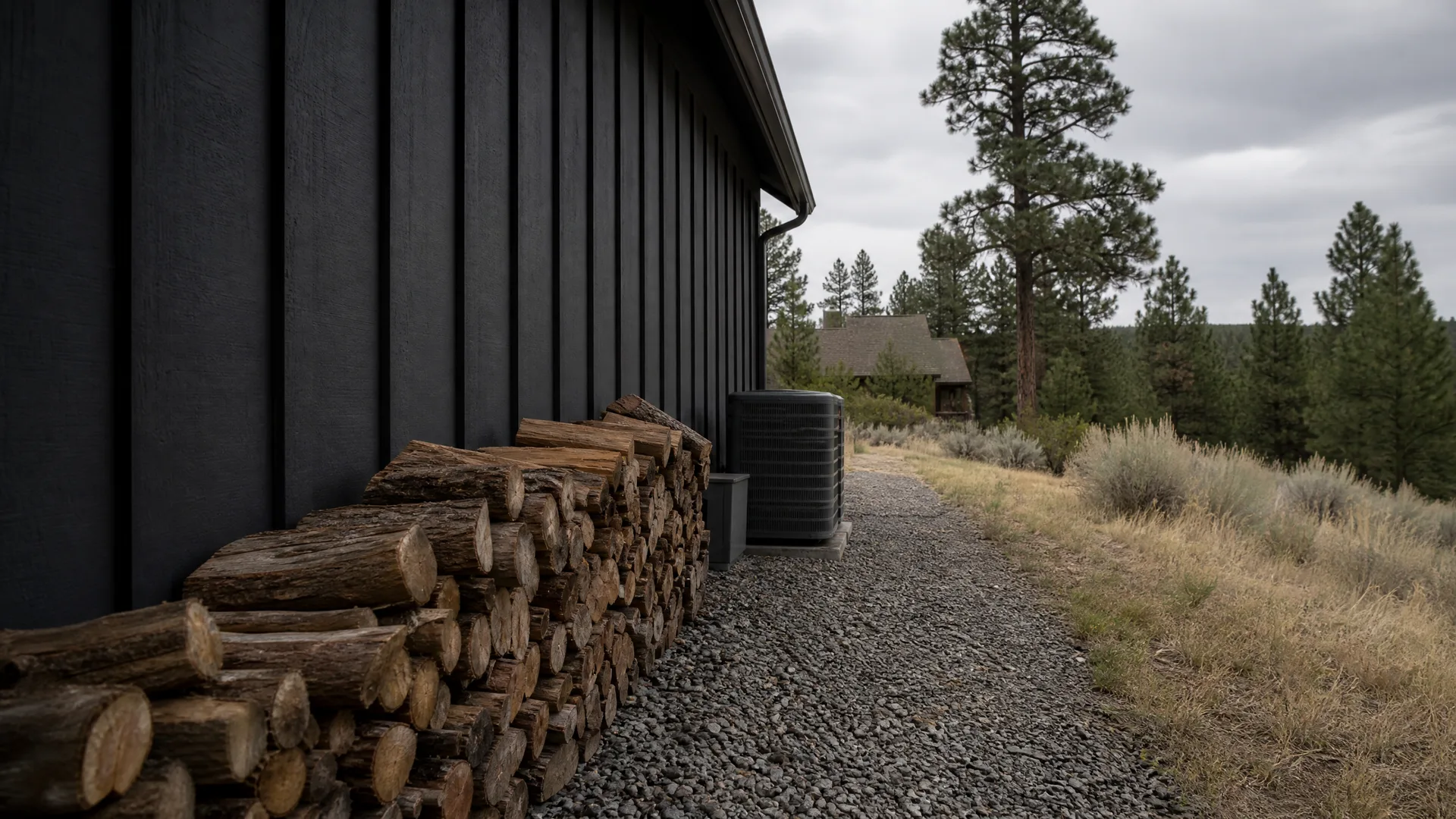
Stacked firewood along the dark vertical-board wall of a house beside a gravel path with two outdoor condenser units, with pines, dry grass and an overcast sky beyond.

Furnace Repair in Kanab, UT

Tell us about the job

Takes about a minute. No obligation.

RepairFurnace or heatingKane County, UT
Step 1 of 2

What ZIP code is the job in?

Eight months of real work

A furnace in Kanab runs from October through May. Overnight lows average 23°F in December and January. That is a long, steady load on the same igniter, blower motor and heat exchanger. It is not something unusual happening to your system.
Same problem, same fix

A furnace that will not light, blows cold air or short cycles here is almost always failing for an ordinary reason. The igniter wears out. The flame sensor gets dirty. The filter clogs and chokes airflow. Finding which one it is matters more than guessing at the cause.

8 months
October through May, your furnace is on duty
23°F
the average winter night it heats against
40 winter storms
in ten years, the nights a failure hurts most
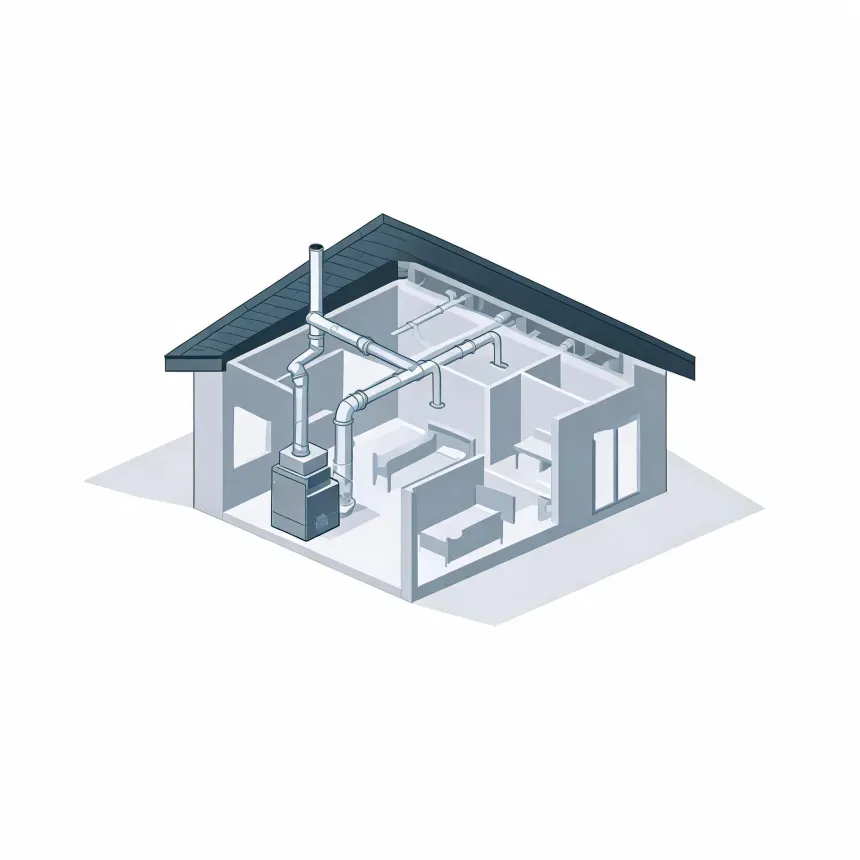
Isometric cutaway illustration of a small single-story house showing interior rooms, a furnace unit with a flue, and connected ductwork running below the dark gabled roof.
Your furnace works hardest from November through March.

NOAA nClimDiv, 1991–2020 normals

Furnaces in Kane County start working in October.

September is the month to get a weak igniter or a dirty flame sensor looked at, before the first cold night finds it.

Electricity here runs $35.80 per million Btu, and a furnace that short cycles or runs long burns through that all winter

Heat runs October through May
Winter nights average 23°F
40 winter storms from 2015 to 2024
Half the homes in Kane County were built in 1994 or laterA furnace that came with a house like that usually has plenty of life left in it.

Before anyone comes out, check the thermostat is set to heat and the setting is above room temperature. Walk over to the furnace and look at the filter. If it is gray and clogged, swap it, since a choked filter starves the burner of air and can shut the whole thing down on its own. Check that the switch on or near the furnace is on, and that the power cord is seated. If you have a standing pilot, see if it is lit. If the furnace has a window, a flickering or yellow flame instead of a steady blue one is worth telling the tech about, not fixing yourself. Check your breaker panel too. A tripped breaker can look like a dead furnace.

Your furnace is probably worth fixing, not replacing

A furnace that came with a newer Kanab house still has most of its working life ahead of it. If yours is acting up, a repair is more likely to settle it than a replacement is to be needed.

Find a contractor
A man in a cap, dark shirt and brown work pants walks up stone steps toward a gray front door, carrying a canvas tool bag in his right hand, with a potted plant beside the porch.
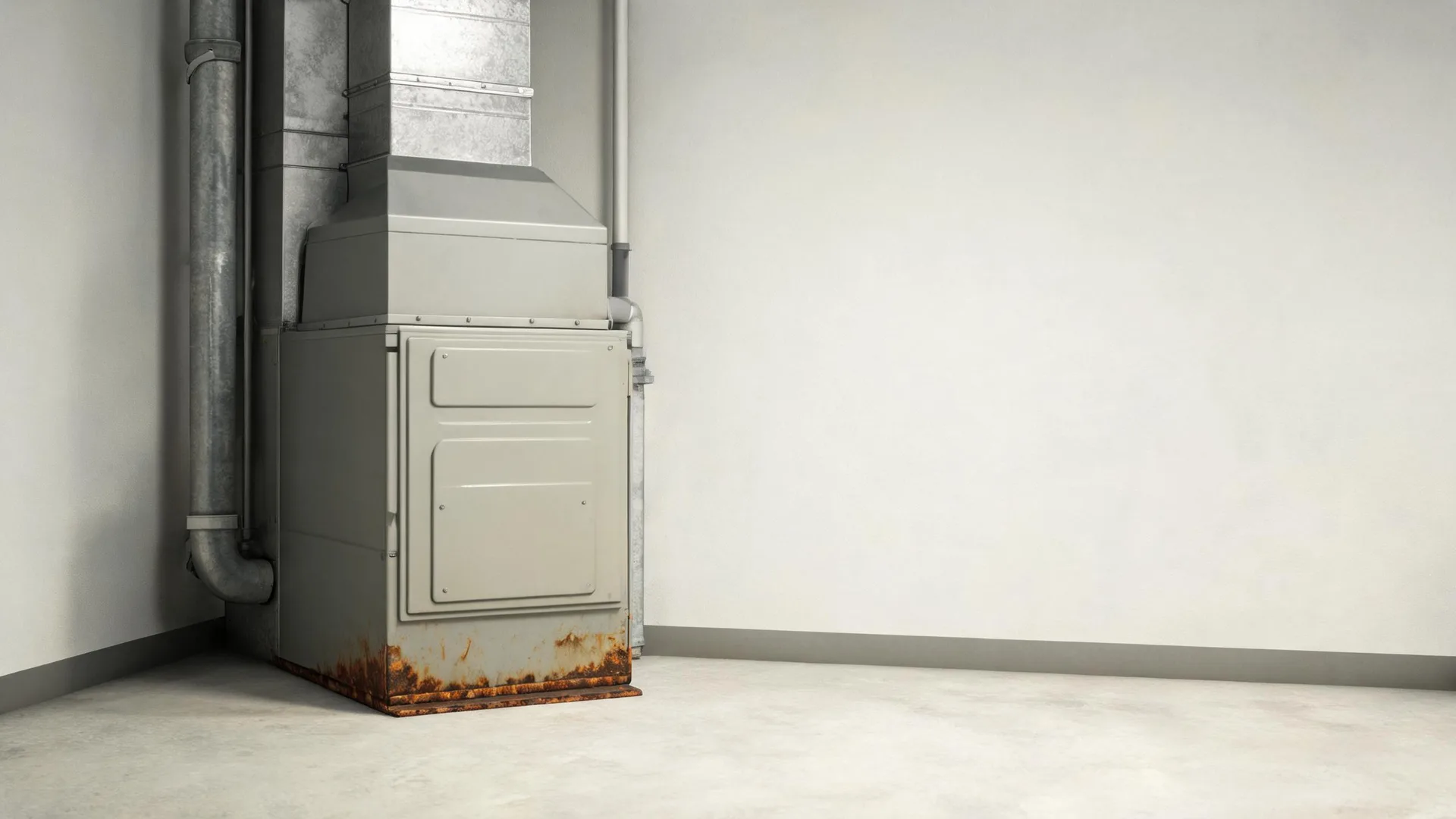
A gas furnace with attached ductwork, gas piping, and condensate lines installed in a concrete-block basement.

Nothing breaks without a reason

Every part on a furnace wears on its own schedule. The igniter sits in the path of the flame each time the burner fires, and that heat makes it brittle over time until it cracks or stops glowing hot enough to light the gas. The flame sensor sits in that same flame, and it does not break so much as get coated, a film of residue that keeps it from sensing the fire that is right in front of it. A blower motor runs on a bearing that eventually wears loose or seizes, and you hear that before anything stops working. None of this is bad luck. It is what happens to parts that sit in heat and moving air for months at a stretch. The furnace does not fail because something went wrong. It fails because something finally wore out.

What you'll notice first

A furnace that's struggling usually tells you before it quits. The air coming out of the vents feels cooler than it used to. The burner takes a few tries to catch, or you hear it click and click without lighting. It cycles on and off faster than it should, running a few minutes at a time instead of settling into a long steady burn. Sometimes it's a smell, a burnt dust smell on the first run or something sharper that shouldn't be there at all.

What those signs are worth telling the tech

A furnace that short cycles wears out its own parts faster, because the igniter and blower start and stop more often than they're built for. A weak flame or a delayed light points at the igniter or flame sensor before the system shuts down entirely. Catching it at the clicking-and-not-lighting stage is a smaller job than catching it after the furnace won't come on at all.

A furnace that's short cycling or struggling to light is already working harder than it should, and letting it run that way asks the heat exchanger and blower motor to absorb the strain instead of the real problem. A cracked heat exchanger is the clearest example. It usually starts small, but heat stresses the metal every time the burner fires, and a crack that starts hairline can spread with each cycle until it needs a full replacement instead of a patch. A dirty flame sensor works the same way in miniature. Left alone, the furnace shuts itself off more and more often as a safety response, and each failed attempt to light puts more wear on the igniter that's trying to do its job. The part causing the trouble rarely fails alone. It drags the parts around it down with it.

Most of the time, fixing a furnace is the right call. An igniter, a flame sensor, a blower motor, these are parts built to be swapped on their own, and replacing one doesn't touch the rest of the system. What changes the math is the heat exchanger. That part isn't sold separately from the furnace in any practical sense, and a crack in it is a safety issue, not a wear issue, so a tech won't patch around it. The other thing worth weighing is how many parts are failing at once. One worn igniter is a repair. An old blower motor, a cracked exchanger and a control board all going in the same winter is a different conversation, because you're paying to patch a system that's reaching the end of its parts one at a time anyway.