






An unfinished basement containing a gas furnace with ductwork in the foreground and miscellaneous stored items along the far concrete wall.

Furnace Repair in Heber, UT

Tell us about the job

Takes about a minute. No obligation.

RepairFurnace or heatingWasatch County, UT
Step 1 of 2

What ZIP code is the job in?

Furnaces in Wasatch County run from September clear through June. That's most of the year, with the overnight low averaging 14°F through December, January and February. A furnace built to cycle on and off for part of the year is instead running almost all of it, and the parts inside wear on a schedule that matches. The igniter, the blower motor, the pressure switch, all of them see more hours here than they would somewhere milder. Add in the winter storms this county sees most years, and the furnace is often working its hardest in the worst conditions. If something's acting up now, there's usually a reason tied to that workload, and it's worth finding before it gets worse.

10 months
September through June, your furnace is on duty
14°F
the average winter night it heats against
79%
of homes here heat with gas, so most furnaces here burn gas
104 winter storms
in ten years, the nights a failure hurts most
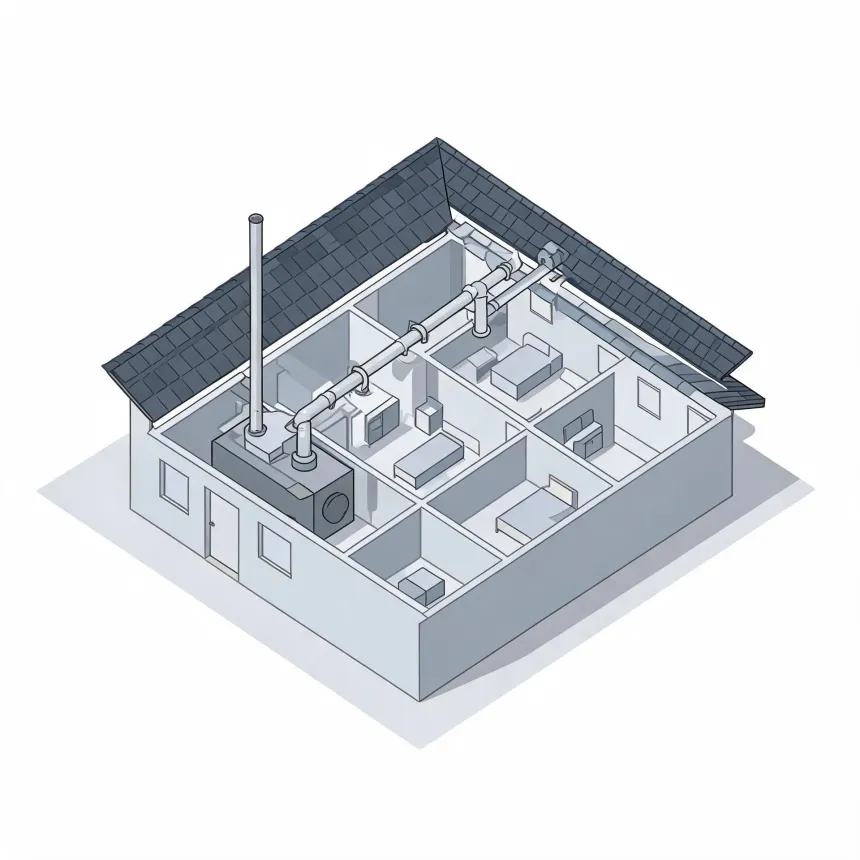
Isometric cutaway illustration of a single-story house showing interior rooms, furniture, a dark furnace unit with a tall vertical flue pipe, and ductwork running under the pitched shingle roof.
Your furnace works hardest from October through April.

NOAA nClimDiv, 1991–2020 normals

Half the homes in Wasatch County were built in 2005 or later.

A furnace that came with a newer house still has years of life in it, and that's worth knowing before you decide to replace instead of repair.

September is when a weak furnace shows it

Heat runs September through June
Winter nights average 14°F
104 winter storms from 2015 to 2024
Gas here isn't cheapUtah gas ran $12.55 per million Btu in 2024, and a furnace that's struggling burns more of it to do the same job.

A furnace that short-cycles or won't hold a flame isn't failing for no reason, and resetting it won't tell you which part is marginal. A licensed technician can check the pressure switch, the igniter and the flame sensor against the load the furnace is actually carrying this time of year. A part that's borderline now is the one likely to quit during a storm, when the furnace is working hardest and you need it most. Getting it checked while it's still just acting up means it gets fixed before it becomes a no-heat call.

A newer furnace is worth repairing

If your furnace came with the house, it's probably not old enough to write off. Get the part that's failing fixed, not the whole system replaced.

Find a contractor
A man in a dark long-sleeve shirt and tan work pants, seen from behind, climbs wooden porch steps toward a navy front door while carrying a canvas tool tote, with a potted flowering plant beside the entry.
A gas furnace with attached ductwork, gas piping, and condensate lines installed in a concrete-block basement.

Running on a bad part doesn't rest it, it uses it up

A cracked heat exchanger stays quiet at first. A dirty flame sensor lets the flame waver instead of cutting out clean. A pressure switch that's barely making contact still closes the circuit, most of the time. None of these stop the furnace from running, so it keeps running, and every cycle after that asks a weak part to do the same job again. The igniter that glows orange instead of white is heating the same amount of air with less margin each time. A blower motor with a failing bearing keeps turning, just louder and hotter than it should. The furnace doesn't know a part is marginal. It only knows to fire when the thermostat calls, so it fires, and the wear that was starting to show becomes the wear that causes a no-heat call.

What you can check safely

Check the thermostat is set to heat and the temperature is actually above room temperature. Check the furnace switch, it looks like a light switch on or near the unit, and make sure it's on. Check the air filter, a filter packed with dust chokes airflow and can cause the furnace to shut itself off. Check the breaker it runs on. Check that all supply vents and return grilles are open and nothing is stacked in front of them.

What to leave alone

Don't open the burner compartment or touch the flame sensor, the igniter or the pressure switch tubing. Don't hold the reset button down if the furnace keeps locking out, that button is telling you something failed its safety check. Don't keep resetting a furnace that smells like gas, leave the house and call the gas company from outside. A furnace that locks out repeatedly needs a technician to find out why, not a homeowner cycling the power.

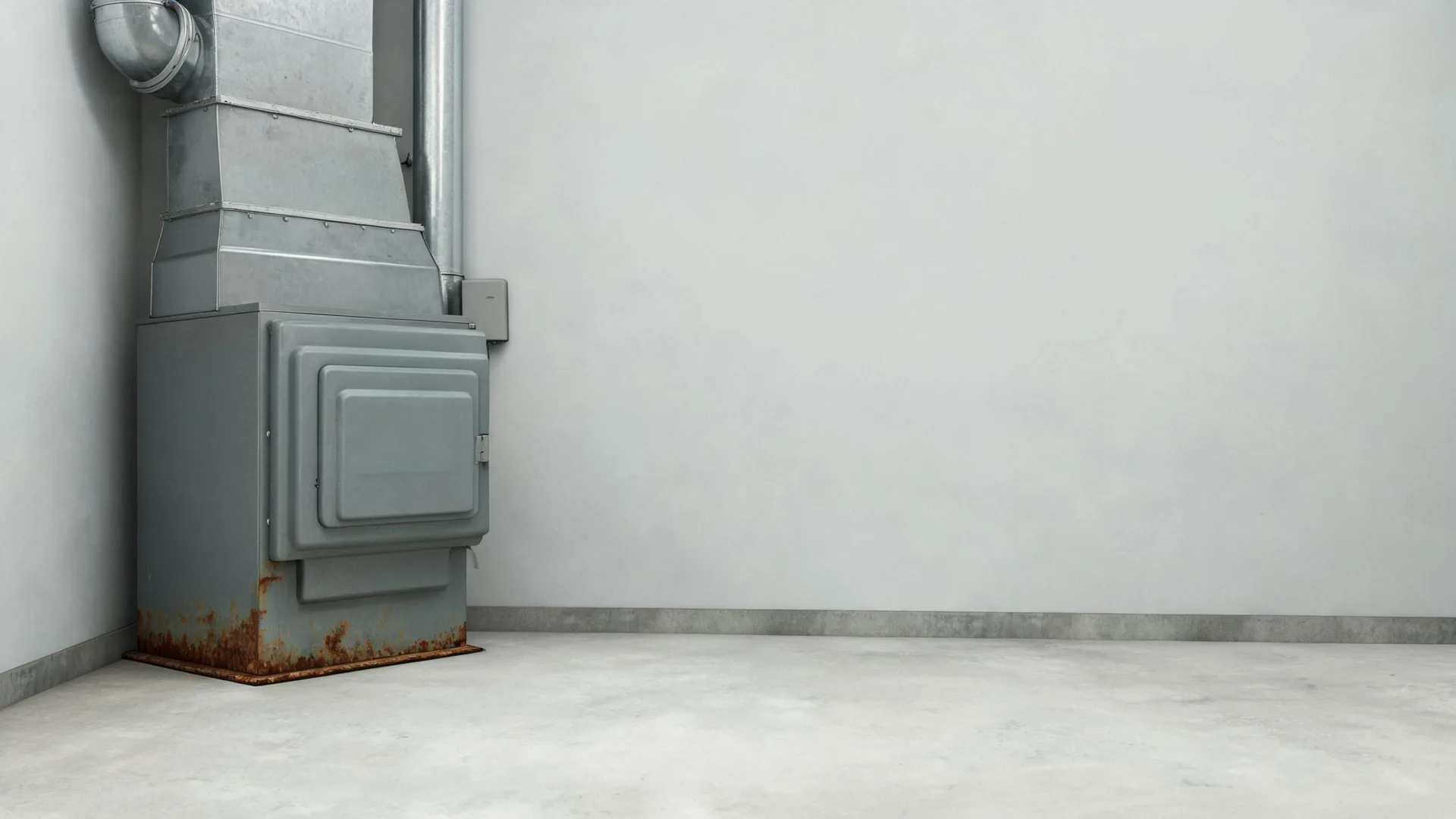
A gray forced-air furnace with sheet-metal ductwork stands in an unfinished basement with exposed wooden joists, concrete walls, and a hanging incandescent bulb.

A new furnace would cut about $150 a year off heating for a typical Wasatch County home.

  • A new high-efficiency furnace$610 a year
  • An older furnace$760 a year

Estimates for a typical Wasatch County home, compared with an older unit built to the previous federal minimum, from EIA household energy data, Utah fuel prices and NOAA climate normals. Your home will differ.

Repair makes sense when one part has failed and the heat exchanger is sound.

Replacement makes sense when the heat exchanger is cracked or the furnace keeps needing parts.

A diagnostic visit starts before the panel comes off. A technician asks when the trouble started, what it sounds or smells like, whether it's constant or only on some cycles, because that history points to certain parts faster than guessing does. Then the covers come off and the furnace gets watched through at least one full cycle, ignition through shutdown, since some faults only show up partway through. Pressure switch readings get checked against what the furnace needs at its current firing rate. The flame itself gets looked at, the color and the shape say a lot about combustion. Voltage gets tested at the igniter, the gas valve, the blower motor, wherever the symptom points. The goal isn't to replace parts until something works. It's to find the one reading that's off and confirm that's the cause before anything gets swapped out.