
Warmly lit timber-frame and stone houses line a street at dusk, with evergreen trees and a snow-capped mountain range in the background.

Furnace Repair in Ephraim, UT

Tell us about the job

Takes about a minute. No obligation.

RepairFurnace or heatingSanpete County, UT
Step 1 of 2

What ZIP code is the job in?

Furnaces in Ephraim run from September through June, close to ten months of the year. Overnight lows average 16°F across December, January and February, so once a furnace kicks on in the fall it rarely gets a real break until spring. Sanpete County has seen dozens of winter storms over the past decade, the kind of heavy snow and cold snaps that push a furnace to run harder and longer than it would somewhere milder. That kind of run time wears on an igniter or a blower motor faster than it should. If yours is acting up, it's worth having someone look at what's actually failing rather than guessing.

10 months
September through June, your furnace is on duty
16°F
the average winter night it heats against
77%
of homes here heat with gas, so most furnaces here burn gas
52 winter storms
in ten years, the nights a failure hurts most
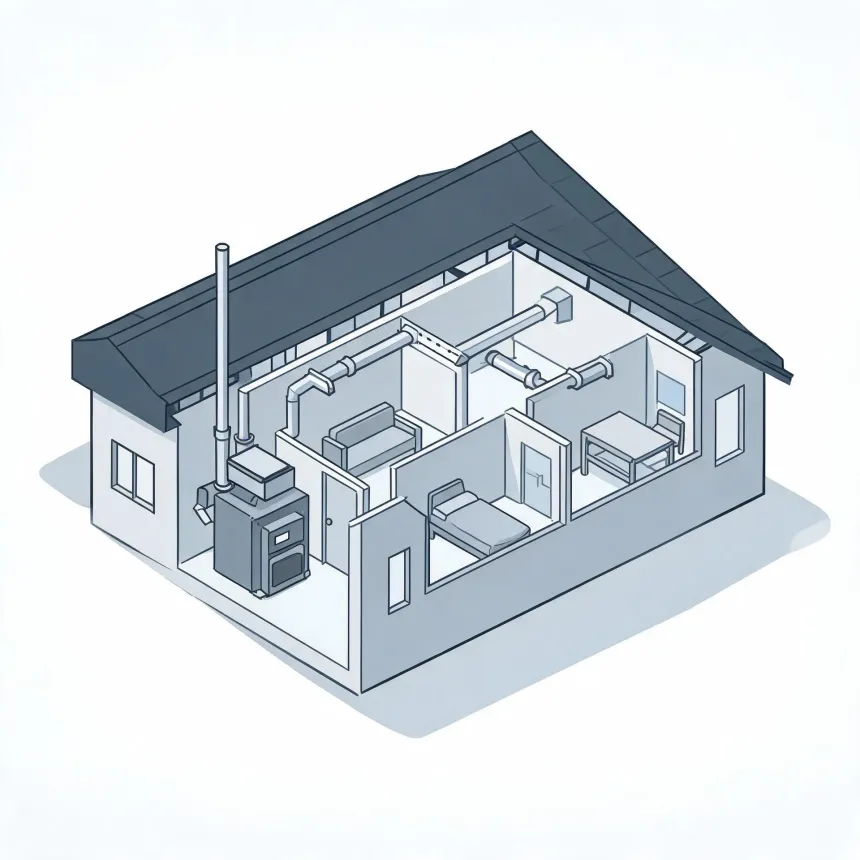
Isometric cutaway illustration of a single-story house showing interior rooms with furniture, overhead ducting, a flue pipe, and a furnace unit against an interior wall.
Your furnace works hardest from November through April.

NOAA nClimDiv, 1991–2020 normals

Furnace season starts in September here.

August is when a weak igniter or blower motor gets found before it has to carry ten months of work.

A furnace that runs this much costs more when it's not working rightNatural gas in Utah ran $12.55 per million Btu in 2024.

A furnace that short-cycles or blows cool air in January isn't failing for no reason. It's been running since September with no real break, and something finally gave out. Could be the igniter, could be a blower motor losing strength, could be a flame sensor that's gone dirty from months of steady use. Guessing at parts wastes time you don't have when it's 16 below outside. Get the actual cause checked before it's replaced, so the fix holds for the rest of the winter and not just a week.

A newer furnace is usually worth fixing, not replacing

Half the homes in Sanpete County were built in 1985 or later. If yours is one of them, the furnace likely isn't old enough to be the problem. A repair makes sense before anyone talks about replacing it.

Find a contractor
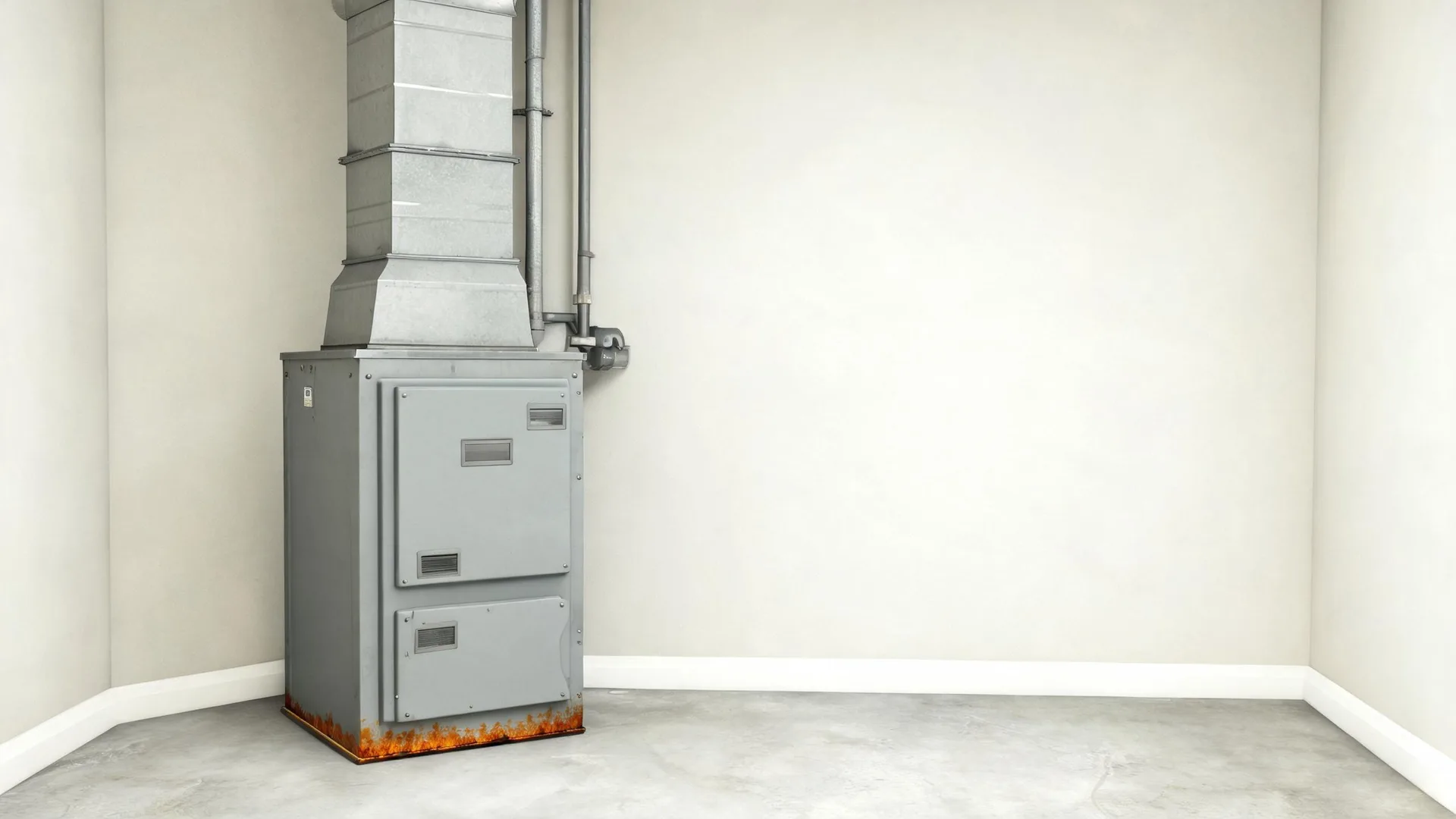
A gray gas furnace with attached ductwork and piping installed in an unfinished concrete basement.

What a struggling furnace sounds and feels like

Short cycling is the one most people notice first. The furnace fires, runs for a short burst, then shuts off before the house warms up, and starts again not long after. That's usually a flame sensor coated with residue, or a blower motor that's starting to go. Rattling or a screech at startup points to the blower wheel or its bearings. Cool air out of the vents, or air that never gets as warm as it used to, often means the igniter isn't doing its job all the way. A furnace that takes a few tries to light, or clicks without lighting at all, has an igniter that's wearing out. None of these fix themselves by running more. Each one gets worse the longer the furnace keeps working around it.

Check the simple stuff first

Look at the thermostat before anything else. Make sure it's set to heat, not cool, and that the set point is actually above room temperature. Check the furnace switch, the one that looks like a light switch near the unit, and make sure it hasn't been bumped off. Check the breaker it's on. Replace the air filter if it's visibly gray or clogged. A blocked filter can cause short cycling or weak airflow that looks like a bigger problem than it is.

What not to touch

Leave the burners, the igniter and the flame sensor alone. These sit close to open flame and wiring, and cleaning or adjusting them without the right tools can crack a part or create a gas leak. If the furnace smells like gas, don't flip any switches at all. Get everyone out and call the gas company from outside the house. That's the one furnace problem that isn't a repair call first.

An unfinished concrete basement containing a gas furnace with sheet-metal ductwork, utility shelving, and exposed overhead joists.

A new furnace would cut about $130 a year off heating for a typical Sanpete County home.

  • A new high-efficiency furnace$550 a year
  • An older furnace$680 a year

Estimates for a typical Sanpete County home, compared with an older unit built to the previous federal minimum, from EIA household energy data, Utah fuel prices and NOAA climate normals. Your home will differ.

Repair makes sense when one part has failed and the heat exchanger is sound.

Replacement makes sense when the heat exchanger is cracked or the furnace keeps needing parts.

Repair or replace usually comes down to what else is wrong with the furnace, not just the part that failed. A cracked heat exchanger is the one thing that ends the conversation, since that's a safety issue and not something anyone patches. Short of that, most failures, a bad igniter, a weak blower motor, a dirty flame sensor, are single-part repairs on a system that's otherwise sound. The parts most likely to fail are also the ones built to be replaced on their own, without touching the rest of the furnace. Age matters less than people think. A furnace that's been maintained and is only now showing its first real failure is usually worth fixing. One with a growing list of repairs, each a different part, is telling you something different than one that's run clean for years and finally tripped up once.