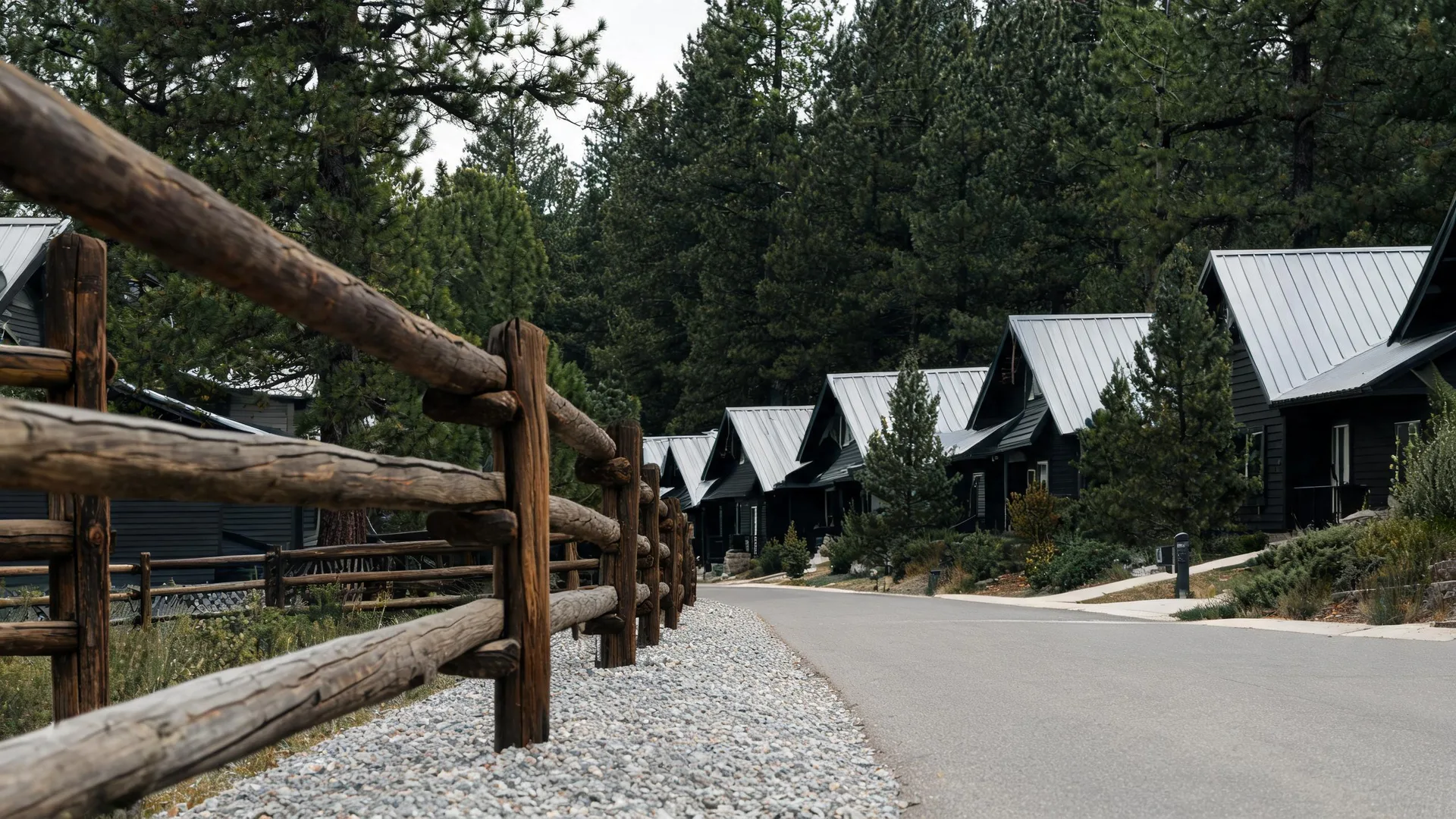





A paved road bordered by a rustic log rail fence and gravel shoulder passes a row of dark-sided cabins with metal gable roofs beneath tall pine trees.

Furnace Repair in Circleville, UT

Tell us about the job

Takes about a minute. No obligation.

RepairFurnace or heatingPiute County, UT
Step 1 of 2

What ZIP code is the job in?

Furnaces in Circleville run heat about ten months a year, September through June. That's close to year round work with only a short break in summer. Overnight lows average 16°F through December, January and February, so when the cold months hit, the furnace isn't easing into the load. It's running long hours against hard cold, night after night. That kind of use wears on an igniter or a blower motor sooner than it would somewhere milder. If yours is acting up, there's usually a reason tied to that workload, and it's worth having someone find it rather than guess.

10 months
September through June, your furnace is on duty
16°F
the average winter night it heats against
32 winter storms
in ten years, the nights a failure hurts most
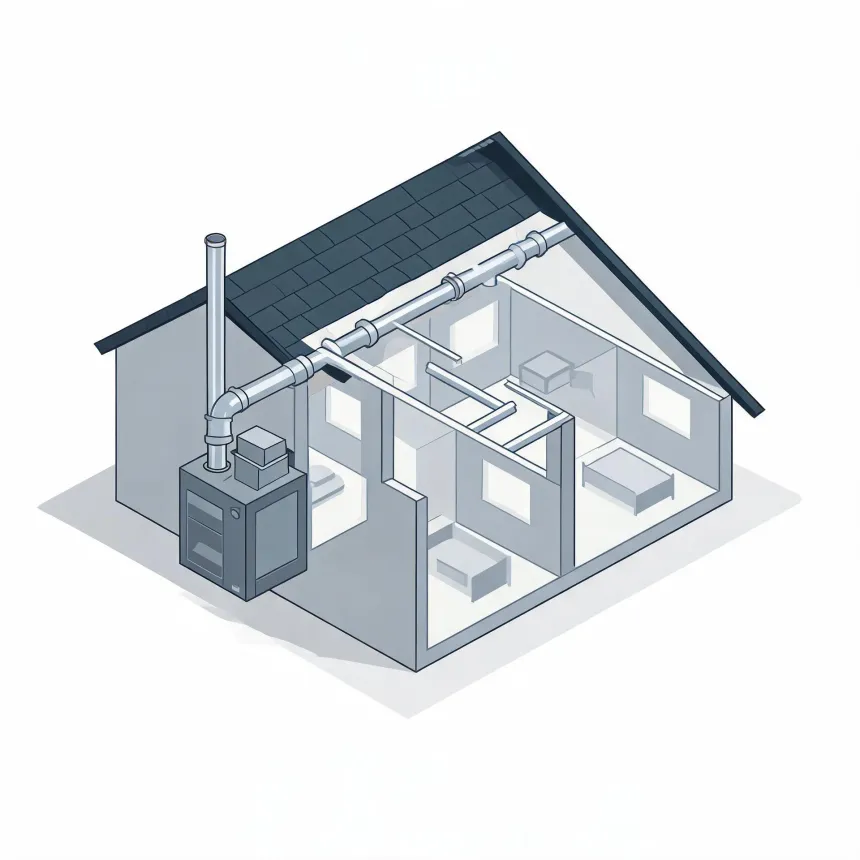
Isometric cutaway illustration of a small house showing interior rooms, ductwork running through the attic, and a furnace unit with a vertical flue pipe on the exterior wall.
Your furnace works hardest from October through April.

NOAA nClimDiv, 1991–2020 normals

Furnaces in Circleville start their first cold runs in September, after sitting idle most of the summer.

A weak igniter or blower motor usually shows itself in September's first hard runs, not in the easy months that follow.

A furnace here is about as old as the house, and it fails the usual way

Half the homes here were built by 1976
Heat runs September through June
Winter nights average 16°F
Gas isn't cheap here eitherUtah gas ran $12.55 per million Btu in 2024, and a furnace running rough burns more of it every month.

Short cycling is one of the easiest signs to catch. The furnace fires, runs for a short burst, then shuts off before the house warms up, and starts again not long after. That's not the thermostat being impatient. It usually means the heat exchanger is overheating and tripping the limit switch, or airflow is restricted somewhere. A furnace that takes several tries to light, or lights and then flames out, is telling you the igniter or flame sensor is on its way out. A burner flame that's yellow or flickering instead of steady blue is worth noting too, since that points to a combustion problem rather than a simple part wearing down. Rattling, squealing or grinding from the blower compartment usually means a motor bearing is failing, not just a loose panel. Any smell of gas, even faint, means shutting the furnace off and getting someone out right away rather than waiting to see if it happens again.

A rough-running furnace costs you more here

A furnace burning gas at $12.55 per million Btu doesn't do it any cheaper running rough than running right. If it's struggling, that cost shows up on the bill every month until someone looks at it.

Find a contractor
A man in a dark long-sleeve shirt and tan work pants, seen from behind, climbs wooden porch steps toward a navy front door while carrying a canvas tool tote, with a potted flowering plant beside the entry.
A gray residential gas furnace installed in an unfinished basement, connected to sheet-metal ductwork and PVC pipes.

What to check before you call

Check the thermostat first. It should be set to heat, with the target above room temperature, not just set to fan. Check the filter next. Hold it up to a light. If you can't see light through it, swap it, since a clogged filter chokes airflow enough to make the furnace short cycle or blow cool air. Go to the breaker box and check the furnace breaker. Some homes run the furnace and AC off the same one, so check both. If your furnace has a standing pilot, look for the small blue flame through the viewing window. If it's out, there's usually a relight instruction printed right on the unit. If yours has an electronic igniter instead, there's no flame to check by eye, and repeated failed starts in a row usually point to the igniter itself. Make sure nothing is blocking the return air grille or the supply vents, since restricted airflow can trip the limit switch and shut the whole unit down as a safety measure. None of this fixes a cracked igniter or a dying blower motor. It just rules out the simple stuff first.

A cracked heat exchanger gets worse with every run

Metal that's already cracked flexes more each time it heats up and cools down. Left running, the crack opens further and can start pushing exhaust where it shouldn't go. This is the one problem where shutting the furnace off and waiting for a tech is the right call, not a last resort.

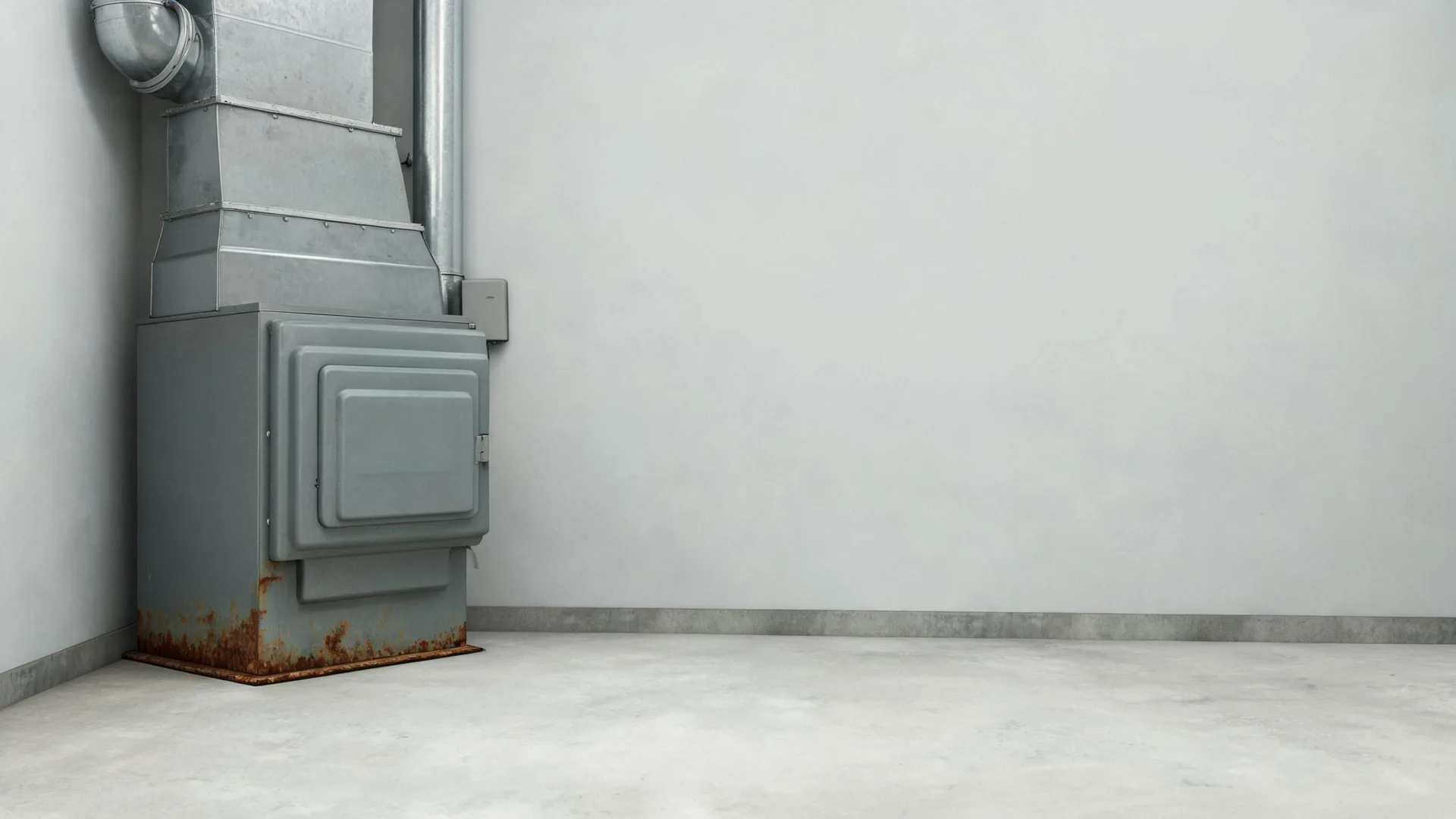
A failing igniter doesn't fail gently

An igniter that's cracking or wearing thin usually limps along for a while, firing late or skipping a cycle here and there. Each failed start is a small jolt of current through a part that's already weak. Keep running it that way and the igniter goes from intermittent to dead, usually on the coldest night it picks.

A gray forced-air furnace with sheet-metal ductwork stands in an unfinished basement with exposed wooden joists, concrete walls, and a hanging incandescent bulb.

A new furnace would cut about $130 a year off heating for a typical Piute County home.

  • A new high-efficiency furnace$550 a year
  • An older furnace$680 a year

Estimates for a typical Piute County home, compared with an older unit built to the previous federal minimum, from EIA household energy data, Utah fuel prices and NOAA climate normals. Your home will differ.

Repair makes sense when one part has failed and the heat exchanger is sound.

Replacement makes sense when the heat exchanger is cracked or the furnace keeps needing parts.

An old furnace doesn't fail all at once, usually. It fails a part at a time, and each part is its own decision. A cracked heat exchanger means replacing the furnace, not the part, since the exchanger is most of what the furnace is. A failed igniter, a bad blower motor, a dead flame sensor, those are repairs, and a furnace that's otherwise sound is worth fixing every time. What matters is how many of these it's had and how close together. One repair on a furnace that's run clean for years is just a part wearing out. A second or third in close succession is usually the furnace telling you the rest isn't far behind. A tech who's looked at the whole unit can tell you which one you're in.