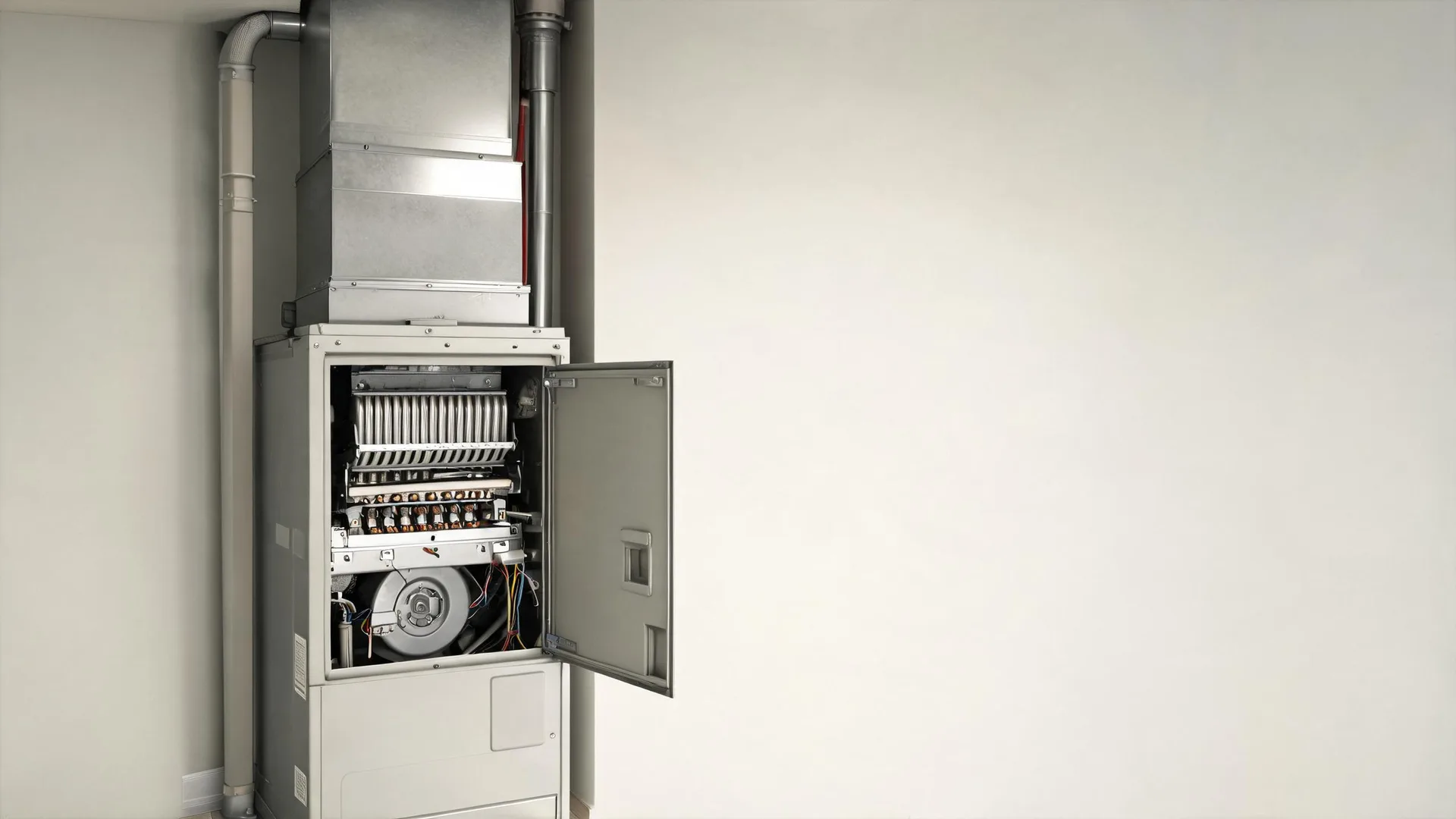
Eight months of work a year
Furnaces in Beaver County run from October through May, with overnight lows averaging 19°F in December and January. That's a long stretch of hard running, and a lot of cold nights for a furnace to keep up with.
Takes about a minute. No obligation.
Furnaces in Beaver County run from October through May, with overnight lows averaging 19°F in December and January. That's a long stretch of hard running, and a lot of cold nights for a furnace to keep up with.
Winter storms hit Beaver County 35 times between 2015 and 2024. A furnace that's been straining all season is more likely to quit right when a storm rolls in, so a problem now is worth having looked at rather than waiting out.
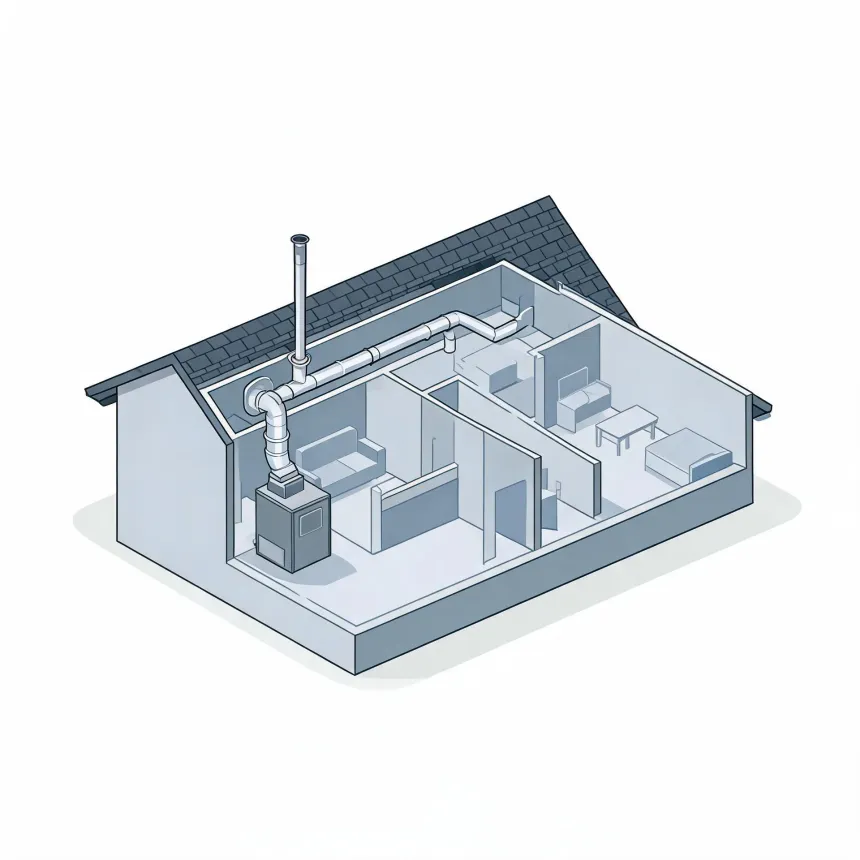
NOAA nClimDiv, 1991–2020 normals
A furnace in Beaver County isn't fighting anything unusual.
Most calls here turn out to be the same worn igniter or failing flame sensor you'd find anywhere, and the fix is just as ordinary.



Half the homes in Beaver County were built in 1976 or earlier, and half in 1976 or later. That split doesn't point to any one cause here. An older furnace and a newer one fail for the same handful of reasons. A worn igniter, a failing flame sensor, a blower motor on its way out. Whatever year your system went in, the usual check still applies. Have it looked at and the contractor will tell you which of the ordinary problems it is.
A furnace that's been running since October has had months to wear down before a storm puts real demand on it. Get the problem looked at now and a contractor can catch it while it's still one worn part, not a no-heat call in the middle of a cold night.
Find a contractor
Before anyone comes out, check the thermostat first. Make sure it's set to heat, not just on, and that the temperature you want is actually above room temperature. Next, go look at the filter. Hold it up to a light. If you can't see through it, that's enough to choke the airflow and cause all kinds of problems that look like bigger failures than they are. Check that every supply vent in the house is open and nothing's been pushed in front of one. Then find the furnace itself and look at the switch on the side of it, the one that looks like a light switch. It gets bumped off by accident more than people expect. If yours has a standing pilot, look for the small flame through the little window. If it's out, there's usually a relight instruction printed right on the panel. Last, check the breaker. A furnace that won't start at all is sometimes just a tripped breaker and nothing more. None of this fixes a cracked heat exchanger or a dying blower motor, but it rules out the simple stuff before anyone has to take anything apart.
A cracked igniter still lights the burners, so the furnace keeps running. But it's drawing more current to do it, and that strain is what finally snaps it for good. A flame sensor coated in residue still senses flame, just barely, and every cycle it has to work harder before it finally tells the system to shut down. Running a marginal part doesn't let it coast. It wears the part down faster than if it failed clean the first time.
A dirty flame sensor can cause short cycling, where the burners fire and shut off again and again. Each of those cycles puts stress on the igniter too, so a problem that started in one part starts taking another one down with it. A blower motor that's struggling pulls more current than it should, and that heat has to go somewhere. Left running, it can trip a limit switch or damage the control board that's wired to it. The part that fails last is often not the part that started the trouble.
Estimates for a typical Beaver County home, compared with an older unit built to the previous federal minimum, from EIA household energy data, Utah fuel prices and NOAA climate normals. Your home will differ.
Repair makes sense when one part has failed and the heat exchanger is sound.
Replacement makes sense when the heat exchanger is cracked or the furnace keeps needing parts.
A diagnostic visit starts before any panel comes off. A contractor will ask when the trouble started and what it looks like, short cycling, no heat at all, a smell, a sound. Then the cover comes off and the burners get a look, because a weak flame or an uneven one points to where to look next. Testing the igniter or flame sensor usually means checking them against a known good reading, not just eyeballing them for damage. Airflow gets checked too, since a weak blower or a clogged filter can mimic a failing part that's actually fine. The goal of the visit isn't just naming the broken part. It's ruling out the parts that aren't broken, so the fix matches what's actually wrong.