Warmly lit timber-frame and stone houses line a street at dusk, with evergreen trees and a snow-capped mountain range in the background.

Furnace Maintenance in Brigham City, UT

Tell us about the job

Takes about a minute. No obligation.

Tune-up, service, or cleaningFurnace or heatingBox Elder County, UT
Step 1 of 2

What ZIP code is the job in?

Eight months of work

Furnaces in Box Elder County run from October through May, with overnight lows averaging 19°F through December, January and February. That is a long stretch asking a lot of the igniter, the blower motor and every other part that keeps it running.
Check it before the cold sets in

A furnace that has sat idle since spring will show whatever wore out last winter the first time it kicks on. Getting it looked at before October means finding a weak part on a technician's schedule, not during a snowstorm.

One visit a year covers what a furnace needs here.

A fall check catches a weak igniter or a worn blower bearing before the cold months put weight on it.

Most of what breaks a furnace here isn't the cold itself

219 severe weather events from 2015 to 2024
7% of homes statewide lost power a day or more in 2024
159 damaging wind events from 2015 to 2024

Gas heats almost 8 in 10 homes in Box Elder County. That means most furnace checks here are really burner checks. A technician looks at the flame itself, how it burns, what color it is, whether it's reaching where it should. The vent pipe gets checked too, since that's what carries exhaust out of the house instead of letting it back up. Flame sensor, pilot or hot surface igniter, gas valve, these are the parts that matter on a gas furnace, more than anything a filter touches. Electric furnaces, the other common setup here, skip all of that and wear differently, so what gets checked depends on which one is in your house.

Half the homes here were built in 1983 or later

Half the homes in Box Elder County were built in 1983 or later. A furnace that's not old yet still benefits from a yearly check. Catching a weak part early keeps a system that has years left running the way it should.

Find a contractor
A gray gas furnace with attached ductwork and piping installed in an unfinished concrete basement.

Book it in September, before October asks anything of it

October through May, that's eight months of heat calls on this furnace. September is the month to get it checked, right before the season starts asking something of it every day. A furnace that starts cold in October and runs straight through to May doesn't get a break to reveal a weak part gently. Whatever's going to fail, fails while it's needed.

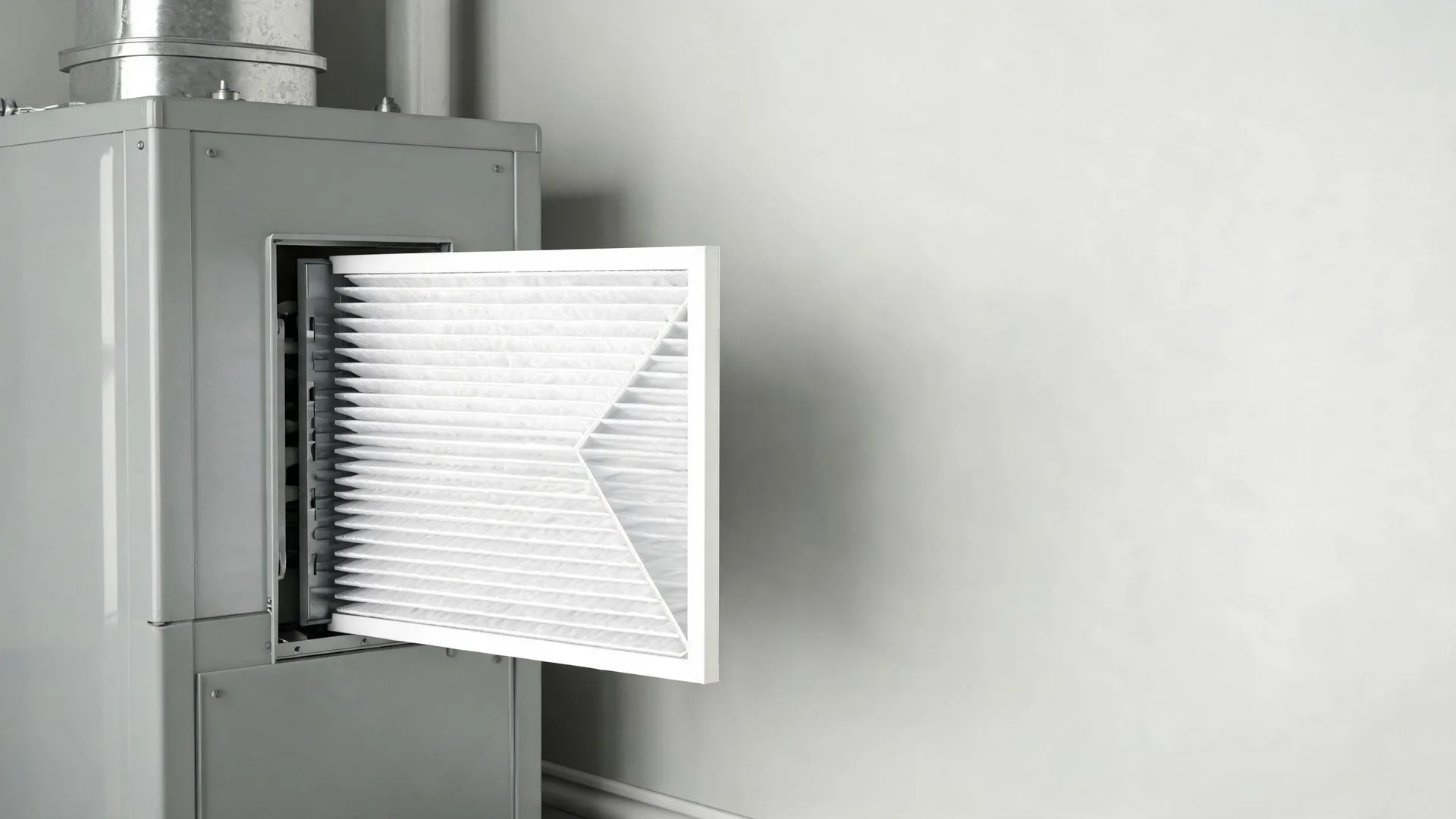
The filter is doing more than you think

A dirty filter chokes the air coming back to the furnace. The blower works harder to pull air through it, and less air moves across the heat exchanger. That can make the furnace run hotter than it should and shorten the life of the exchanger itself. A filter is the one part of this system meant to be checked between visits, not saved for the technician.

The drain only matters on certain furnaces

A high-efficiency furnace produces condensation and needs a clear drain line to get rid of it. If that line clogs, the furnace can shut itself down rather than let water back up into the unit. An older style furnace without a second heat exchanger does not make condensation and has no drain to worry about, so this is one more thing that depends on which furnace is sitting in the house.

A technician opens the cabinet and checks things no homeowner has reason to look at. The flame sensor gets cleaned or tested, since a coated sensor is the most common reason a furnace fires for a few seconds and shuts off. The heat exchanger gets inspected for cracks, which matter because a cracked exchanger can let exhaust mix with the air moving through the house. Wiring connections get checked too, since a loose connection at the control board can cause a furnace to stop mid-cycle for no reason anyone inside the house can see. The blower wheel gets looked at for dust buildup, which throws it off balance the same way a dirty fan blade would. None of this shows up as a problem yet. It shows up as a breakdown later, on the coldest night it's asked to work the hardest.

A tune-up starts with static pressure, not the flame. A technician checks that air is actually moving through the ductwork the way the furnace expects, because a furnace fighting restricted airflow runs hotter and shuts off sooner than it should. Amp draw on the blower motor gets checked against what the motor is rated for, since a motor pulling more current than it should is wearing out even if it still spins fine today. The igniter gets looked at for hairline cracks, since that's a part that tends to fail by breaking, not by wearing down slowly. Gas pressure gets tested at the manifold, because too much or too little changes how the burner behaves even if the flame looks normal to an untrained eye. A capacitor gets tested under load if the furnace has one, since a capacitor can read fine sitting still and still fail the moment the blower asks something of it.