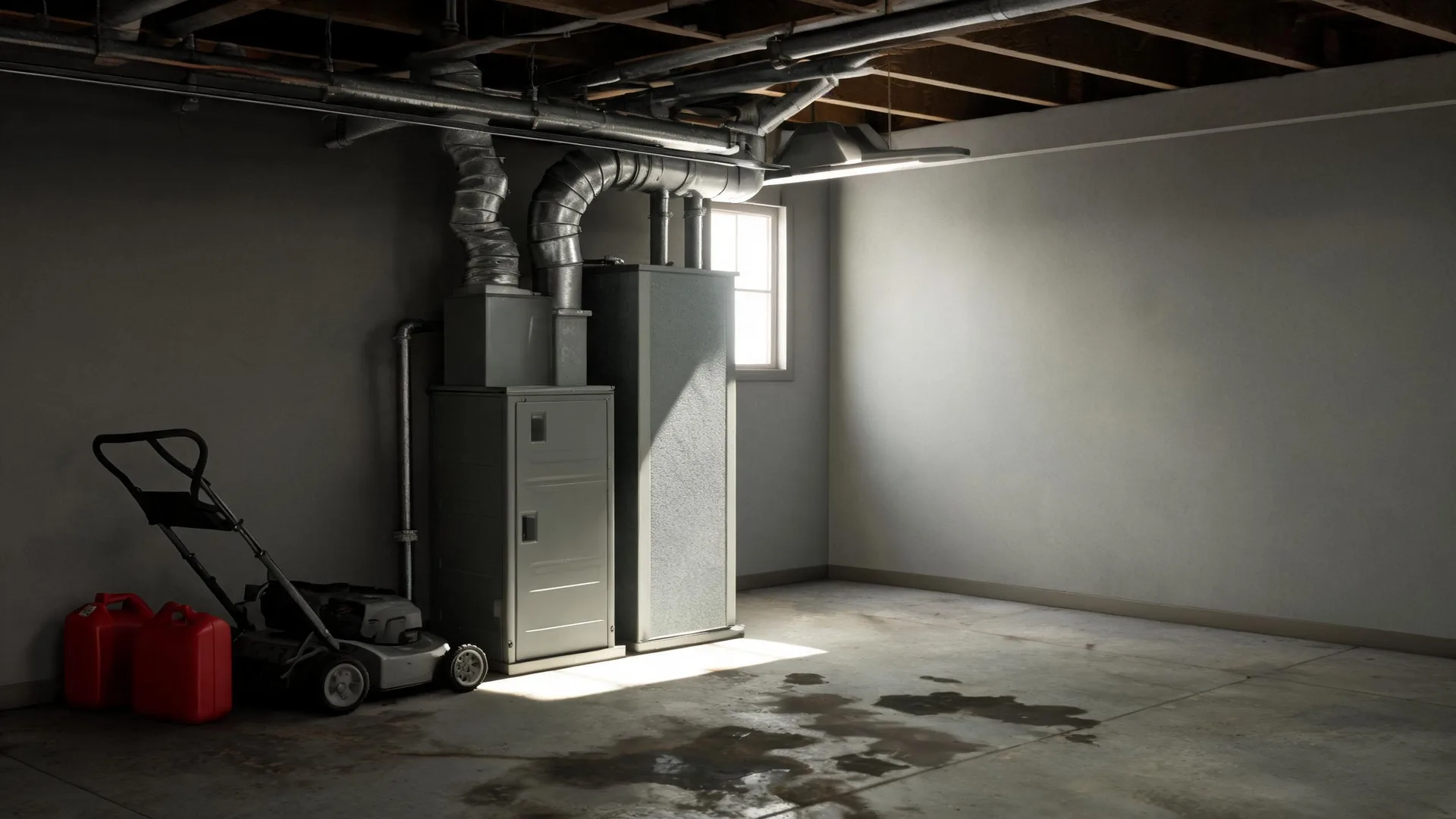
AFUE tells you what's wasted
The AFUE number on the label is how much of the gas you burn turns into heat for the house, versus what goes out the flue. A higher number means less gas wasted getting the same warmth into the rooms.
Takes about a minute. No obligation.
The AFUE number on the label is how much of the gas you burn turns into heat for the house, versus what goes out the flue. A higher number means less gas wasted getting the same warmth into the rooms.
A high-efficiency furnace sized wrong for the house won't deliver the rating on the label. One sized too big cycles on and off too fast to run efficiently, and one too small just runs longer to make up for it. The rating is only as good as the sizing work behind it.
NOAA nClimDiv, 1991–2020 normals
Gas heats 80.9% of homes in Cache County.
A gas furnace is the easy match for a house already piped for one.

Cache County is zone 5B, a cool zone where heating carries most of the work a furnace does over the year. Any furnace installed here has to meet the federal minimum for its manufacture date, 80 percent AFUE. That floor moves in 2028, when new non-weatherized gas furnaces have to reach 95 percent. If your installation happens to land near that date, worth asking which rule your unit falls under.
Gas here runs $12.55 per million Btu. The AFUE rating on the label decides how much of that gas turns into heat and how much goes out the flue. Get the sizing and the rating right, and that number works for you on every bill that follows.
Find a contractorA furnace here runs most of the year and works against real cold while it does it. That argues for sizing it to this house, room by room, not to whatever the last contractor quoted. A unit too big for the rooms it serves will short cycle through all ten months of heating, and the wear from that adds up faster than it would somewhere milder. Ask whoever bids the job to show the load calculation for your house, not just a number on a page.
A contractor doing this right measures every room, checks the windows and doors, and adds up how much heat the house loses on the coldest day of the year. That number, not the square footage and not the size of the old furnace, is what decides the new one. Houses built differently need different furnaces even when they look the same from the street.
A furnace that outsizes the house heats the air fast, shuts off, and starts again soon after. That short cycling never lets the system settle into a steady run, so rooms end up with uneven heat even though the furnace is working hard. The right size runs longer stretches at a steadier output, and that's what actually keeps the house even.
Estimates for a typical Cache County home, from EIA household energy data, Utah fuel prices and NOAA climate normals. Your home will differ.
Install day starts with the old furnace coming out, along with any venting or ductwork that doesn't match the new one. The new unit gets set, then connected to the gas line, the ductwork, the venting, and the electrical. Once it's in, a tech checks the gas pressure, fires it up, and reads the temperature rise across the heat exchanger to confirm it matches what the manufacturer specifies. Static pressure in the ductwork gets checked too, since too much resistance strains the blower motor no matter how good the furnace itself is. The last step is combustion testing, making sure the flue is drafting properly and nothing is spilling back into the house. None of this is quick, and a furnace that gets fired up without these checks can run for years with a problem nobody caught on day one.