




A stack of split firewood in a metal rack sits against the dark vertical-board exterior wall of a house, beside a gravel path with dry grass and pine trees under an overcast sky.

Furnace Installation in Garden City, UT

Tell us about the job

Takes about a minute. No obligation.

New system or replacementFurnace or heatingRich County, UT
Step 1 of 2

What ZIP code is the job in?

A furnace in Garden City runs about ten months a year, September through June. That's most of the calendar, and the stretch it gets off is short. Overnight lows average 11°F across December, January and February, so when it is running, it's working against real cold, not a mild chill. A furnace sized wrong for that kind of run time shows it fast, either short-cycling because it's too big or straining to keep up because it's too small. This is a system that earns its keep here, so getting the size and the install right matters.

10 months
September through June, your furnace is on duty
11°F
the average winter night it heats against
80% AFUE
the federal minimum any new unit must meet
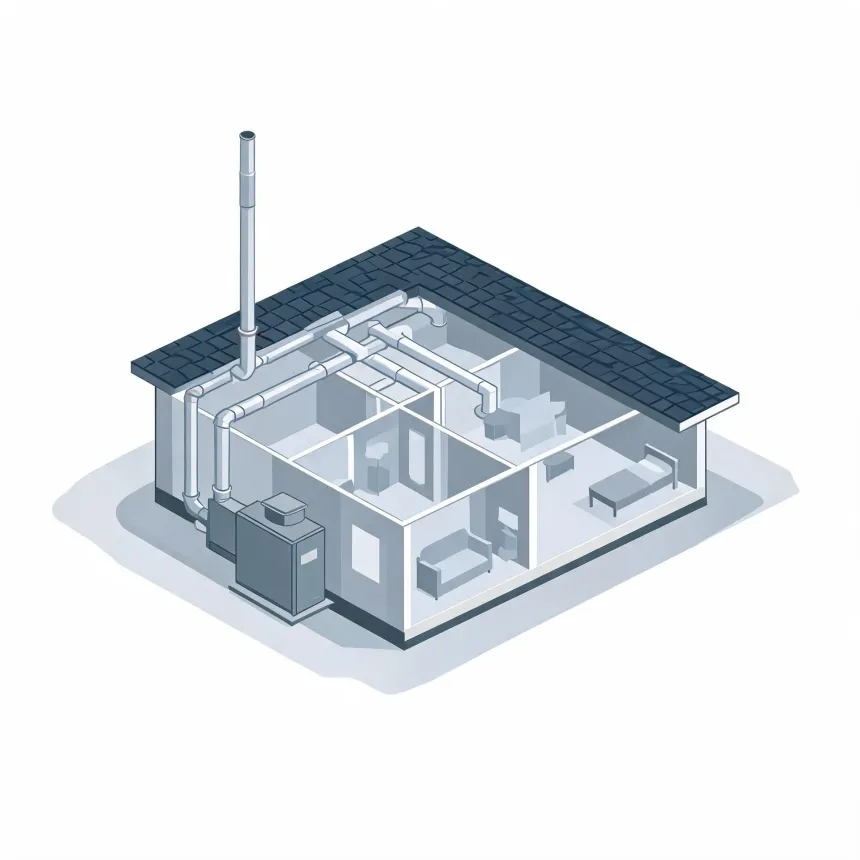
Isometric cutaway illustration of a single-story house with a dark shingled roof, showing interior rooms with furniture, a ducted air distribution system, a tall vertical flue pipe, and a gray furnace unit outside the wall.
Your furnace works hardest from October through April.

NOAA nClimDiv, 1991–2020 normals

Furnace season in Garden City starts in September.

Replace it in August and the install happens on your schedule, not during the first cold week.

Get the load calculation right. A wrong-sized furnace won't make it to June.

Heat runs September through June
Winter nights average 11°F
Climate zone 6B

Ask what load calculation they're using to size the furnace, not just what size the old one was. A furnace sized by square footage alone can end up too big or too small for what the house actually needs, and either mistake costs you for the life of the system. Ask about the venting, since a new high-efficiency furnace vents differently than an older one and that can mean new pipe, not just a swap of the unit. Ask how they're handling the ductwork, because a furnace can only perform as well as the ducts let it, and nobody installing a furnace should ignore what it's being hooked up to. Ask what the warranty covers on the heat exchanger versus everything else, since those terms are rarely the same length. And ask what happens if the load calculation turns up a size different from what you expected. A contractor who can't answer that one plainly is guessing.

Size it for how hard it works here

A new system here will work harder than most, every year. Size it right and don't buy on price alone.

Find a contractor
A man in a cap and dark jacket, seen from behind, carries a canvas tool bag up porch steps toward a dark blue front door of a gray-sided house.
A gas furnace with attached ductwork, gas piping, and condensate lines installed in a concrete-block basement.

The label tells you about the furnace, not the system

The AFUE number on the label tells you what share of the fuel turns into heat for the house, and what share goes out the vent. That number is measured under set conditions in a lab, not inside your ductwork, so a furnace with the same rating can behave differently once it's hooked up to your return and your supply runs. A high-efficiency furnace also runs cooler exhaust, which is why it vents through plastic pipe instead of a metal flue. That changes what the install involves, not just what the furnace costs to run. The rating describes the equipment on its own. Ducts that leak or a return that's choked down will cost you efficiency no label can promise back.

The math behind the size

Sizing a furnace right means a room by room load calculation that accounts for window area, insulation levels, ceiling height and how much outside wall the house has. Square footage alone leaves out too much. Houses the same size can need different size furnaces because one holds heat better than the other.
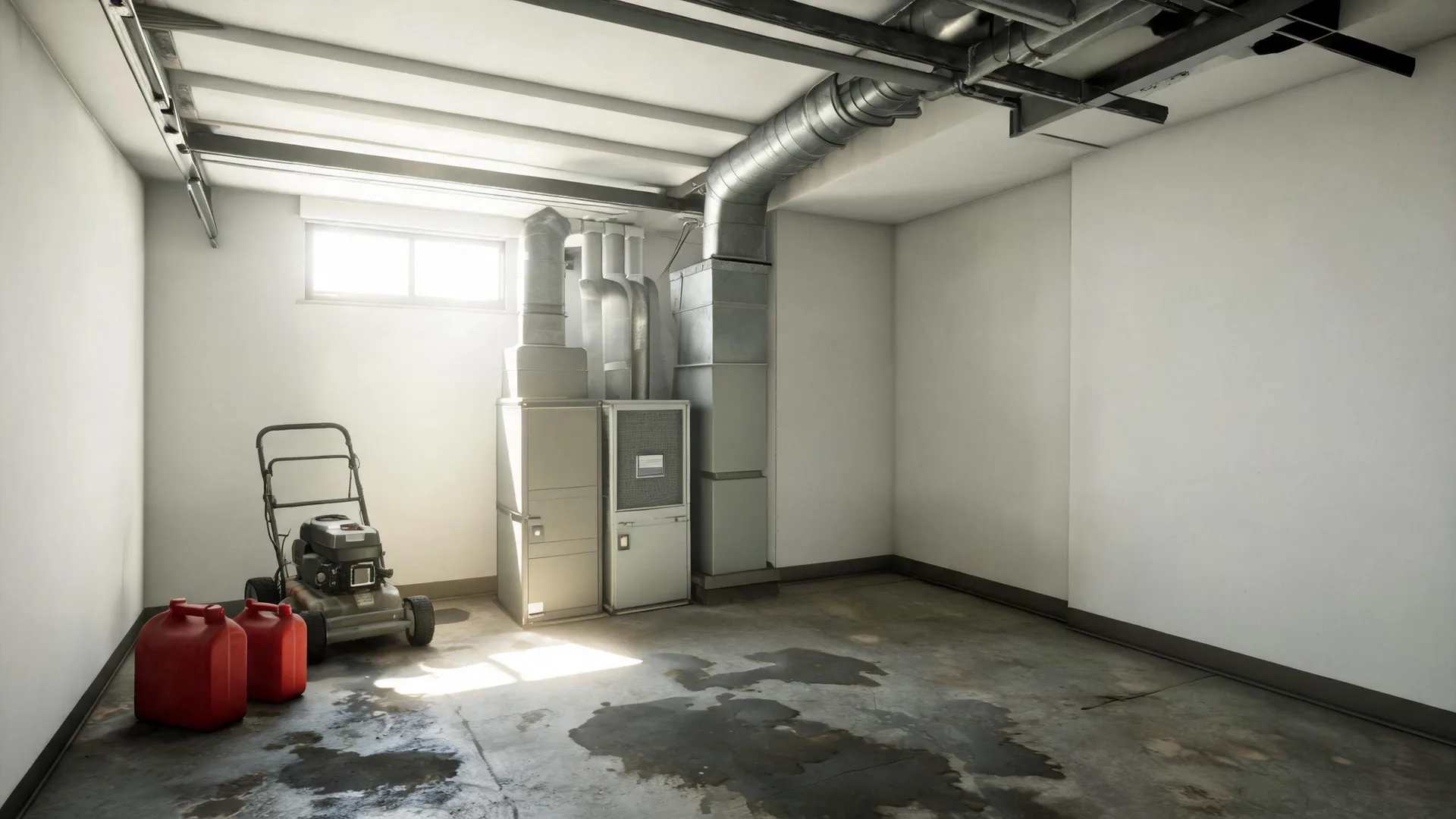
What happens when it's wrong

A furnace too big for the house heats the space fast, shuts off, then starts again a few minutes later. That short cycling wears out the ignition system and the blower motor long before they should quit, and it leaves rooms far from the furnace cold even though the thermostat reads warm. A furnace too small just runs and runs, straining through the coldest stretches without ever catching up.

A lot of what drives the price has nothing to do with the furnace box itself. If the new unit vents differently than the old one, that means new pipe run to the outside, sometimes a new termination point altogether, and that's labor the old system never needed. If the ductwork is undersized or leaky, fixing it so the new furnace can actually move the air it's rated for adds to the job, and skipping that step just wastes the furnace you paid for. A furnace that isn't a straight swap for what's there, different fuel type, different venting category, a location change, takes more time and more parts than one that drops into the same spot the old one came out of. Electrical work is its own line item too, since some furnaces need a dedicated circuit or a different disconnect than what's already run. None of this is optional work someone's padding the bill with. It's what makes the furnace work the way the label says it will.

Installation day starts with the old furnace coming out. That alone can take a while if the venting or the ductwork connects in more than one spot. The new furnace gets set in place, then the technician works through the gas line, the venting, the ductwork and the electrical, in whatever order the job calls for. Once it's hooked up, it gets fired up and checked. Gas pressure, temperature rise across the heat exchanger, airflow at the registers. That last check matters because a furnace can be installed correctly and still not perform right if the blower speed isn't matched to the ductwork it's tied into. Expect some testing and adjusting before anyone calls it done, not just a quick on and off. A straight swap into the same spot with the same venting goes faster than a job where the fuel type changes or the furnace moves to a new location.