



Illuminated stone-and-timber mountain homes line a quiet street at dusk, with evergreen trees and a mountain range in the background.

Furnace Installation in Brigham City, UT

Tell us about the job

Takes about a minute. No obligation.

New system or replacementFurnace or heatingBox Elder County, UT
Step 1 of 2

What ZIP code is the job in?

Gas heats close to 8 in 10 homes in Box Elder County. If your old furnace ran on gas, a new gas furnace is the straightforward swap, using the gas line and vent already in place. Electric furnaces heat about 1 in 10 homes here, and propane a smaller share still, usually where a gas line isn't an option. When you're replacing a furnace, matching the fuel you already have means the contractor is working with what's already there instead of adding new lines or venting.

8 months
October through May, your furnace is on duty
19°F
the average winter night it heats against
80%
of homes here heat with gas, so most furnaces here burn gas
80% AFUE
the federal minimum any new unit must meet
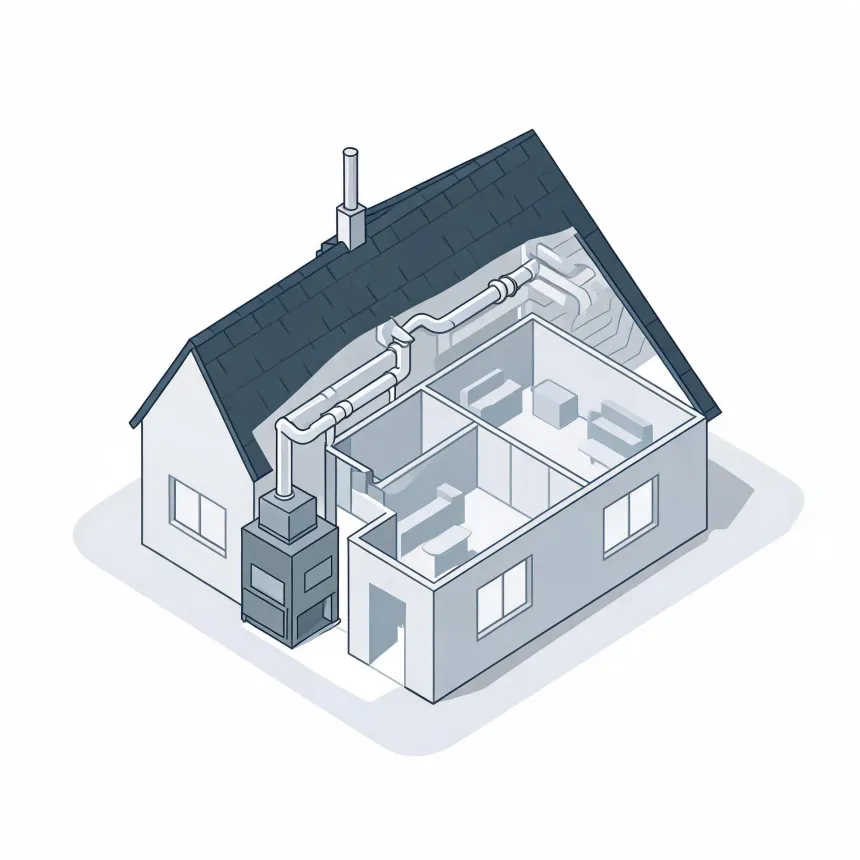
Isometric line illustration of a cutaway single-story house with a dark shingled roof, showing interior rooms and ductwork connected to a gray furnace unit with a flue pipe.
Your furnace works hardest from November through March.

NOAA nClimDiv, 1991–2020 normals

Furnaces in Box Elder County run from October through May, eight months of the year.

A furnace sized wrong will spend most of the year proving it.

A standard furnace, sized right, handles Brigham City winters

Heat runs October through May
Winter nights average 19°F
51 winter storms from 2015 to 2024

A contractor sizes your furnace with a load calculation, not a guess based on the old unit or square footage alone. That matters more here than in a mild climate. Overnight lows average 19°F through December, January and February, and the furnace has to recover from that cold morning after morning for eight months straight. Undersized, it runs flat out and still falls short on the coldest nights. Oversized, it short cycles, heating the house fast and shutting off before it's pulled the chill out of the walls and floors, then starting again. Either way the wear shows up early. Ask what load calculation the contractor used and what size they landed on, and why.

The right size furnace, installed and ready for winter

Box Elder County sees its share of wind and winter storms, but that's not a reason to size up. A correctly sized furnace, installed with a vent and gas line already there, is built to run through outages and bad weather the same as any other night. Get the load calculation done and the system matched to your house.

Find a contractor
A man in a cap, dark t-shirt and worn tan work pants walks up steps toward a dark front door, carrying a canvas tool bag filled with tools, beside a potted shrub.
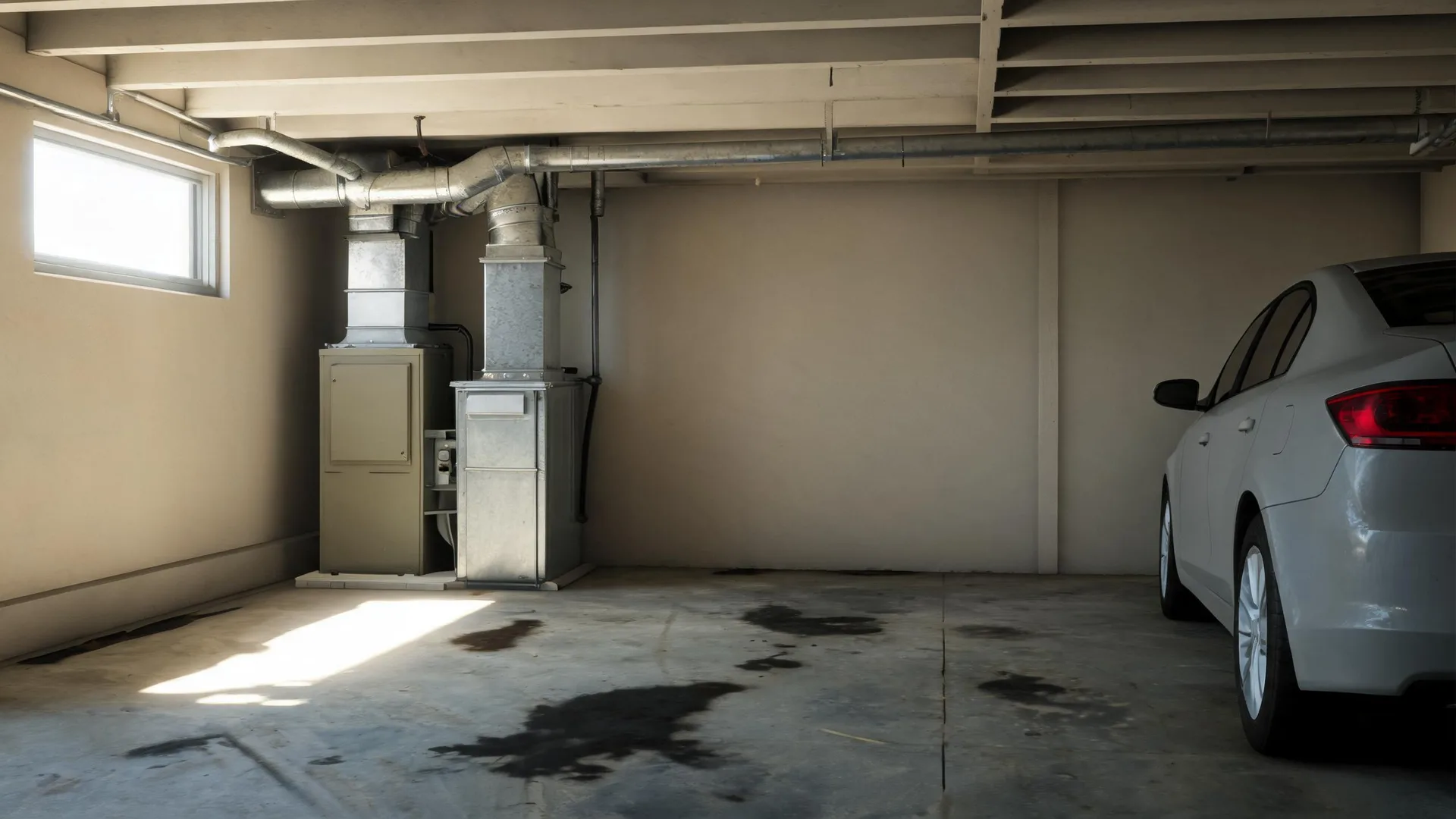
A gray residential gas furnace installed in an unfinished basement, surrounded by ductwork, a metal flue pipe, and a gas supply line.

Eight months of heat starts in October. September is what you have before that.

Heat starts in October here and runs through May, eight months straight. September is what you have before that first cold morning. Replace the furnace in September and the contractor has time for the load calculation, time to schedule the work, and time to deal with anything unexpected, like a vent that needs attention before the new furnace connects to it. Wait until the house is already cold and you're working around whatever slot is open, on whatever timeline that leaves.

Ask for the AFUE rating in writing

The AFUE rating tells you how much of the fuel burned turns into heat in the house versus what goes out the vent. A contractor comparing systems should give you this rating for each option, not just a brand name. A furnace with a higher rating costs more up front and less to run every month it's working.

Ask how the ductwork was checked, not just the furnace

A new furnace moves a different amount of air than the old one did, and the existing ducts have to be able to handle it. If a contractor quotes a furnace without looking at the duct sizing and the return air, ask why. Ducts that are too small for the new furnace mean rooms that don't heat evenly no matter how good the furnace is.

An unfinished basement featuring a grey forced-air furnace with metal ductwork, concrete block walls, exposed wooden joists, and a single hanging bare bulb.

A high-efficiency gas furnace would save about $100 a year to run in Box Elder County compared with a gas furnace.

  • A high-efficiency gas furnace$480 a year
  • A gas furnace$580 a year

Estimates for a typical Box Elder County home, from EIA household energy data, Utah fuel prices and NOAA climate normals. Your home will differ.

Installation day starts with the old furnace coming out, along with the old vent connector if it's not sized for the new unit. The contractor sets the new furnace, connects the gas line and the vent, then wires it into the thermostat and the ductwork trunk. Once it's in place, the gas line gets pressure tested and the vent draft gets checked, because a furnace that vents wrong will spill exhaust back into the house instead of outside. Then the contractor runs it, checks the temperature rise across the heat exchanger, and makes sure it matches what the furnace is rated for. That number has to fall in the right range, not just close. Before anyone leaves, the system should cycle on and off at least once so you can see it work, not just hear that it's done.