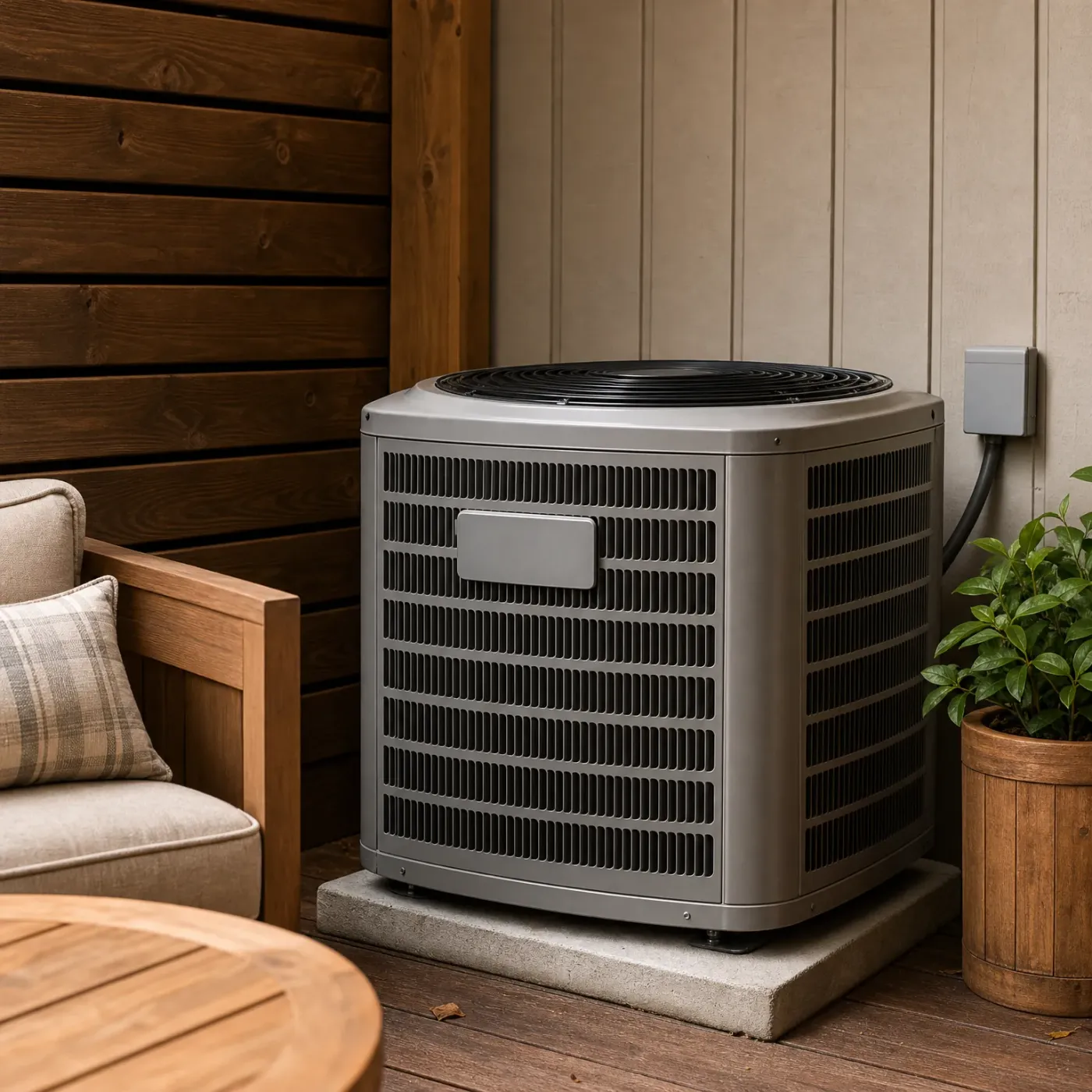
A dark outdoor heat pump unit with a round fan grille and finned coil sits on a concrete pad beside a house with horizontal siding and stone veneer, next to gravel, a paver walkway, grass and shrubs in warm low light.

A heat pump pro near you

Why your heat pump blows cold air in a Utah winter

Cold air coming out of the vents doesn't always mean your heat pump is broken. Sometimes it's doing exactly what it's built to do, and sometimes it's a sign something's wrong. This page gets into the difference, and what tends to cause it in a Utah winter. Answer your question here, then get matched with a contractor who can take a look.

Find a heat pump pro

A heat pump blowing air that feels cold is usually just moving heat at a lower temperature than a gas furnace would. The air coming out might be 90 to 95 degrees, which is warmer than your house but cooler than your skin, so it feels like a cold draft even though it's heating the room. In a Utah winter, when outdoor temperatures drop well below freezing, the unit has to work harder to pull heat from the air outside, and the air it delivers inside runs cooler as a result. That's normal operation. What's not normal is air that feels truly cold, room temperature or below, running nonstop, or a system that's frosted over outside and not defrosting on its own. That points to low refrigerant, a stuck reversing valve, or a defrost control that isn't cycling the way it should, and those need a contractor to sort out.

A smiling bearded man in a dark green henley shirt sits on a blue-gray couch in a living room, with a bowl of popcorn in the foreground and a houseplant and window behind him.
A smiling man in a dark sweatshirt reclines on a gray sofa in a living room, with a wooden bowl of popcorn on a table in the foreground and a dining area, shelving, and pendant lamp behind him.
A smiling man in a navy long-sleeve shirt reclines on a sofa in a living room, with a bowl of popcorn on a wooden coffee table and framed pictures on the wall behind him.
A smiling man in a dark green long-sleeved shirt sits on a gray sofa in a living room, with a bowl of popcorn in the foreground and windows and a potted plant behind him.

90 to 95 degrees

That's roughly what should be coming out of your vents on heat. If you check it with a thermometer and it reads lower, something in the system needs a look.
Hand off my repair

When it's actually cold air

Air that feels truly cold, not just cool, often points to low refrigerant or a defrost cycle stuck running. A contractor can tell which from a service call.

Hand off my repair

Normal Operation or a Real Problem

Normal for a heat pump

  • Vent air in the low 90s feels cool against your skin even though it's well above room temperature.
  • Defrost cycles run the outdoor fan without heat for a few minutes, so a vent can blow room-temperature or cooler air briefly.
  • Air feels cooler than a gas furnace's output because a heat pump moves heat instead of burning fuel for it.
  • Colder outdoor temperatures mean the system works harder and the vent air runs a little cooler than on a mild day.
  • The system switching between defrost and heating can make the air temperature at the vent shift within a single cycle.

Signs something's wrong

  • Air that reads below 90 degrees on a thermometer held to the vent points to a problem, not normal operation.
  • A low refrigerant charge makes the system move less heat, so the air stays close to room temperature instead of warming past it.
  • A failed reversing valve can leave the system stuck in cooling mode even when the thermostat calls for heat.
  • Ice building up on the outdoor unit that doesn't clear during defrost means the system isn't shedding frost the way it should.
  • Auxiliary heat that never kicks in during a hard freeze leaves the heat pump trying to cover a load it can't handle alone.
  • A thermostat set to the wrong mode or an airflow problem at the filter can mimic a mechanical failure without being one.
A two-story house with cream horizontal siding, a dark gabled roof, and a white front door, fronted by a lawn, shrubs, and a concrete walkway leading to a sidewalk and street, with large leafy trees on both sides.

Utah summers don't sit heavy on you the way they do in a muggier state. The dew point averages 41°F across June, July and August, by NOAA's records, which is dry air by any measure. Your heat pump's compressor spends those months barely working to pull moisture out, so it runs lean and easy. Come winter, that same unit has to reverse the job and pull heat out of cold, dry outside air instead, which is harder work and leaves less margin for anything already wearing down. A part that was fine all summer can show its problems the first cold week. If your vents are blowing air that's actually cold, not just cool, send the form and let a contractor sort out whether it's normal or not. That part stops being yours to figure out.

NASA POWER T2MDEW county cells weighted by homes

Get the right pro for your heat pump

Send the request today and stop worrying about who to call.

You're not committing to anything by asking.

Cold Vents: What To Do Next

  • Vent air in the low 90s is doing its job, even though it feels cool against your skin.
  • Air that stays cold for more than ten or fifteen minutes, or never warms past room temperature, points to a real fault.
  • A frozen outdoor coil, a low refrigerant charge, or a reversing valve stuck in the wrong position are the usual causes.
  • A thermometer at the vent tells you more in thirty seconds than guessing ever will.
  • Utah's dry winters don't cause these faults, so a heat pump blowing cold here needs the same look any broken one would.
  • Once you send the form, a contractor takes it from there and reaches out to you directly.

Most of the time, what feels like cold air from a heat pump is just the system running the way it's supposed to. Air in the low 90s warms your house without ever feeling warm to the touch, and that's true whether it's 20 degrees outside or 50. The defrost cycle adds to the confusion, since the outdoor fan keeps running during it without heat behind it, so a vent can blow cool air for a few minutes at a stretch. None of that means anything is wrong.

What does mean something is wrong is air that stays cold well past that, or never climbs above room temperature at all. That points to a frozen outdoor coil, a refrigerant charge that's dropped, or a reversing valve stuck where it shouldn't be. None of those are caused by Utah winters being dry or cold. They're mechanical problems that would show up the same way in any state, and they don't fix themselves.

A thermometer held at the vent settles the question faster than watching and waiting. If it reads near 90, the system's working. If it's stuck near room temperature or colder, that's a system that needs a contractor, not a thermostat adjustment.

Once you send the form, you're done hunting for who to call. A contractor who covers your area takes it from there and reaches out to you.

A shingled two-story house with lit windows and stone accents at dusk, with a stone paver walkway and landscape lighting leading past ornamental grasses toward a calm bay under an orange and blue sky.

Heat Pump Repair

A pro who works on heat pumps

RepairHeat PumpUtah
Step 1 of 2

What ZIP code is the job in?

  • A living room corner with a beige upholstered armchair holding a green pillow and knitted throw, a ceramic table lamp on a side table, white built-in bookshelves, a framed landscape print, a curtained window, and a round wooden table with a lit candle and bowl in the foreground.
    • Describe your heat pump job, and a local pro who handles it gets in touch.
  • A lit table lamp with a tapered beige fabric shade and a speckled rounded ceramic base sits on a wooden surface beside a potted plant, with curtains and a window in the background.
    • After this form, you can stop searching for a heat pump pro.
    • Send it once and finding someone is no longer on you.
  • A cream upholstered armchair with a gray pillow and knit throw sits beside a wooden table with a eucalyptus-filled vase, in front of a lit stone fireplace with stacked firewood.
    • Explain the job once and skip repeating it on every call.
    • Skip searching for a heat pump pro and answer a few questions instead.
  • A gray outdoor air conditioner condenser unit on a concrete pad beside a wood-sided wall, with a horizontal wood slat fence, a cushioned patio chair, a wooden table, and a potted green plant nearby.
    • The pro who reaches out is licensed in Utah.
    • Only one pro gets your request, so you hear from one company.