




Why your furnace smells like burning in Utah

RepairFurnace or heatingUtah
Step 1 of 2

What ZIP code is the job in?

Why does my furnace smell like it's burning?

That burning smell catches your attention the first time you turn the furnace on for the season, and it's enough to make you wonder if you should shut it off and call someone right away. Most of the time there's a simple reason behind it, but you want to know whether this is dust clearing off or something that needs a repair before you run the furnace all night.

Usually it's dust burning off the heat exchanger, but a lingering smell means something else is wrong

A furnace that's been sitting unused since spring collects dust on the burners and heat exchanger. The first time it fires up, that dust burns off and the smell clears within an hour. That's normal and nothing to worry about. If the smell doesn't fade, or it comes back every time the furnace runs, something inside is overheating. A cracked heat exchanger, a dirty burner, or a motor running hot can all cause a smell that sticks around. Gas furnaces here run most of the winter, so a problem like this won't go away on its own. It needs a technician to open the furnace up and find out which part is causing it before you keep running it through the cold months ahead.

A smiling bearded man in a dark blue henley shirt sits leaning back on a light grey sofa in a living room, with a bowl of popcorn on a wooden coffee table and a large window behind him.
A bearded man in a dark quarter-zip sweater sits smiling on a brown sofa in a dimly lit living room, with a bowl of popcorn and a mug on a table in the foreground and a potted plant near a window behind him.
A smiling man with graying dark hair and a beard, wearing an olive sweater, sits on a sofa in a living room beside a bowl of popcorn on a wooden table.
A smiling man in a dark green henley shirt sits on a gray sofa in a living room with a lit table lamp, wooden shelving unit, and a bowl of popcorn in the foreground.

Is this smell normal or a sign of trouble?

A little dust burning off on that first cold morning is one thing. It fades inside an hour. What you're checking for is whether it lingers, or comes back every time the furnace kicks on, or changes character. A sharp, acrid smell points to dust or pet hair on the burners or in the ducts. A metallic smell can mean the heat exchanger is cracked, and that's not something to wait on, since it can let exhaust into the air you're breathing. A smell like an electrical short, hot plastic or burning wire, means a wiring problem near the blower motor or control board. If the smell shows up with soot around the vents, or the pilot light looks yellow instead of blue, that's worth acting on the same day.

A gray high-efficiency furnace in a basement with PVC venting pipes, a yellow gas line, metal ductwork, concrete walls and floor, and a wood-framed stairway at left.

Normal startup smell

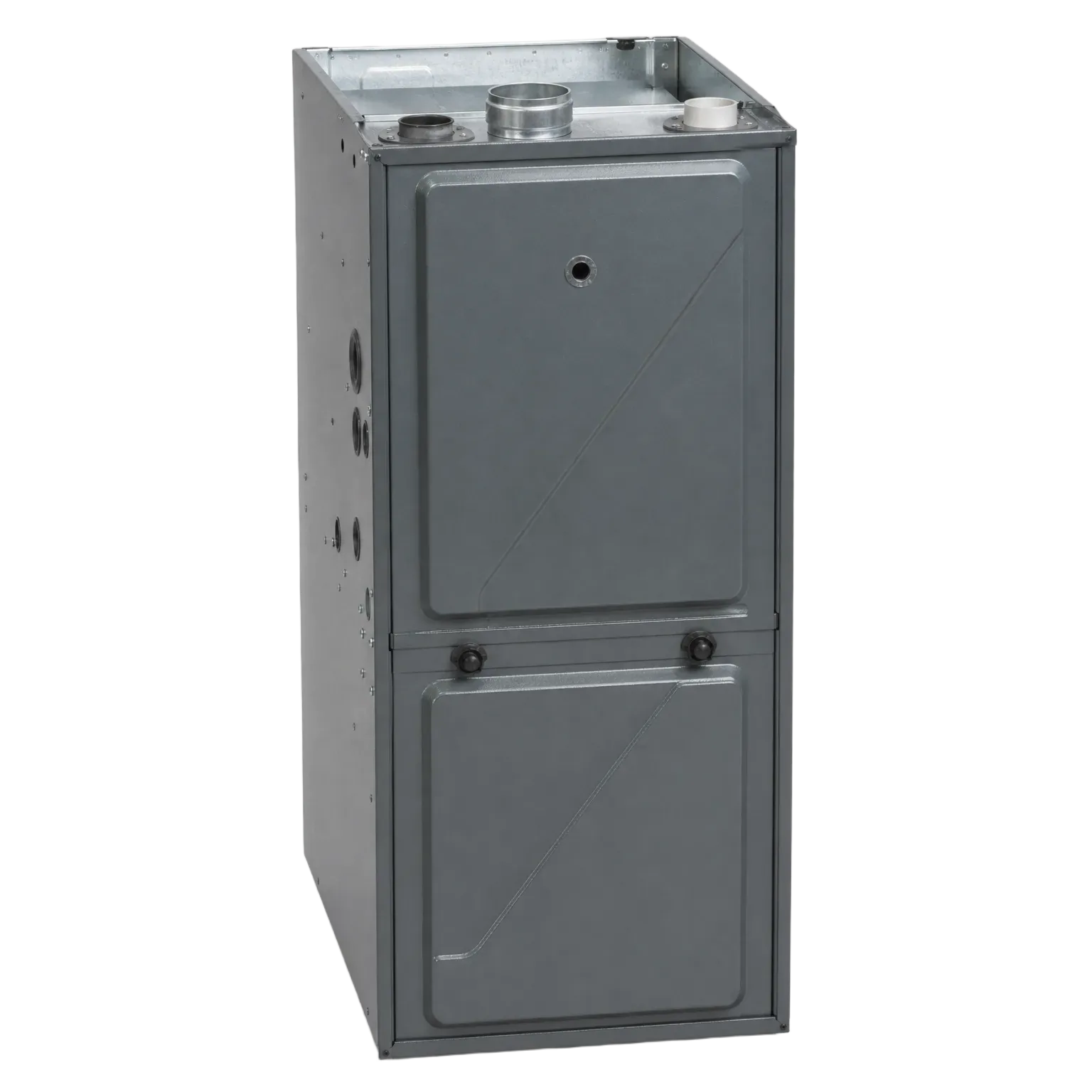
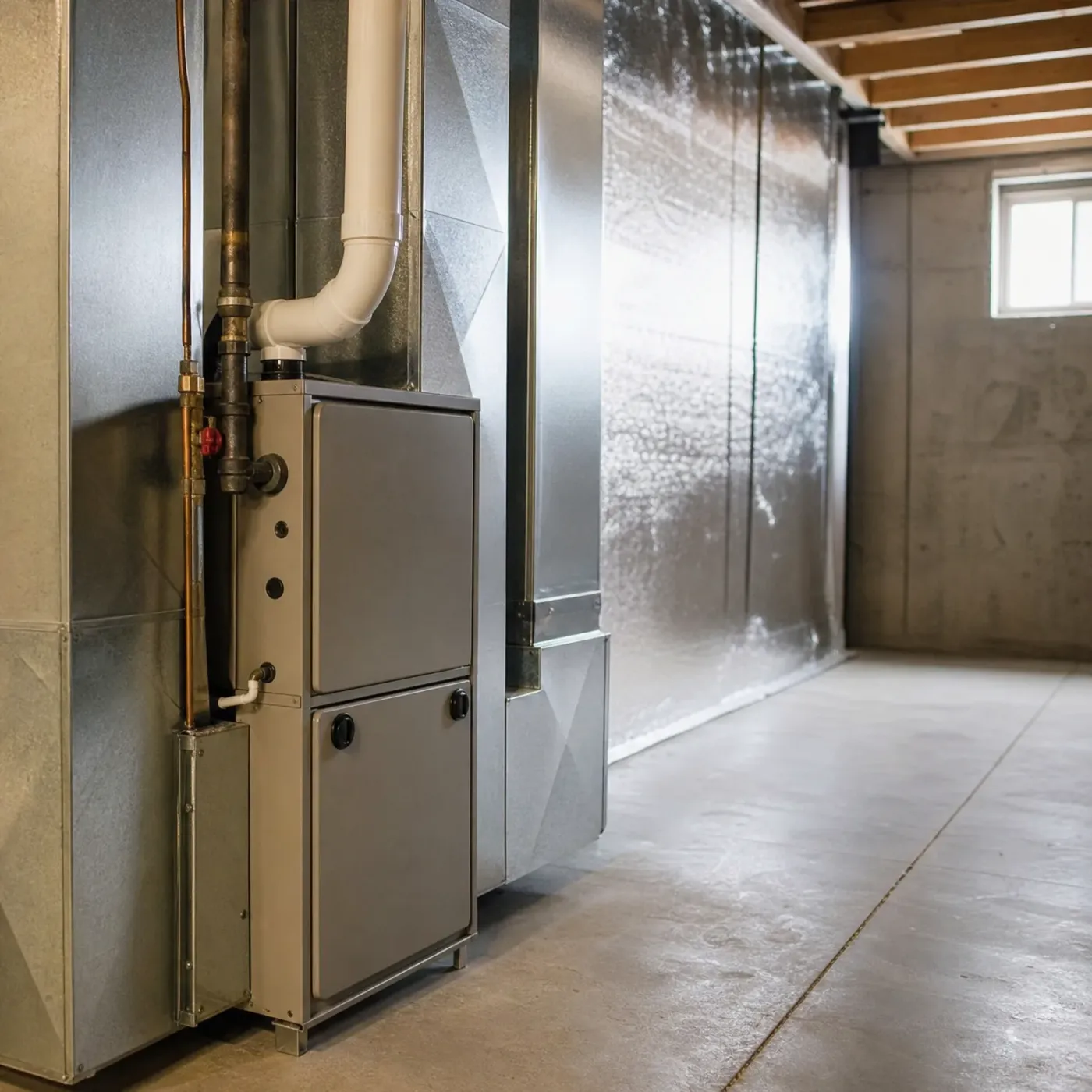
This is what a furnace looks like when the smell is nothing to worry about. The cabinet is sealed up, the flue runs straight out through PVC, and the gas line sits connected and still. Once the dust on the burners burns off, the air clears and stays clear.


A beige furnace with a louvered front panel and metal ductwork stands on a concrete basement floor beside pipes and a white cylindrical water heater.

Smell that keeps coming back

This is an older furnace worth a closer look. If the smell lingers past that first hour, or shows up every time the furnace runs, something inside is burning that shouldn't be. A cracked heat exchanger or a dirty burner needs a contractor to find it.

Call Now or Wait It Out

Call today

  • The smell gets checked and explained instead of guessed at from across the house.
  • A gas furnace throwing off a burning smell that doesn't fade can mean a cracked heat exchanger or a wiring problem near the blower motor.
  • You stop running searches, calling shops that don't answer, and repeating the same description of the smell to each one.
  • Once the form goes in, finding someone to look at it is off your plate for the evening.
  • A furnace that's leaking exhaust where it shouldn't isn't something to sit on through another cold night in Utah.
  • Whatever quotes or availability you'd have spent the night comparing gets sorted out instead of landing back on you.

Wait and watch

  • If the smell only showed up on the season's first run and faded within the hour, it was probably just dust on the burners.
  • Watching means running the furnace again tomorrow and paying attention to whether the smell comes back.
  • A smell that stays the same, faint and gone fast, is different from one that changes or gets stronger each time the furnace kicks on.
  • Waiting costs you nothing if the smell doesn't return, but it means living with the question until you're sure.
  • If it does come back, you're back to searching for a contractor, except now it's later and the furnace has run more cycles.
  1. Dust settled on the burners over the summer while the furnace sat idle.

  2. The burners fire and heat the dust until it scorches off.

  3. Hot metal in the heat exchanger bakes off dust and oils too.

  4. Smoke and odor pull into the return air and spread through the ducts.

A woman in a dark gray sweater reclines on a light sofa with eyes closed and a slight smile, under a textured gray blanket with an open book resting on her lap, with a lit table lamp and plant in the background.
A smiling bearded man in a navy crewneck sweater sits at a dinner table with a glass of red wine, plates and glasses in the foreground, in a dimly lit room with a lamp and framed picture behind him.

Done looking for a furnace pro

Describe your furnace job once, to one pro.

You're not committing to anything by asking.

Why a gas furnace burns dust first

A gas furnace in Utah sits unused from April through October, give or take, while the AC handles the dry heat outside. Dust settles straight onto the burners and the heat exchanger during those months. When the burners light again, that dust is the first thing to burn, and it burns at the surface of hot metal before any air even moves through the ducts. That's why the smell shows up fast, often within the first few minutes of the first cycle. It has nowhere else to come from yet. Once that layer is gone, there's nothing left on the burners to scorch, which is why the smell should drop off on its own well before the furnace finishes its first full cycle of the day.

What changes if it keeps going

If the smell is still there on the third or fourth cycle, it's not dust anymore. Dust burns off once and stays gone. A smell that returns every time the furnace kicks on points at something that reheats each cycle, like wiring insulation near the blower motor or a crack in the heat exchanger itself. Utah's gas utility rates are part of why most homes here run gas furnaces instead of electric heat, so a cracked heat exchanger is a bigger deal than it sounds: it's the part that keeps combustion gas separate from the air moving through your house. A furnace doesn't need to run long for that to matter.

Winter nights average 21°F statewide

At 21°F, your furnace is firing most of the night to hold the house steady, not just taking the chill off in the morning. That's a long stretch for a cracked heat exchanger or bad wiring to keep putting off smoke and odor into the air you're breathing.

NOAA nClimDiv 1991-2020 county normals weighted by homes

Where this leaves you

  • A burning smell that fades within the hour is dust burning off and nothing to fix.
  • A burning smell that lingers, returns, or changes to plastic or electrical points to a real problem.
  • A cracked heat exchanger or bad wiring near the blower motor won't clear up on its own.
  • Nights near 21°F mean the furnace runs for hours at a stretch, not just a short morning cycle.
  • A longer run time gives a damaged part more time to put smoke and odor into the air you breathe.
  • The smell itself won't tell you which one it is without someone looking at the furnace.

A furnace that smells like burning for an hour on that first cold night is doing what it's supposed to do. Dust sat on the burners all summer, and it clears out on its own. A smell that hangs around, comes back each cycle, or turns sharper, like plastic or something electrical, is a different situation. That points to a cracked heat exchanger or wiring near the blower motor, and neither one fixes itself. With nights dropping to 21°F, the furnace isn't cycling on and off for a few minutes at a time. It's running for hours to keep the house warm, and every one of those hours is more time for a damaged part to keep pushing smoke and odor into the air moving through your vents. You can tell how long the smell lasts and whether it's changing. What you can't do from across the room is tell which part is behind it. That takes someone who can open the cabinet and look. Instead of searching through contractors, calling a few, explaining the smell and the timing to each one, then sitting with quotes trying to compare them, you can send this once. From there, finding someone to look at the furnace is off your plate. You'll know where you stand once it's been looked at, rather than guessing at it from the smell alone.

A gray furnace with a white PVC vent pipe and copper piping stands beside large galvanized sheet-metal ducts in an unfinished basement with concrete floor, concrete walls, foil-faced insulation, and a small window.

It's off your list after this

Hand it off

Fill out one short form instead of calling around.

It costs nothing to send, and you don't have to hire anyone.