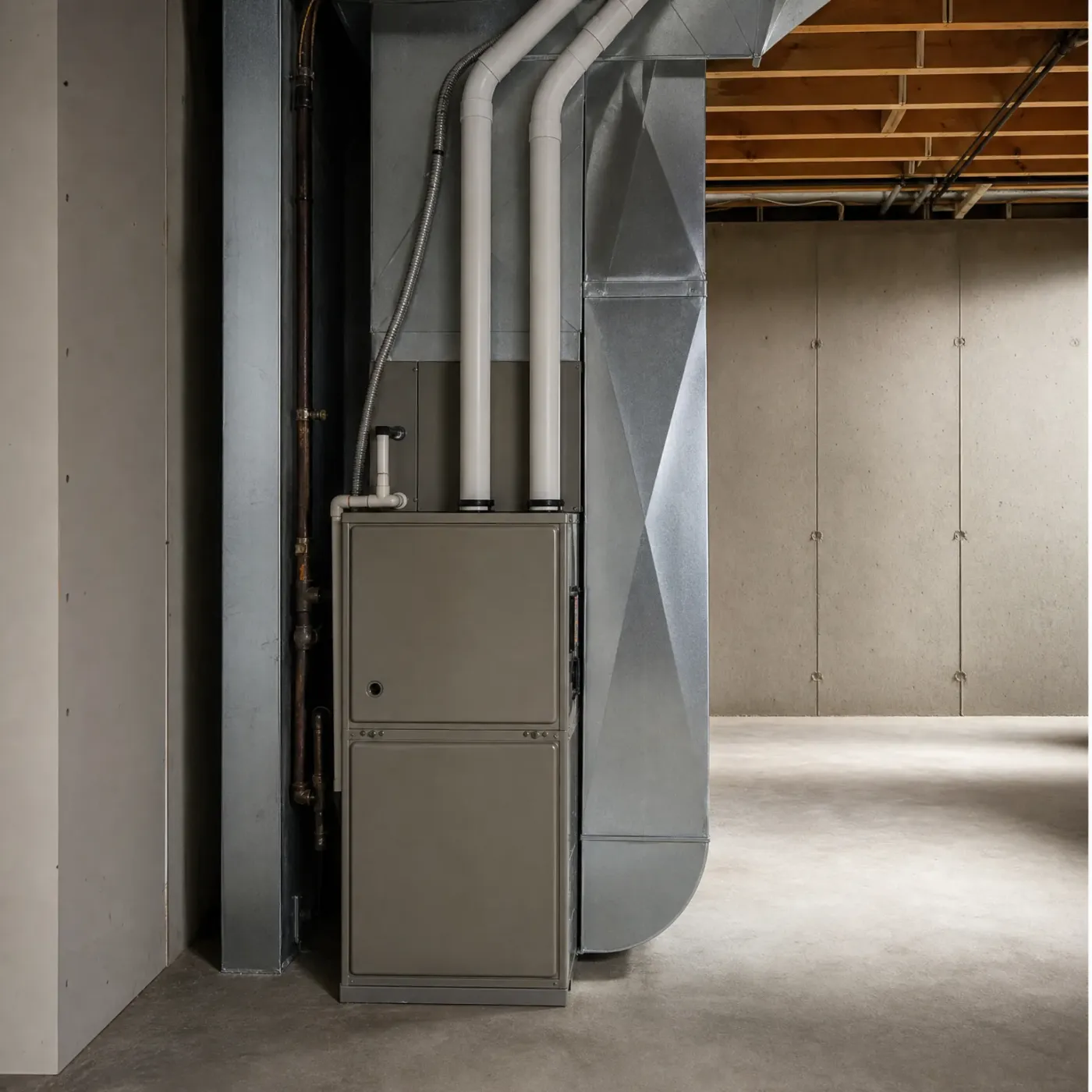
One rod, one job
The flame sensor only confirms fire is present. It does not light the burner or move heat through your ducts, so a dirty sensor can shut down an otherwise working furnace.

A flame sensor needs cleaning when the furnace starts shutting off a few seconds after it lights, or won't stay lit at all. The sensor is a thin metal rod near the burner that tells the furnace a flame is actually present. Over a season of use it builds up a layer of soot and oxidation, and once that coating gets thick enough the sensor can't read the flame anymore, so the furnace cuts the gas as a safety check even though it's burning fine. With gas heat running most days from about November through March here, that coating builds up steadily over the winter, and a furnace that fires up, runs briefly, then shuts off and tries again is usually telling you the sensor needs attention before the cold months are over, not a part that needs replacing yet.




The flame sensor only confirms fire is present. It does not light the burner or move heat through your ducts, so a dirty sensor can shut down an otherwise working furnace.
Most homes in Utah heat with gas, which means most furnaces here have a flame sensor doing this job all winter and building up residue the same way.
You turn the thermostat up, the burners light, and then the furnace quits a short while later. Maybe it tries again and quits again. Maybe the blower keeps pushing air that isn't warm anymore. Some furnaces will just stop firing altogether and leave you with a house that won't heat past a certain point. You might not see or smell anything unusual at the furnace itself, since this is the sensor failing to tell the control board what it needs to know, not a gas smell or a visible problem. Left alone through a Utah winter, this means more cold mornings and more short cycling, which asks more of the rest of the furnace than it should have to give.
Power and gas to the furnace get shut off first
The burner compartment panel comes off to expose the sensor
The flame sensor unscrews from its mounting bracket by the burner
Light grey residue gets wiped off with a fine abrasive pad


The sensor doesn't see flame the way you'd think. It reads a small electrical current, measured in microamps, that only flows when the rod is sitting in fire. A clean rod passes several microamps without trouble. As oxide builds up on the metal, that current drops, and the control board is checking it many times a second while the burners run. Once the reading falls below what the board needs, it cuts gas to the burner. That's the safety shutoff you're seeing when the furnace quits a few seconds after lighting. None of this means the sensor is bad. The grey coating is just residue from combustion, the same fire that heats your house, settling on the rod cycle after cycle. Wiping it off exposes bare metal again, and the current reads fine once it does. A furnace that's been running fine for months can start doing this with no other change, because the buildup is gradual and the shutoff happens the moment the signal crosses that line.


Only one pro gets your request, so you hear from one company.
There's no charge for the request.
If you can get to the burner compartment safely, pulling the sensor and going over it with a fine abrasive pad is something a lot of homeowners handle on their own. It takes a few minutes once the panel is off. The risk is in what you don't see: a sensor that looks clean but is cracked, a mounting bracket bent out of position, or a different problem entirely, like a dirty flame or a venting issue, causing the same shutoff pattern you blamed on the sensor.
A technician who works on furnaces all winter in Utah has pulled hundreds of sensors and knows what a coated one looks like versus one that needs replacing outright. They'll also check whether the shutoffs are coming from the sensor at all, since a weak igniter or a blocked vent can cause the same symptom. If something else is going on, it gets caught during the same visit instead of after another cold morning without heat.
Almost 4 in 5 Utah homes run on gas heat, so that flame sensor by the burner is doing its job in most houses on your street, not just yours. With a furnace firing up every cold morning from fall through spring, the sensor sees a lot of flame, and a lot of chances to pick up residue.
ACS 2020-2024 5-year B25040
A furnace that lights and quits within seconds is usually telling you one thing: the flame sensor can't read the flame anymore. Not a cracked heat exchanger, not a failing control board. A coated rod. That's good news, because the fix is a few minutes of work on one small part, not a repair that eats into your week or your budget.
Every winter morning your furnace fires, that rod sits in the flame and collects a little more residue. By the time your furnace has run from fall through spring, it's carrying a season's worth of buildup, and that's usually when the short-cycling starts. It's a predictable pattern, and a contractor who works on gas furnaces all winter in Utah has seen it enough times to check the sensor before anything else.
When you get matched through this page, it's with one licensed local contractor, not a handful of companies competing for your callback. That matters when you're describing a furnace that quits a few seconds after it lights. You're talking to someone who services this exact equipment through the exact season that causes the problem, not a dispatcher reading from a script.
Once that rod is cleaned and reads a steady flame again, the furnace should light, hold, and run through its full cycle the way it did before the buildup started.