A row of illuminated timber-frame and stone houses photographed at dusk, with evergreen trees and a mountain range in the background.

Heat Pump Repair in Richfield, UT

Tell us about the job

Takes about a minute. No obligation.

RepairHeat PumpSevier County, UT
Step 1 of 2

What ZIP code is the job in?

Cold nights, not extreme ones

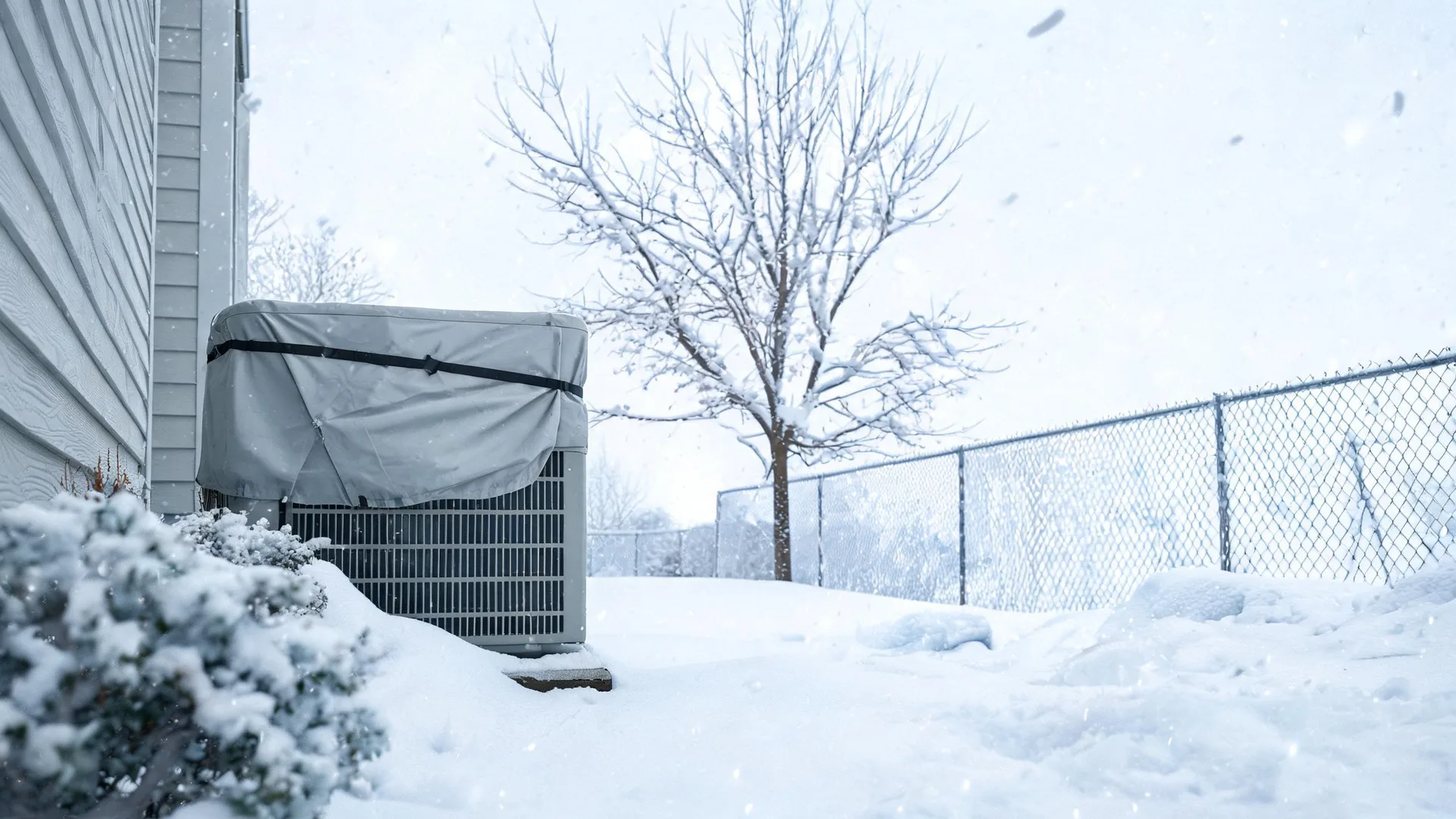
Richfield winters average 17°F overnight through December, January and February. A heat pump works harder below freezing, but that's a steady, predictable cold, not the deep sub-zero stretches that wear out a compressor fast.


So age and upkeep explain most failures

When the climate isn't pushing a heat pump past its limits, a breakdown is usually about a part wearing out or maintenance that got skipped, not the system being overmatched. That's the kind of problem a repair fixes for good.

10 months
September through June, your system heats
1 months
July through July, it cools
17°F
the average winter night it heats against
78°F
the average summer afternoon it cools against
Isometric cutaway illustration of a house showing attic ductwork, an indoor air handler, furnished rooms, and an outdoor condenser unit connected by lines along the exterior wall.
Your system heats September through June and cools July through July.

NOAA nClimDiv, 1991–2020 normals

August is the only month a heat pump here gets to rest.

September puts it back to work every day, and a weak part that got by in summer shows itself fast.

Richfield doesn't push a heat pump any harder than normal, so the usual fix is probably the right one

Power costs 12.22 cents a kWh statewide
34 damaging wind events from 2015 to 2024
31 winter storms from 2015 to 2024

Half the homes in Sevier County were built in 1977 or earlier, half in 1977 or later. Either way, the house's age doesn't tell you much about the heat pump inside it. The system there now isn't necessarily the one the house was built with. It's whatever got installed or replaced since, so its condition comes down to how many years it's run and how it's been kept up, not the age of the walls around it. A heat pump that's had regular filter changes and coil cleanings can outlast one that hasn't, no matter which decade the house went up. If yours is acting up, the more useful question is when it was last serviced, not when the house was built.

Worth fixing, not replacing, in most cases

A fixable problem is still waiting on a call to get fixed. Since the strain on the system here is ordinary, a repair tech looking at yours is more likely finding a worn part or overdue maintenance than a system that's been pushed past what it can handle. That's a straightforward job for someone who works on these every day.

Find a contractor
A man in a dark long-sleeve shirt and tan work pants, seen from behind, carries a canvas tool bag up porch steps toward a dark blue front door, with a potted plant beside him.
A gray heat pump outdoor unit mounted on a concrete pad next to a residential house with lap siding and stone accents.

What actually wears out

Most heat pump failures start with the outdoor unit. The coil out there collects dirt, dust and leaves since it's sitting outside year round, and when it gets caked, the system can't pull heat from the air the way it should. The compressor ends up working harder to make up for it, and that's what eventually burns it out. A dirty filter causes the same kind of strain from the inside, choking off airflow until the whole system is straining to do a job that should be easy. Capacitors and contactors wear out too, just from years of starting and stopping the compressor and fan motors. None of that is about one bad winter. It's what happens to any machine that runs most days of the year without someone checking the parts that wear.

A small problem rarely stays small

A weak capacitor still starts the compressor most days, just slower and hotter than it should. Run it like that for weeks and the compressor windings take the damage instead, and windings don't get repaired. The whole outdoor unit gets replaced when they fail.

Ice is a symptom, not the problem

A heat pump low on refrigerant or starved for airflow will frost up its outdoor coil. Keep running it and that ice just builds, blocking the coil further and forcing the system to work against itself instead of heating the house.

A heat pump that needs a repair usually tells you before it quits outright. It might blow air that isn't as warm as it used to be, or run long stretches without ever seeming to catch up. You might hear it cycling on and off more than it used to, short bursts instead of a steady run. A hissing or bubbling sound from the lines points to refrigerant escaping somewhere it shouldn't. A grinding or squealing from the outdoor unit usually means a motor bearing is going. If the outdoor coil has ice on it outside of a normal defrost cycle, something's already wrong, whether that's airflow or refrigerant. None of these mean the system is done. They mean something specific is failing, and it's worth having someone look before it takes the compressor down with it.

The question is whether the compressor is still good. A heat pump is really a compressor with parts built around it, and everything else on that list gets replaced without much drama. A capacitor, a contactor, a fan motor, these fail on their own schedule and a repair just swaps in a new one. The compressor is different. It doesn't get rebuilt when it fails, the whole outdoor unit does, and that's a different kind of bill than fixing what broke. So when a tech is deciding which way to point you, they're really asking how the compressor sounds and runs, not just what part quit this time. If it's pulling hard, running hot, or tripping off on its own protection, that's the piece that matters more than whatever else needs fixing alongside it.