





An outdoor heat pump unit mounted on a concrete pad in front of a two-story suburban house with a landscaped lawn.

Heat Pump Repair in Layton, UT

Tell us about the job

Takes about a minute. No obligation.

RepairHeat PumpDavis County, UT
Step 1 of 2

What ZIP code is the job in?

Your heat pump isn't fighting extreme heat here. Overnight lows average 22°F across December, January and February, cold but not the kind of hard freeze that keeps a system running nonstop. Winter storms have hit Davis County 48 times over the past ten years, but that's weather passing through, not a long season of strain. A heat pump that isn't working overtime year after year tends to hold up well. So when one here starts acting up, it's rarely because the system has been run into the ground. More often something specific has failed, a contactor or a capacitor or a sensor reading wrong, and that kind of problem is usually worth fixing.

8 months
October through May, your system heats
3 months
June through August, it cools
22°F
the average winter night it heats against
84°F
the average summer afternoon it cools against
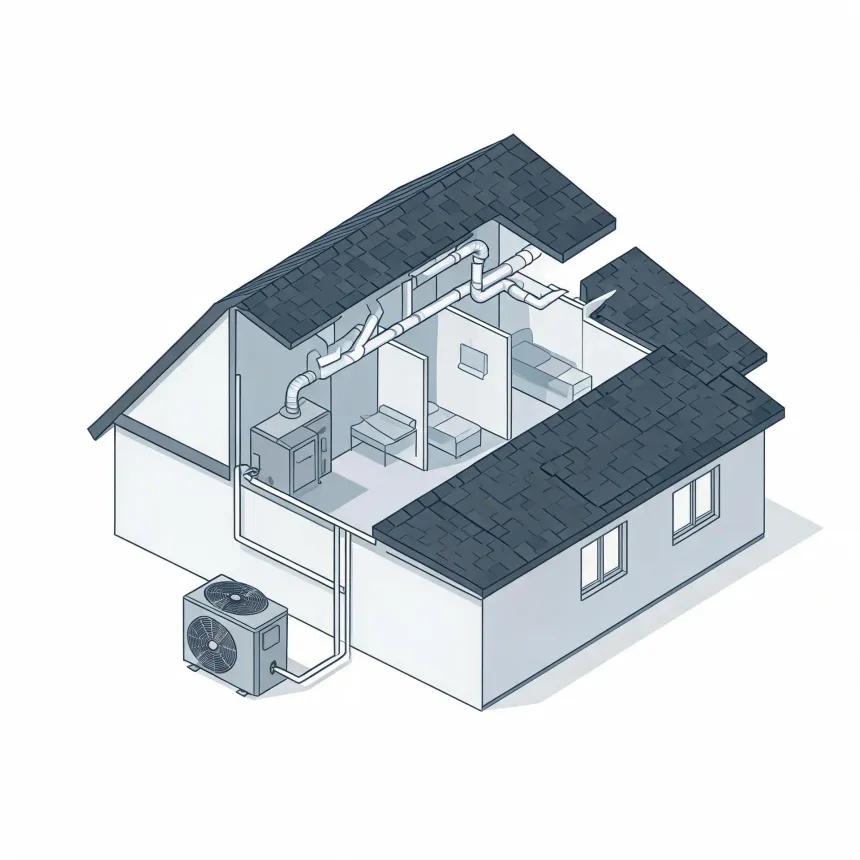
Isometric line illustration of a cutaway single-story house showing interior ductwork, an indoor air handler unit, and an outdoor condenser connected by refrigerant lines, with a dark shingled roof.
Your system heats October through May and cools June through August.

NOAA nClimDiv, 1991–2020 normals

Half the homes in Davis County were built in 1993 or later.

A heat pump that came with a newer house still has years in it, worth a repair call before anything else.

Layton doesn't put extra strain on a heat pump

Power costs 12.22 cents a kWh statewide
59 damaging wind events from 2015 to 2024
9 hail events from 2015 to 2024

Heat pumps here switch over to heating in October, and September is when it's worth a look if yours has been acting off. A part that's been marginal all summer often gives out in the first cold snap, not before. Same thing happens in June when cooling starts up again after sitting idle since September. The jump in load finds the weak spot. If your heat pump is short cycling or blowing air that isn't warm enough right as the switch happens, that's not a coincidence, that's the part that was already failing finally getting tested.

A newer system is a system worth repairing

Get the repair looked at before you consider anything bigger. A system that came with a newer house has years of working life built in, and a failed part doesn't change that math.

Find a contractor
A man in a cap, gray long-sleeve shirt and tan work pants carries a worn canvas tool bag up porch steps toward a dark gray front door beside a potted shrub.
A white mini-split heat pump outdoor unit mounted on a concrete pad beside a gray-sided house, surrounded by gravel and green shrubs.

What actually wears out, and why

A heat pump wears out the same handful of ways no matter where it sits. The run capacitor loses its charge over years of starting and stopping the compressor, and once it's weak the motor strains on every start until it stops catching at all. Contacts inside the contactor pit and burn from years of arcing each time it closes, until the connection gets too poor to pass power. The defrost board or its sensor can read the coil wrong, so the system either never defrosts when it should or runs the defrost cycle when it doesn't need to, and either way ice builds somewhere it shouldn't. Fan motors wear out in the bearings and start sounding rough before they quit outright. None of these are about one hard season. They're about a part reaching the end of what it had, and that happens on its own schedule.

Check the thermostat first

Make sure it's set to heat, not cool, and set below room temperature so it's actually calling. Check the batteries if it has a screen that's dim or blank. A heat pump that seems dead is sometimes just a thermostat that lost its setting or stopped talking to the system.
Look at the outdoor unit

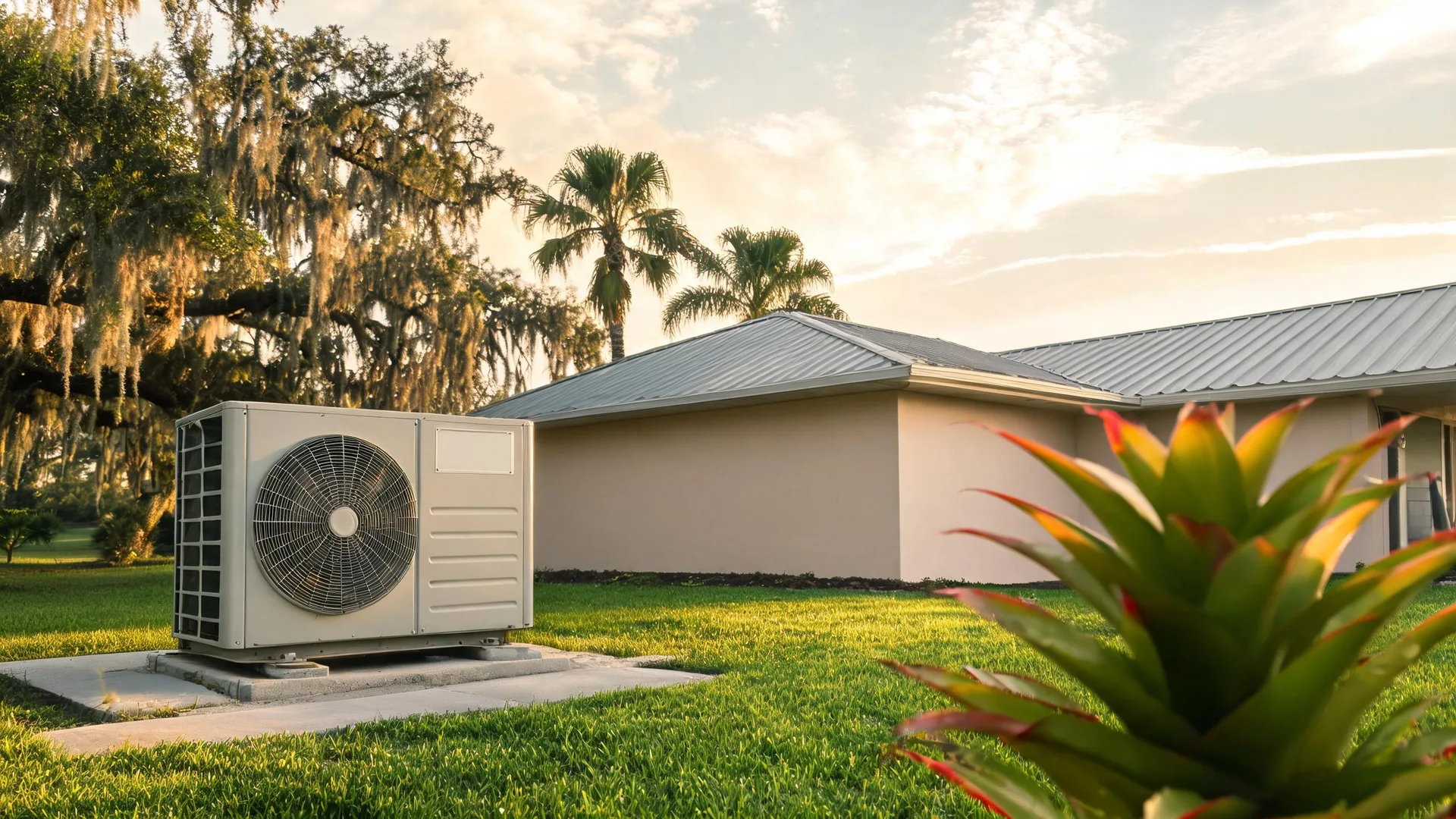
Walk outside and see if the outdoor unit is running at all, and if it's caked in ice beyond a thin frost. Clear away leaves, grass clippings or anything piled against it so air can move through. Check that the breaker for it hasn't tripped. If the indoor side runs but the outdoor unit sits silent, that's worth telling the tech before they arrive.

A heat pump that's struggling doesn't fail cleanly, it fails slower while you watch. A weak capacitor still starts the compressor most of the time, just with more strain on the motor windings each time it does, until one start doesn't take. A refrigerant leak doesn't empty the system in one shot, it runs low, the compressor works harder to move what's left, and the parts around it heat up more than they're built for. Ice on the outdoor coil is the same story. A little frost is normal, but if the defrost cycle isn't clearing it, that ice keeps building, blocks airflow further, and makes the system run longer to do less. None of that resets itself by waiting. The part that's struggling now is the part doing the damage, and it's doing it every cycle until someone replaces it.

Repair and replacement is really a question about one part, not the whole system. A reversing valve stuck in one position is a single part failing, and a heat pump otherwise running fine is worth fixing at that point, not replacing. Age matters less than what's actually gone wrong. A compressor that's failed outright is a different conversation, since that's the most expensive part in the system and it's the one part a tech can't just swap in an afternoon. Everything else, a contactor, a capacitor, a fan motor, a blower wheel, a bad sensor, gets replaced on its own without touching the rest of the system. So the real question isn't how old the unit is, it's whether what failed is a part or the compressor itself, and whether the rest of the system around it is still sound.