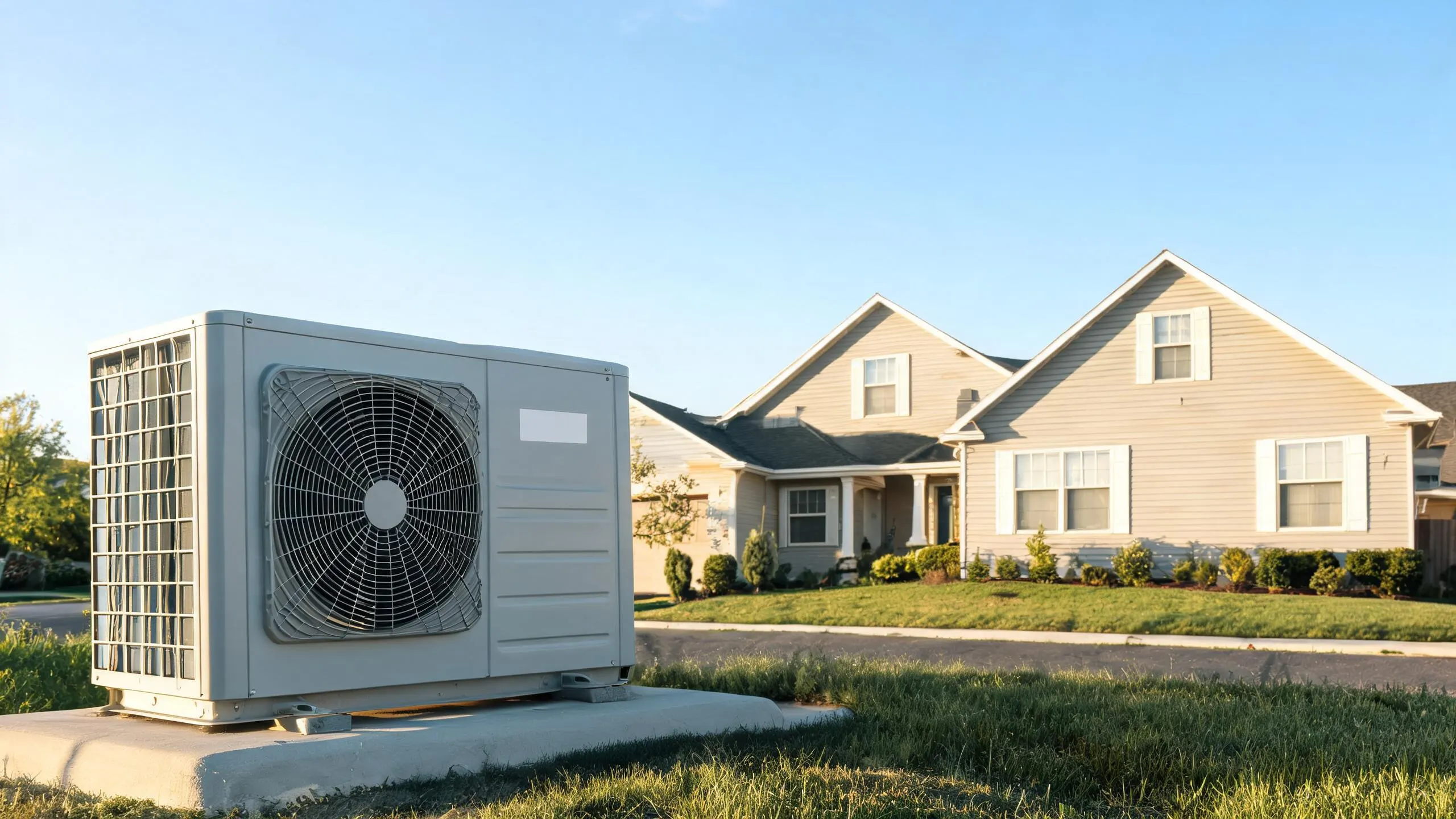

An outdoor heat pump unit mounted on a concrete pad in front of a two-story suburban house.

Heat Pump Repair in Blanding, UT

Tell us about the job

Takes about a minute. No obligation.

RepairHeat PumpSan Juan County, UT
Step 1 of 2

What ZIP code is the job in?

Winter nights here average 23°F, and your heat pump has to work harder to pull warmth out of air that cold. That's normal for the equipment, not a sign anything is wrong with it. Blanding doesn't see the hail or storm activity that wears down outdoor units faster in other parts of the state, so if your system is struggling, it's probably not the weather causing it. More likely it's a failing component, low refrigerant, or a thermostat that's not reading right. A tech who services heat pumps regularly can usually spot the cause quickly and tell you whether it's worth repairing.

8 months
October through May, your system heats
3 months
June through August, it cools
23°F
the average winter night it heats against
89°F
the average summer afternoon it cools against
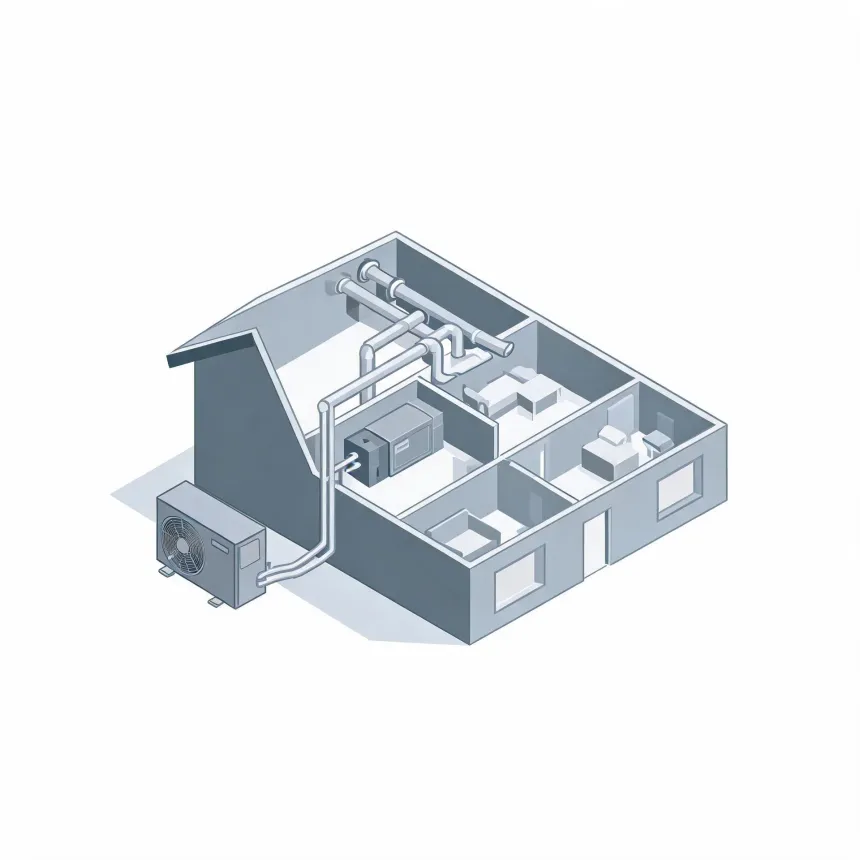
Isometric grayscale illustration of a cutaway house showing interior rooms, ducted air handler and duct runs, connected by pipes to an outdoor condenser unit beside the building.
Your system heats October through May and cools June through August.

NOAA nClimDiv, 1991–2020 normals

Heat here starts in October, right after a September that asks nothing of the system.

The first cold snap finds whatever was already wearing thin.

Half the homes in San Juan County were built in 1986 or later, so there's a good chance yours is one of them. A heat pump that age, if it's the original one, still has working life in it. Mobile homes make up close to a fifth of the housing here, and if that's your setup, the heat pump itself works the same way as any other. Age alone isn't a reason to replace it. If it's kept up and the parts are sound, repair is usually the better call.

Get the usual fix

Nothing about this area is especially hard on it. It's most likely the usual problem with the usual fix.

Find a contractor
A man in a cap, dark shirt and brown work pants walks up stone steps toward a gray front door, carrying a canvas tool bag in his right hand, with a potted plant beside the porch.
A gray heat pump outdoor unit mounted on a concrete pad next to a residential house with lap siding and stone accents.

It runs every season, so it wears differently than other equipment

A heat pump runs both sides of the year, so the parts that wear are the ones that never get a season off. The reversing valve shifts every time the system switches between heat and cool, and over many cycles that's where a stuck or leaking valve shows up. The outdoor fan motor and compressor run longer hours than in a straight air conditioner, since the unit is heating as well as cooling. Contactors pit from constant cycling. Capacitors weaken and lose their charge over time. A defrost sensor or control board can fail after years of reading outdoor temperature and triggering defrost cycles. None of that is a defect. It's just what running year round does to a machine.

A failing part doesn't fail cleanly

A weak capacitor still starts the compressor some mornings and not others. A low refrigerant charge still lets the system blow air, just not enough to catch up on a cold day. Because the heat pump keeps limping along, it's easy to assume it's working fine. Underneath, the compressor is drawing harder to make up for what the failing part isn't giving it.
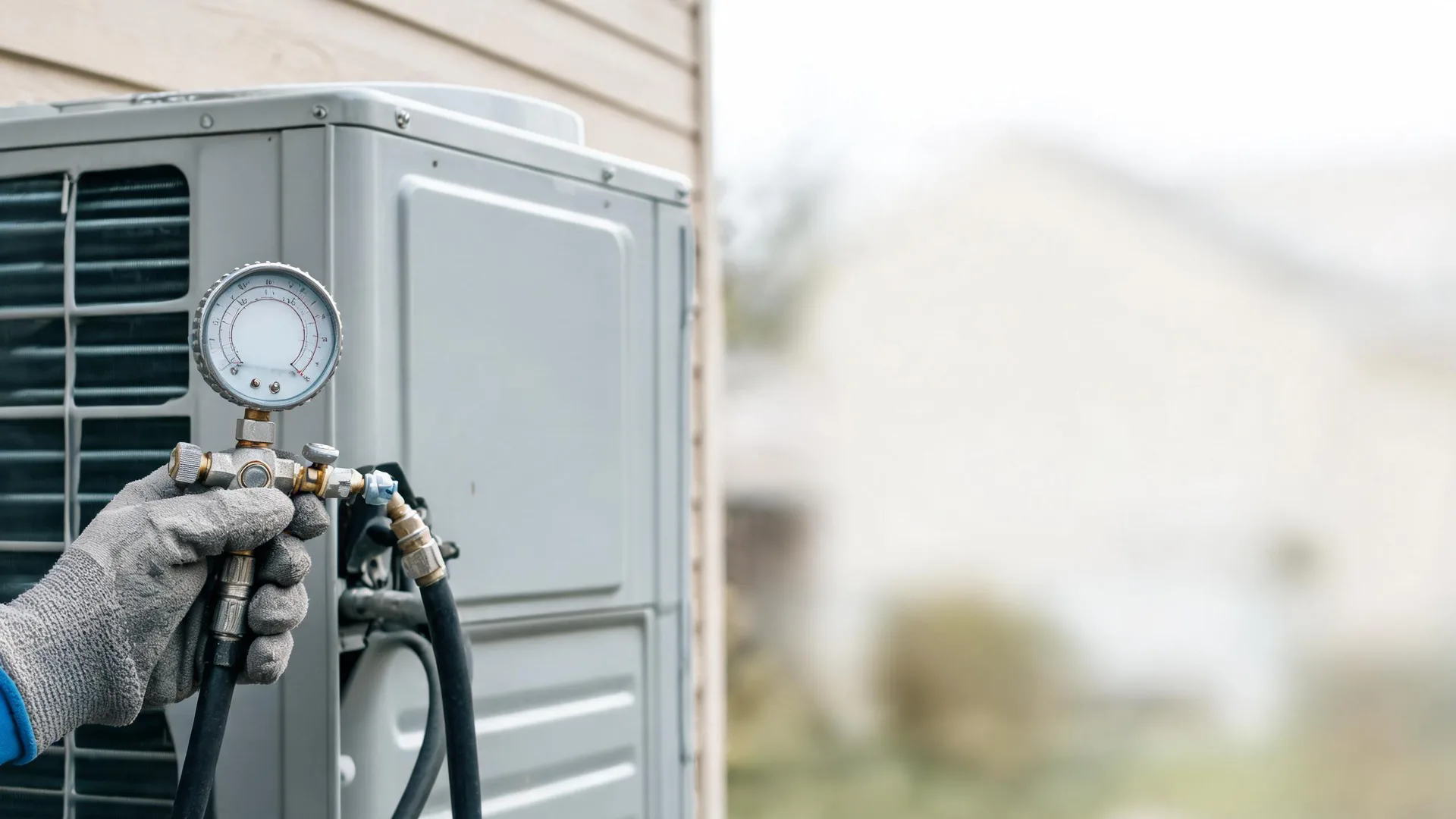
The compressor pays for everything else

Every part upstream of the compressor protects it. Low refrigerant makes it run hotter. A stuck reversing valve can make it work against itself. A bad capacitor makes it strain on every start. The compressor has no idea any of that is happening. It just keeps running under the bad conditions, and it's the one part in the system that can't be swapped out on its own without major work.

Before you call anyone, check the thermostat first. Make sure it's set to heat and the set temperature is actually above room temperature, not just sitting where someone bumped it. Go outside and look at the unit. If the outdoor coil is caked in ice or buried in snow, that's worth noting, but don't chip at it or spray it. Check that the outdoor unit isn't boxed in by anything blocking airflow around it. Inside, pull the air filter and hold it up to a light. If you can't see through it, that alone can choke the system enough to look like a bigger problem. Check your breaker panel for a tripped breaker on the heat pump circuit. None of this fixes a bad reversing valve or a low charge, but it rules out the simple stuff before a tech has to.

Repair makes sense as long as the compressor is still sound and the cabinet isn't rusted through. Most of what fails on a heat pump, a contactor, a capacitor, a sensor, a reversing valve, gets swapped out on its own without touching anything else. That keeps repair cheap relative to replacement even on an older unit. What changes the math is when a part fails and takes something else down with it, or when the same complaint keeps coming back after it's supposedly fixed. A system that's been limping along for a while, drawing hard to make up for a bad part, puts more wear on the compressor every day it keeps running that way. At some point a tech looking at the unit can tell you whether you're fixing a part or just delaying the same breakdown. That's worth asking them directly instead of guessing.