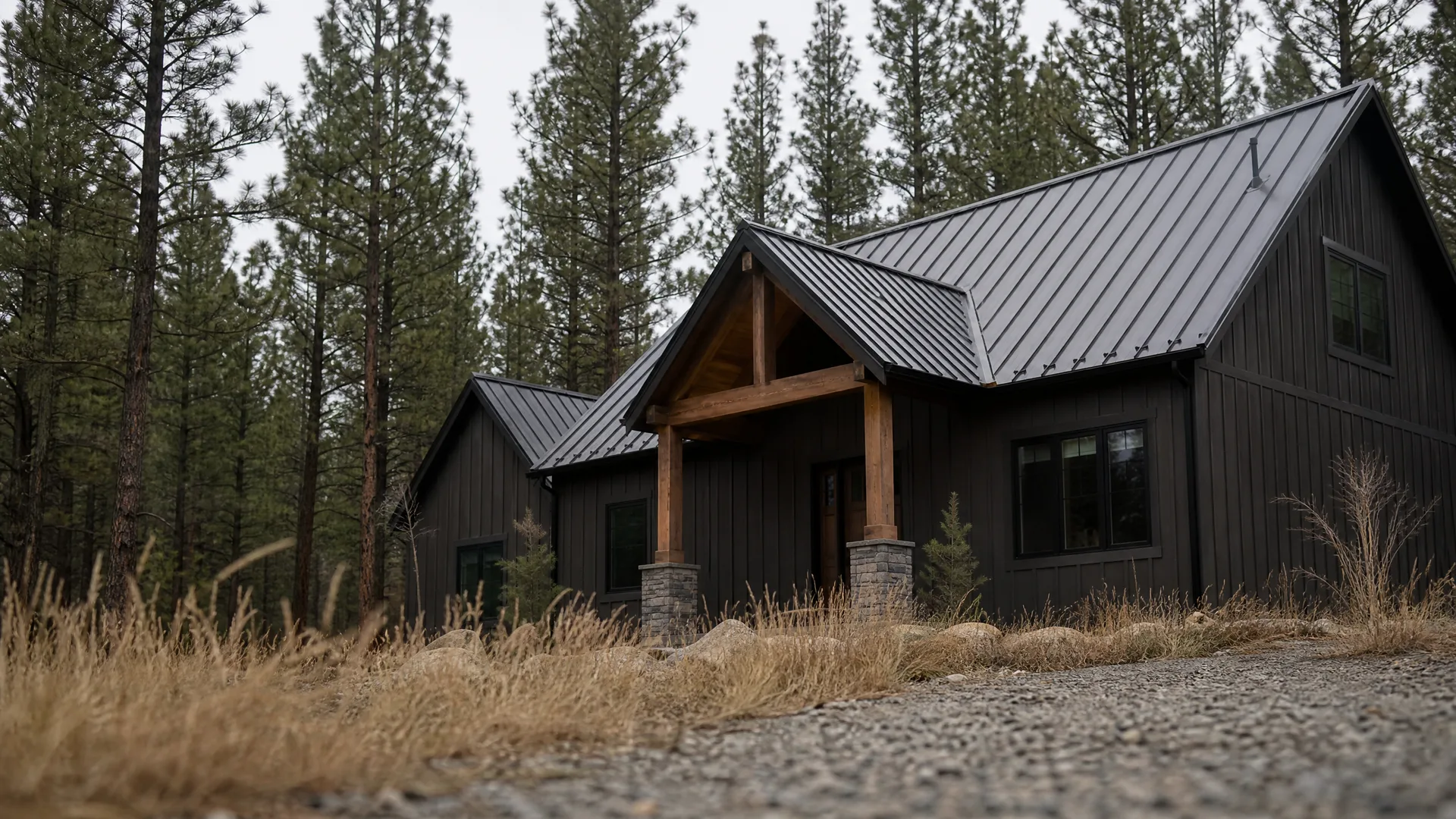


A dark-painted board-and-batten house with a standing-seam metal roof, timber entry porch and stone column bases, set among pine trees behind dry grass and a gravel drive.

Furnace Repair in St. George, UT

Tell us about the job

Takes about a minute. No obligation.

RepairFurnace or heatingWashington County, UT
Step 1 of 2

What ZIP code is the job in?

A tech starts by asking what the furnace is doing, or not doing, before touching anything. Short cycling, no heat at all, a burner that won't stay lit, a blower that runs cold. That answer points to a handful of likely causes before the panels even come off. From there it's a look at the flame itself, the igniter or pilot, the flame sensor, and the pressure switch, since most no-heat calls trace back to one of those. A dirty flame sensor can shut a furnace down just as fast as a cracked heat exchanger, and the only way to tell them apart is to check both. The tech will also pull the filter and look at the ductwork near the unit, because airflow problems make a furnace overheat and shut itself off as a safety measure. By the end you should know exactly what failed, why, and whether it's a quick fix or a sign the furnace is nearing the end of its life.

8 months
October through May, your furnace is on duty
28°F
the average winter night it heats against
58%
of homes here heat with gas, so most furnaces here burn gas
40 winter storms
in ten years, the nights a failure hurts most
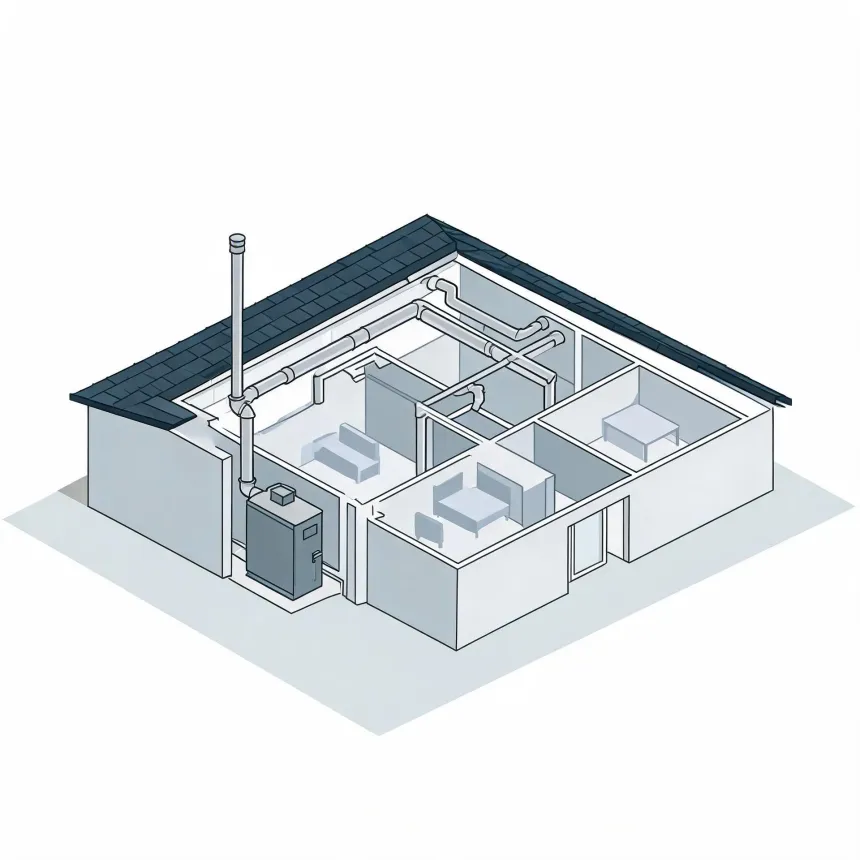
Isometric line illustration of a cutaway single-story house showing interior rooms with furniture, ceiling ductwork, and an exterior furnace unit with a tall flue pipe.
Your furnace works hardest from November through March.

NOAA nClimDiv, 1991–2020 normals

A furnace that shuts off on a safety switch is doing what it's built to do.

Keep restarting it past that point and the overheated heat exchanger or blower motor underneath takes the damage instead.

Half the furnaces in Washington County are young enough to fix, not replace

Half the homes here were built by 2003
Heat runs October through May
Winter nights average 28°F

If your furnace came with a newer build here, get it checked rather than replaced. A cracked heat exchanger on a furnace that old is uncommon, and most no-heat calls come down to an igniter, a flame sensor, or a pressure switch, all of which are straightforward swaps. Replacement makes sense when a furnace is old and worn out, not when it's a few years in and tripped a safety switch. Have a tech confirm what actually failed before you spend money on a new unit.

Repair it

If your system came with a newer house, it likely has plenty of life left. Repair is usually the right call.

Find a contractor
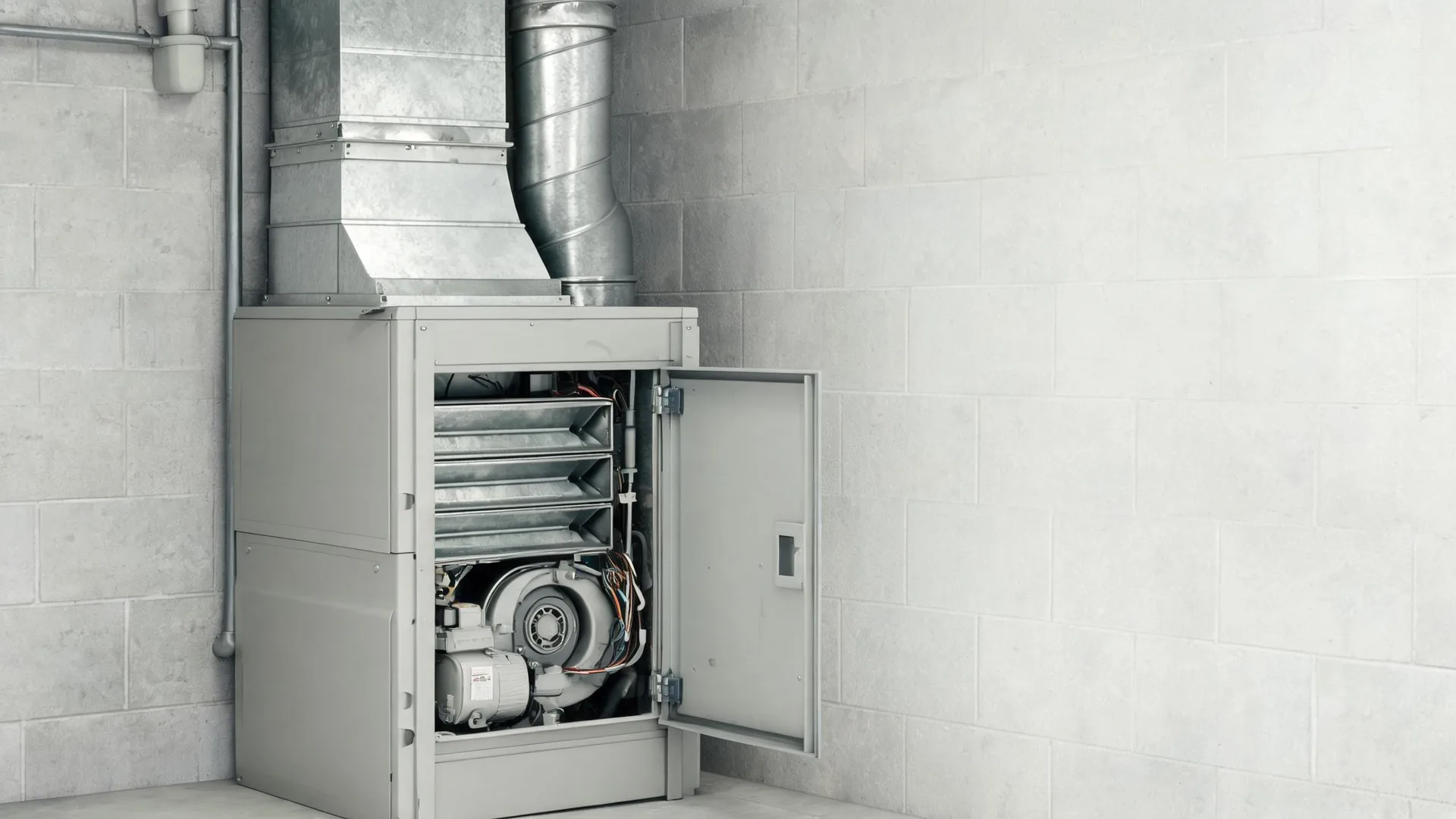
A gray residential gas furnace installed in an unfinished basement, surrounded by ductwork, a metal flue pipe, and a gas supply line.

Years of cycling wear specific parts, not the whole machine

A furnace that's run for years gives you warning before it quits outright. The warm-up gets longer. The blower kicks on and off more than it used to. You start hearing a tick or a rattle that wasn't there before, usually from the blower wheel or a loose panel. None of that means it's done. It means something inside is wearing the way parts wear, and it's worth a look before the night it doesn't come on at all. A furnace that fails cold, with no warning and no noise first, usually has an electrical fault. A cracked igniter. A flame sensor coated in buildup. A control board that finally gave out. Those don't announce themselves. They just stop working.

Check the thermostat and the power first

Make sure the thermostat is set to heat and the set point is above room temperature, and check for a dead battery if it has one. Then check the furnace switch, the one that looks like a light switch near the unit, and the breaker it runs on. A furnace that seems dead is sometimes just unplugged from its power source, not broken.

A dirty filter is worth ruling out yourself

Pull the filter and hold it up to a light. If you can't see light through it, it's choking off airflow, and a furnace starved for air will overheat and shut itself down on a safety switch. Swapping a filter is something any homeowner can do. If the furnace runs fine afterward, that was the whole problem. If it still won't stay on, the filter wasn't it, and it's time to call someone.

A bare concrete basement containing a gray gas furnace with metal ductwork and a vertical flue pipe, lit by a single hanging bulb.

A new furnace would cut about $80 a year off heating for a typical Washington County home.

  • A new high-efficiency furnace$310 a year
  • An older furnace$390 a year

Estimates for a typical Washington County home, compared with an older unit built to the previous federal minimum, from EIA household energy data, Utah fuel prices and NOAA climate normals. Your home will differ.

Repair makes sense when one part has failed and the heat exchanger is sound.

Replacement makes sense when the heat exchanger is cracked or the furnace keeps needing parts.

A tech weighing repair against replacement isn't just looking at what broke. They're looking at what else is likely to break next. When one part fails on its own and everything else looks sound, that's a repair, plain and simple. When a tech opens the cabinet and finds rust along the heat exchanger, a blower motor that's already seized once, and a control board that's been patched before, that's a different conversation. No single part there is unfixable. It's that fixing one just means the next one is due soon after. A furnace that's only ever needed one thing fixed in its life is worth fixing again. One that keeps needing something new every season is telling you where this is headed.