Eight months of heat
Furnaces here run from October through May, with overnight lows averaging 22°F in December, January and February. That is most of the year spent cycling on and off, night after night, to keep a house warm.
Takes about a minute. No obligation.
Furnaces here run from October through May, with overnight lows averaging 22°F in December, January and February. That is most of the year spent cycling on and off, night after night, to keep a house warm.
Salt Lake County saw 91 winter storms, heavy snow, ice and blizzards, between 2015 and 2024. Each one means the furnace runs longer to cover the gap, and that kind of strain is usually what is behind a breakdown.
NOAA nClimDiv, 1991–2020 normals
Furnaces in Salt Lake County start their run in October.
A furnace that sat idle since September often shows its weak point in the first cold weeks of the season.
If the furnace is the one that came with the house, check the year it was built against the year the system was installed. A furnace put in when a newer home was built still has most of its working life ahead of it. That changes what a cracked igniter or a bad flame sensor means. On a system that age, it's a part failing on its own schedule, not a sign the whole unit is near the end. Fixing it is the straightforward call, and there's no reason to weigh it against replacement unless a technician finds something else wrong while they're in there.
Half the homes in Salt Lake County were built in 1986 or later. If your furnace came with a newer house, it's probably not at the end of its working life. The wear a hard winter puts on it is usually something a repair fixes.
Find a contractorWatch this furnace through a full day here and you'll see it cycle on well before dawn, when that 22°F overnight low is doing its work, and keep cycling long after dark. Eight months of that each year adds up to a lot of starts and stops on the same igniter and the same flame sensor. When one of those finally gives out, it's rarely a surprise to a technician who knows what a Salt Lake County winter asks of a furnace. Get the actual part diagnosed instead of guessing, and the repair holds.
A furnace that turns on and off in quick bursts instead of running a full cycle is usually fighting a dirty flame sensor or a clogged filter choking the airflow. One that won't fire at all often comes down to a cracked igniter. Either way, the furnace is telling you which part failed before anyone opens it up.
A bang at startup, a grinding from the blower, or a burning smell that doesn't fade after the first few minutes of the season are worth calling in. These are the furnace showing its wear before it fails outright, and catching them early is usually a simpler repair than waiting for a breakdown.
Estimates for a typical Salt Lake County home, compared with an older unit built to the previous federal minimum, from EIA household energy data, Utah fuel prices and NOAA climate normals. Your home will differ.
Repair makes sense when one part has failed and the heat exchanger is sound.
Replacement makes sense when the heat exchanger is cracked or the furnace keeps needing parts.
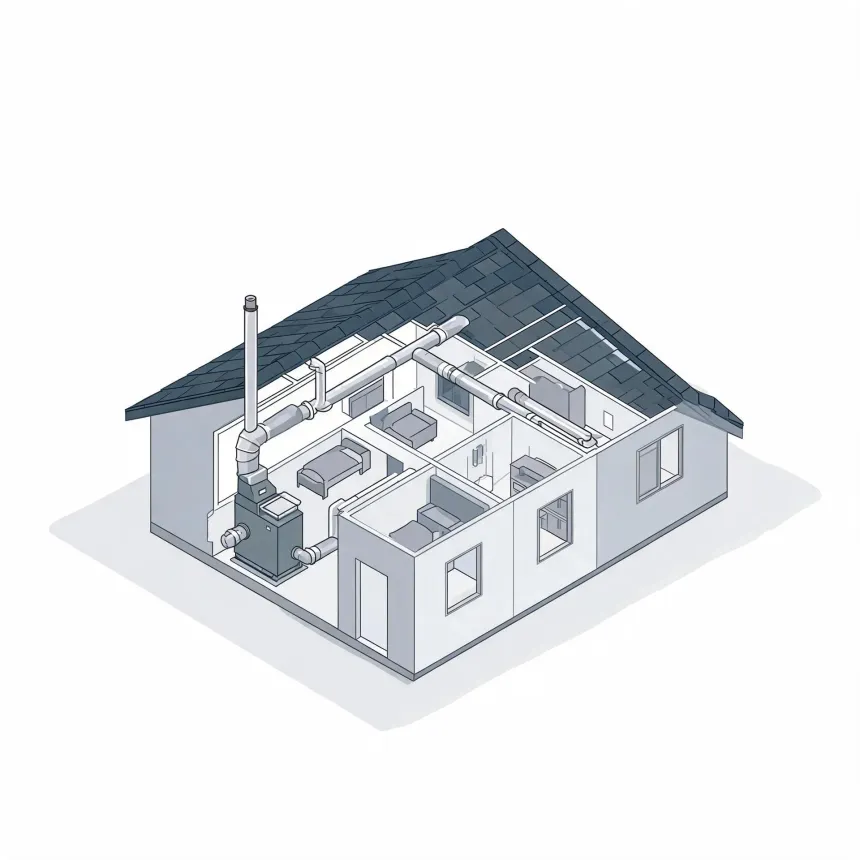
Age is the first thing worth knowing before anyone opens up the furnace. A heat exchanger that's cracked or a blower motor that's seized usually means the unit is done, especially once it's well into years of service. A failed igniter or a bad flame sensor is a different story entirely. Those parts wear out on a schedule of their own and swapping one doesn't say anything about the condition of the rest of the furnace. The real question is whether the failure is a part doing what parts eventually do, or the cabinet and the exchanger themselves giving out. A technician can tell the difference by what's failed and what else is showing wear, not by guessing. Repairing a worn part on a sound furnace is routine. Repairing a furnace whose main components are failing one after another is usually just delaying the same decision.