Illuminated timber-and-stone houses line a residential street at dusk, with evergreen trees in the foreground and a silhouetted mountain range behind them.

Furnace Repair in Morgan, UT

Tell us about the job

Takes about a minute. No obligation.

RepairFurnace or heatingMorgan County, UT
Step 1 of 2

What ZIP code is the job in?

The igniter wears out first

A hot surface igniter is the part most likely to fail in a gas furnace. It heats up every time the burners light, and that cycle of heating and cooling makes it brittle over time. Eventually it cracks and stops glowing, and the furnace won't light at all.
That changes what the fix looks like

An igniter is a straightforward swap once it's confirmed bad. But if the furnace is also short cycling, tripping its limit switch, or the flame sensor is coated with residue, more than one part is asking for attention at the same time, and the tech needs to check each before calling the job done.

10 months
September through June, your furnace is on duty
17°F
the average winter night it heats against
91%
of homes here heat with gas, so most furnaces here burn gas
47 winter storms
in ten years, the nights a failure hurts most
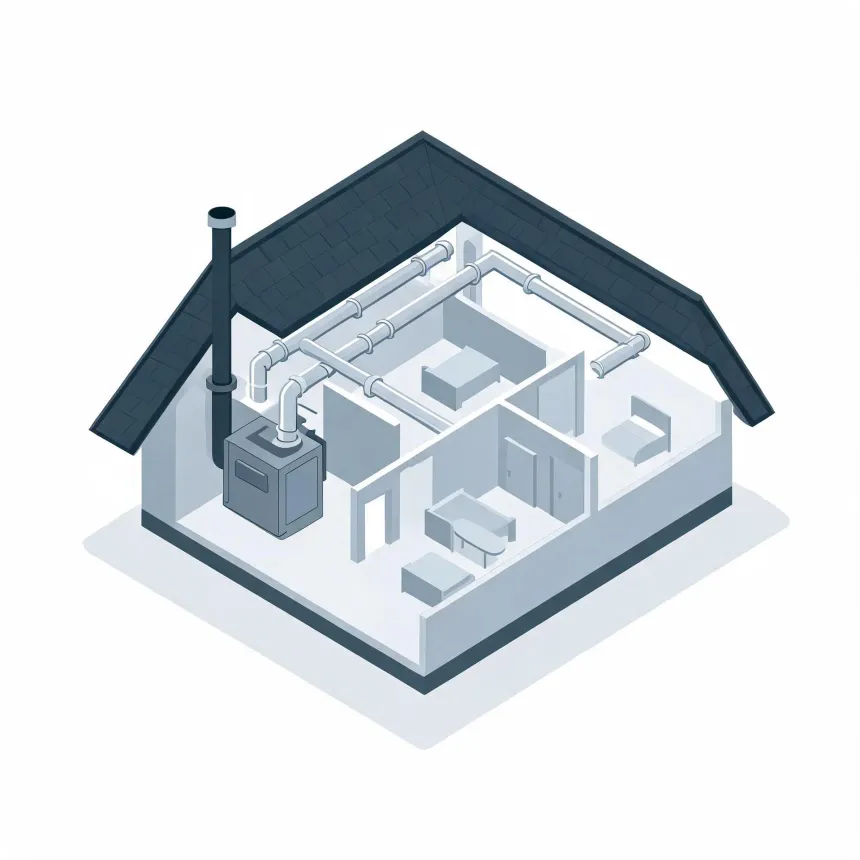
Isometric illustration of a cutaway house showing a dark furnace unit with a flue pipe and branching ductwork running through rooms with simple furniture under a dark gabled roof.
Your furnace works hardest from November through April.

NOAA nClimDiv, 1991–2020 normals

Furnaces in Morgan County start running in September, right after the August break.

After months off, a weak igniter or a dirty flame sensor tends to show up in the first cold weeks of September.

Half the homes in Morgan County were built in 1997 or later, so a lot of these furnaces aren't old yet

Half the homes here were built by 1997
Climate zone 6B
Heat runs September through June

Natural gas in Utah ran $12.55 per million Btu in 2024. That number matters more once a furnace starts struggling. A furnace that short cycles or won't hold a flame burns gas without finishing the job, and you pay for every attempt whether it heats the house or not. A cracked igniter that fires but fails to catch, or a flame sensor too dirty to hold the flame, both waste gas this way. The longer either one goes unfixed, the more those extra cycles add up on the meter.

Get it diagnosed properly

Your furnace works hard here, and that's usually what's behind the problem. Have it diagnosed properly so the fix lasts.

Find a contractor
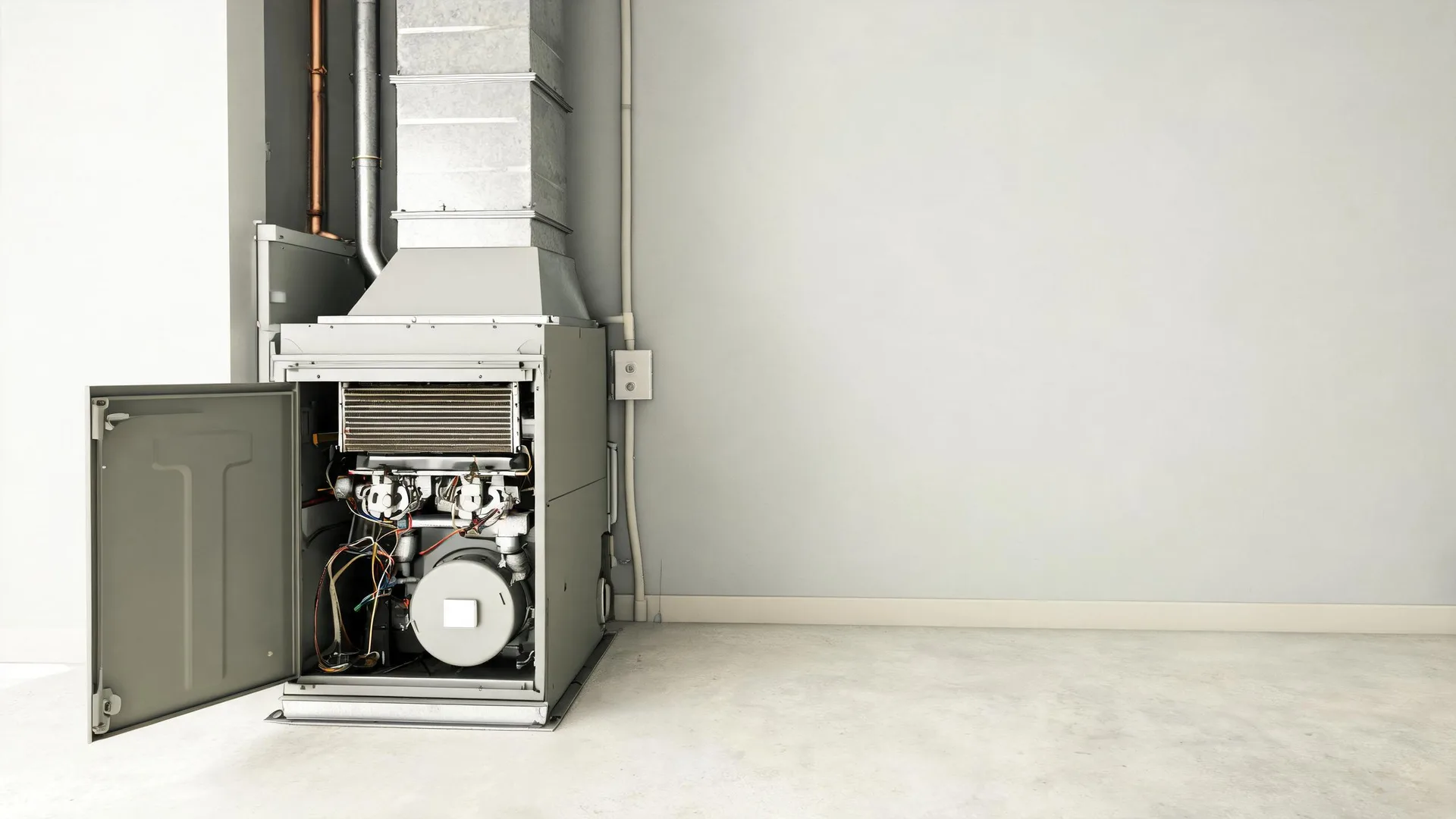
A gray gas furnace with attached ductwork and piping installed in an unfinished concrete basement.

A newer furnace is worth fixing, not replacing

If your furnace came with the house and the house is newer, that works in your favor now. A newer furnace that's acting up is usually still within its working life, and a repair is the call that makes sense. Have the tech confirm the age off the unit's data plate before you decide anything bigger than a repair.

The sounds tell you something

A furnace that rumbles when it kicks on, bangs in the ductwork, or clicks over and over without lighting is already telling you where to look. A delayed boom usually means gas is pooling before it catches, worth having checked soon. Repeated clicking with no flame points to the igniter or the gas valve. A noise that's new, not one it's always made, is the one to act on.

Watch what the air is doing, not just the noise

Air blowing but never warming up points to a different problem than no air at all. One suggests the burners aren't lighting or the gas isn't reaching them. The other points to the blower motor or a clogged filter choking off airflow. Short cycles, where it fires up and shuts off again fast, usually means a safety switch is tripping before the furnace finishes its job.

A gas furnace and sheet-metal air handler unit installed in an unfinished concrete basement.

A new furnace would cut about $140 a year off heating for a typical Morgan County home.

  • A new high-efficiency furnace$550 a year
  • An older furnace$690 a year

Estimates for a typical Morgan County home, compared with an older unit built to the previous federal minimum, from EIA household energy data, Utah fuel prices and NOAA climate normals. Your home will differ.

Repair makes sense when one part has failed and the heat exchanger is sound.

Replacement makes sense when the heat exchanger is cracked or the furnace keeps needing parts.

Age is the first thing to weigh, but it isn't the only one. A furnace that needs its second or third repair in a single season is telling you something a single breakdown doesn't. Each fix on its own might be worth doing, but the pattern matters more than any one part. A cracked heat exchanger is the other line worth knowing about, since that's a safety issue rather than a performance one, and it usually means replacement no matter how new the rest of the furnace is. Everything else, a bad igniter, a failed blower motor, a dirty flame sensor, is a normal wear part doing what wear parts do, and fixing it is the right call on a furnace that's otherwise sound.