

A gravel road lined with a rustic log fence on the left and a row of dark-clad gabled cabins with metal roofs on the right, surrounded by pine forest.

Furnace Repair in Logan, UT

Tell us about the job

Takes about a minute. No obligation.

RepairFurnace or heatingCache County, UT
Step 1 of 2

What ZIP code is the job in?

Most furnace trouble traces back to a handful of parts. The igniter wears out from heating and cooling every cycle, and eventually it cracks or stops glowing hot enough to catch the gas. The flame sensor gets a film of residue over time, and once that happens it can't tell the burner is lit, so the system shuts itself down as a safety measure. Blower motors wear out too, usually the bearings first, and you'll hear it before you feel it stop blowing. A clogged filter puts strain on all of it, since the system has to work harder to pull air through, and that heat builds up where it shouldn't. Pressure switches and inducer motors fail less often, but when they do, the furnace usually won't start at all.

10 months
September through June, your furnace is on duty
17°F
the average winter night it heats against
81%
of homes here heat with gas, so most furnaces here burn gas
48 winter storms
in ten years, the nights a failure hurts most
Isometric grayscale illustration of a cutaway single-story house showing interior rooms with furniture, a furnace unit connected to ductwork and a tall vertical flue pipe extending above the roof.
Your furnace works hardest from November through April.

NOAA nClimDiv, 1991–2020 normals

Natural gas ran $12.55 per million Btu across Utah in 2024.

A furnace that's short-cycling or running long burns through that every day it goes unfixed.

Furnace repair calls in Logan climb in September, when the season's first cold snap finds whatever was already weak

Heat runs September through June
Winter nights average 17°F
48 winter storms from 2015 to 2024

Half the homes in Cache County were built in 1992 or later. If yours is one of them, the furnace may well be the one it came with, or a replacement installed well within its working life. That changes the math on a repair call. A furnace that's seeing its first or second decade of use has no business being replaced over an igniter or a flame sensor. Those are small parts, swapped out on their own, and doing so brings a newer system right back to where it should be.

Ten months of heat a year wears parts down early

Heat runs here from September through June, and overnight lows average 17°F in the dead of winter. That kind of stretch wears on an igniter or a flame sensor faster than it would somewhere milder. Getting the actual cause checked now means the repair holds.

Find a contractor
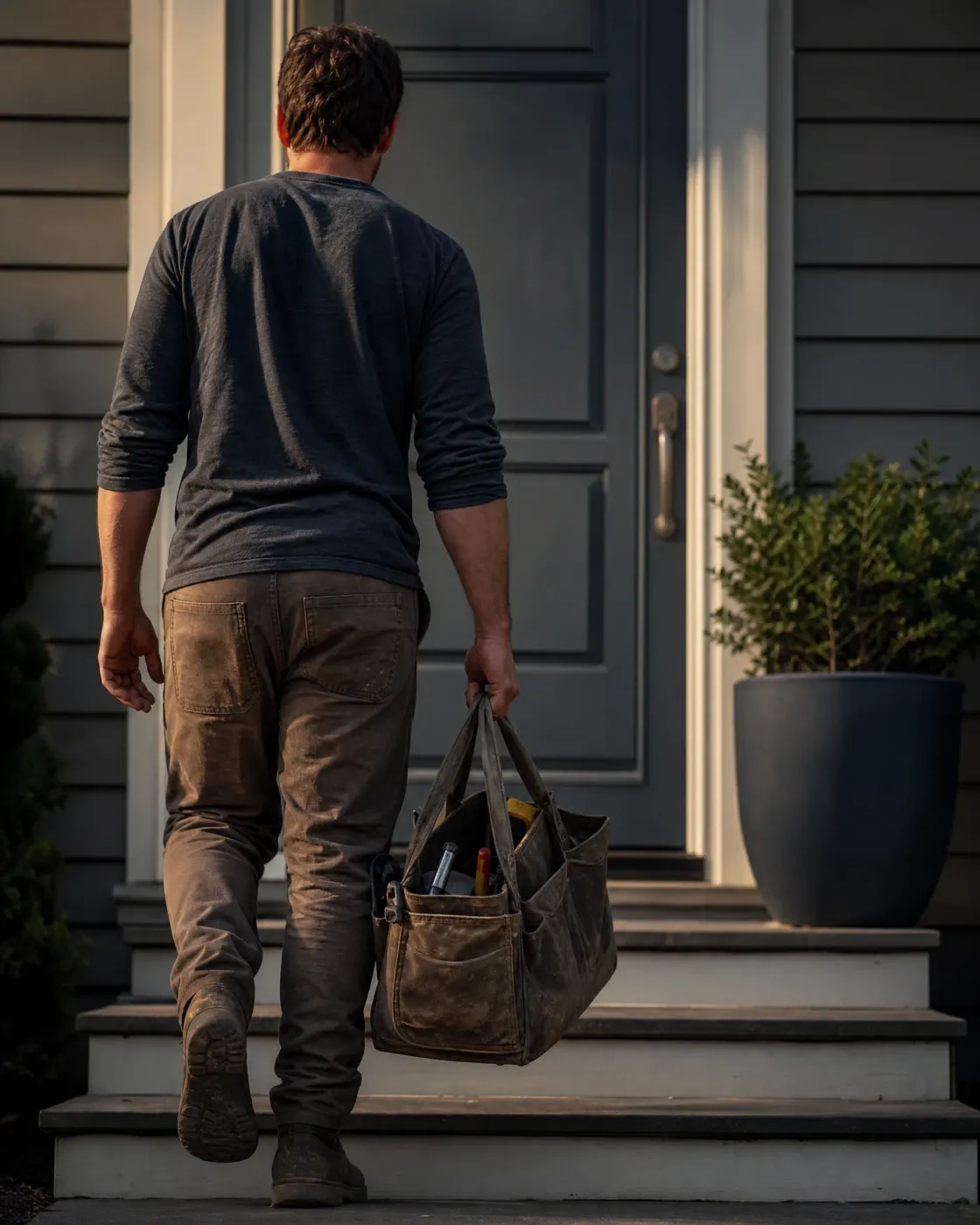
A man in a dark long-sleeve shirt and worn brown work pants, seen from behind, carries a canvas tool bag up the steps toward a gray front door, with a potted shrub beside the entry.
A gas furnace with attached ductwork, gas piping, and condensate lines installed in a concrete-block basement.

A newer furnace still has years on it

If your furnace is still within its first decade or two, a failed igniter or a dirty flame sensor doesn't mean the unit is done. Get the part diagnosed before anyone talks about replacing the whole furnace. Swapping out the one piece that failed is usually all a newer system needs.

What you can check safely

Check that the thermostat is set to heat and the temperature is actually above room temperature. Look at the furnace switch, the one that looks like a light switch near the unit, and make sure it's on. Check the filter, and if it's gray or clogged, swap it. Check the breaker if the furnace won't respond at all. These take a minute and rule out the simplest causes before anyone comes out.

What to leave alone

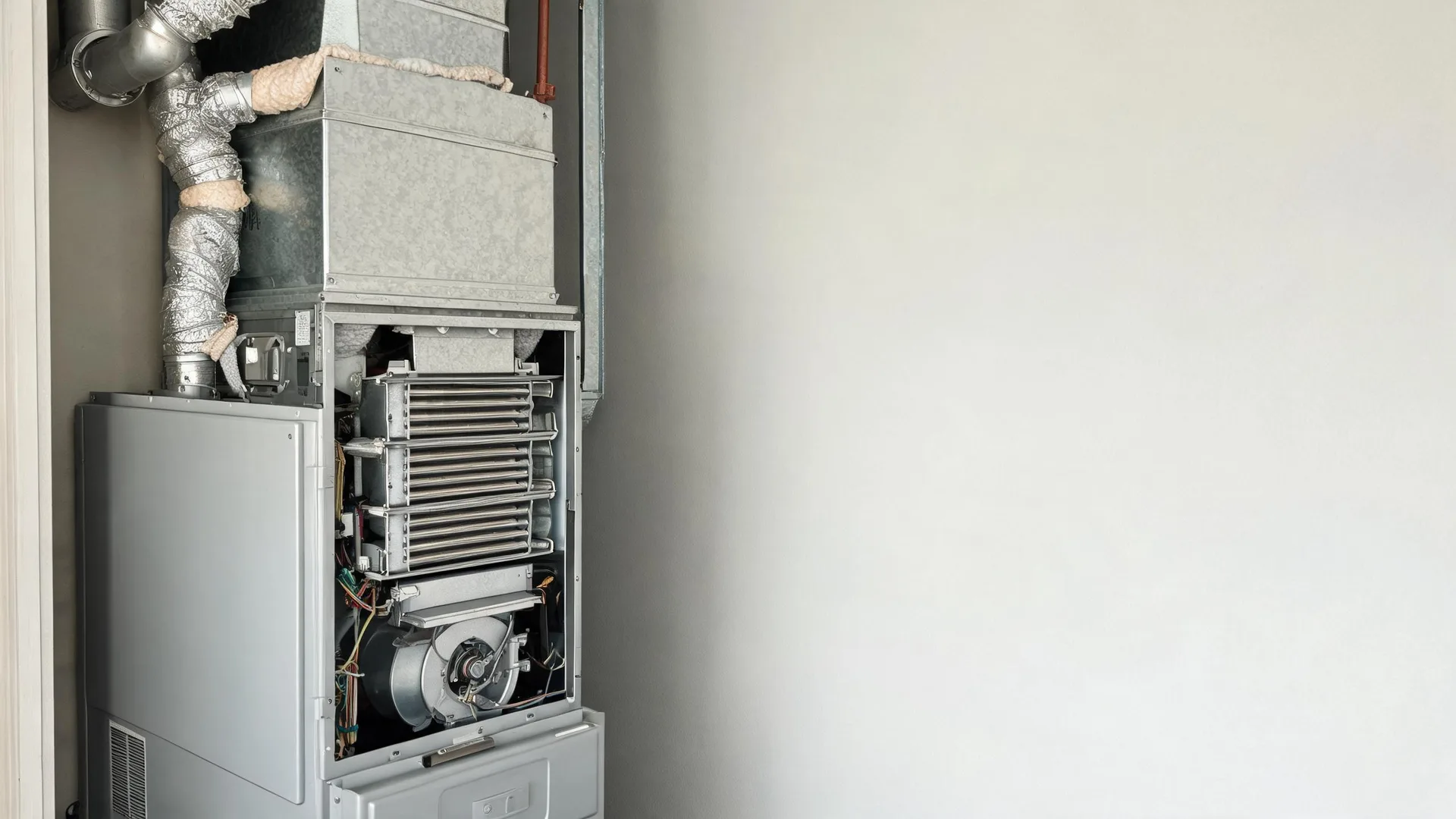
Don't take the panels off the furnace or reach near the burners. If you smell gas, don't flip switches or try anything, just get out and call the gas company from somewhere else. A furnace that's flashing an error light on the control board is trying to tell a technician something specific, so leave that code alone and let them read it. Opening things up to look for the problem usually just adds a second problem to the first.

An unfinished basement containing a gray HVAC furnace with ductwork, exposed wooden joists, a concrete floor, and miscellaneous clutter in one corner.

A new furnace would cut about $140 a year off heating for a typical Cache County home.

  • A new high-efficiency furnace$560 a year
  • An older furnace$700 a year

Estimates for a typical Cache County home, compared with an older unit built to the previous federal minimum, from EIA household energy data, Utah fuel prices and NOAA climate normals. Your home will differ.

Repair makes sense when one part has failed and the heat exchanger is sound.

Replacement makes sense when the heat exchanger is cracked or the furnace keeps needing parts.

A diagnostic call starts before any panel comes off. The tech asks what the furnace was doing, whether it's short-cycling, blowing cold, making noise, or not starting at all, since that narrows things down before a single tool comes out. Then the panels come off and the tech watches a cycle happen. They'll check for spark or glow at the igniter, see whether the flame sensor is reading a steady flame or losing it a few seconds in, and watch the pressure switch and inducer motor do their job at startup. A meter comes out for anything electrical, testing the igniter's resistance or checking for the voltage a part should be getting against what it's actually getting. Most of the time the cause shows itself clearly once the furnace is running and being watched, rather than guessed at from the symptoms alone.