Eight months of runtime
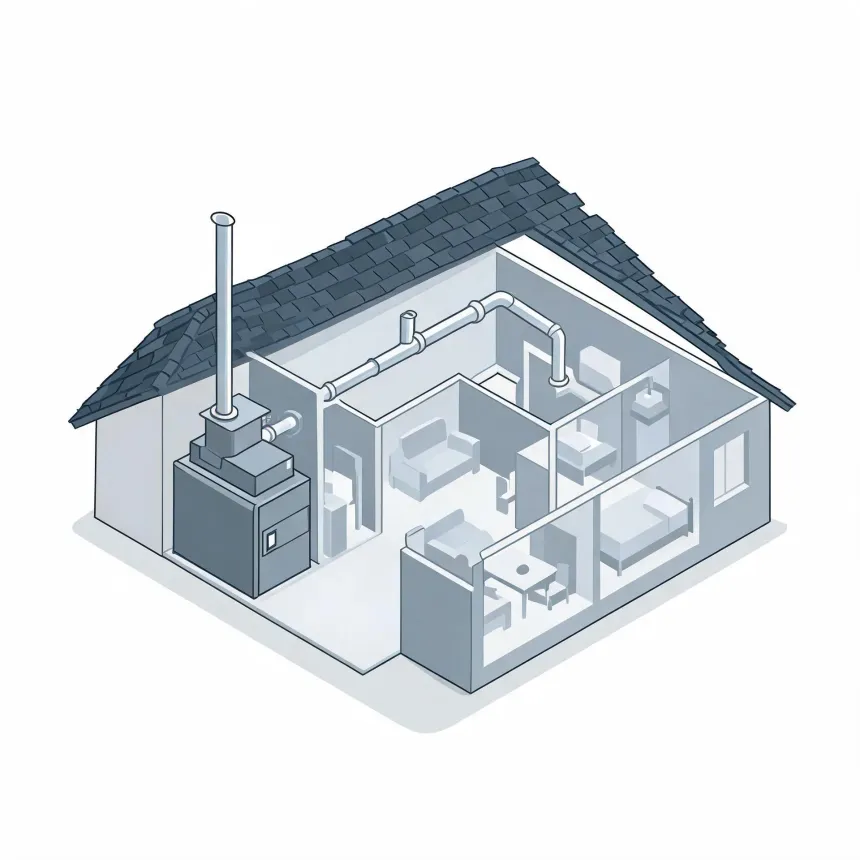
Furnaces in Loa run from October through May. Overnight lows average 21°F across December, January and February, so the burner is cycling on and off most of the night for a good stretch of the winter.
Takes about a minute. No obligation.
Furnaces in Loa run from October through May. Overnight lows average 21°F across December, January and February, so the burner is cycling on and off most of the night for a good stretch of the winter.
A furnace working eight months a year wears down sooner than one running only part of the fall and spring. When something acts up, it's worth having a tech check the whole system rather than just patching the symptom you noticed.
NOAA nClimDiv, 1991–2020 normals
Electricity in Utah ran $35.80 per million Btu in 2024.
A furnace that's struggling to heat pulls more power to do the same job, and that rate makes a bad furnace an expensive one to leave alone.
A furnace burning more power than it should is a cost that keeps adding up at Utah rates. Get it looked at before it runs another month like this.
Find a contractor
Half the homes in Wayne County were built in 1985 or later. If that's your furnace's house, the furnace itself may be newer too, especially if it's been swapped out even once since. A furnace within its working life is usually worth repairing rather than replacing when something goes wrong. Worth checking if yours came with the house or got replaced at some point, since that changes what a repair call is actually deciding.
A heat exchanger that's cracked will flex more with every cycle the burner runs. Left alone, a small crack opens wider and can start pushing exhaust into the air the blower sends through the house.
An igniter that's weak or a flame sensor that's coated with residue will still light the furnace some of the time. Each failed attempt stresses the ignition system a little more, and it's usually a matter of when, not if, the furnace stops lighting at all.
Most furnace problems show up as sound or smell before they show up as no heat at all. A burner that used to light with a quiet whoosh and starts banging means gas is building up before it catches, which points to a dirty igniter or a sensor out of position. A furnace that short cycles, running a few minutes and shutting off before the house warms up, is often protecting itself from overheating because airflow is blocked somewhere. Warm air that smells faintly like something burning the first few times each season is usually just dust on the heat exchanger and clears on its own, but a smell that lingers or turns sharp is not normal and means the blower should be checked. Rooms that used to heat evenly and now don't point to a duct or blower issue rather than the burner itself. None of these mean the furnace is done. They mean something specific is wrong, and it's worth having someone find out which.
Age is the first thing a tech weighs, but it's not the only thing. A furnace that's needed repair after repair in a short stretch is telling you something different than one calling for its first service visit ever. The heat exchanger matters most of all, since that's the part that can't really be fixed, only replaced, and a crack there usually means a new furnace rather than a patched one. Everything else on a furnace, the igniter, the blower motor, the gas valve, can be swapped without touching the rest of the system. So the real question is rarely the furnace's age alone. It's whether the thing that's failing is a part or the furnace itself.