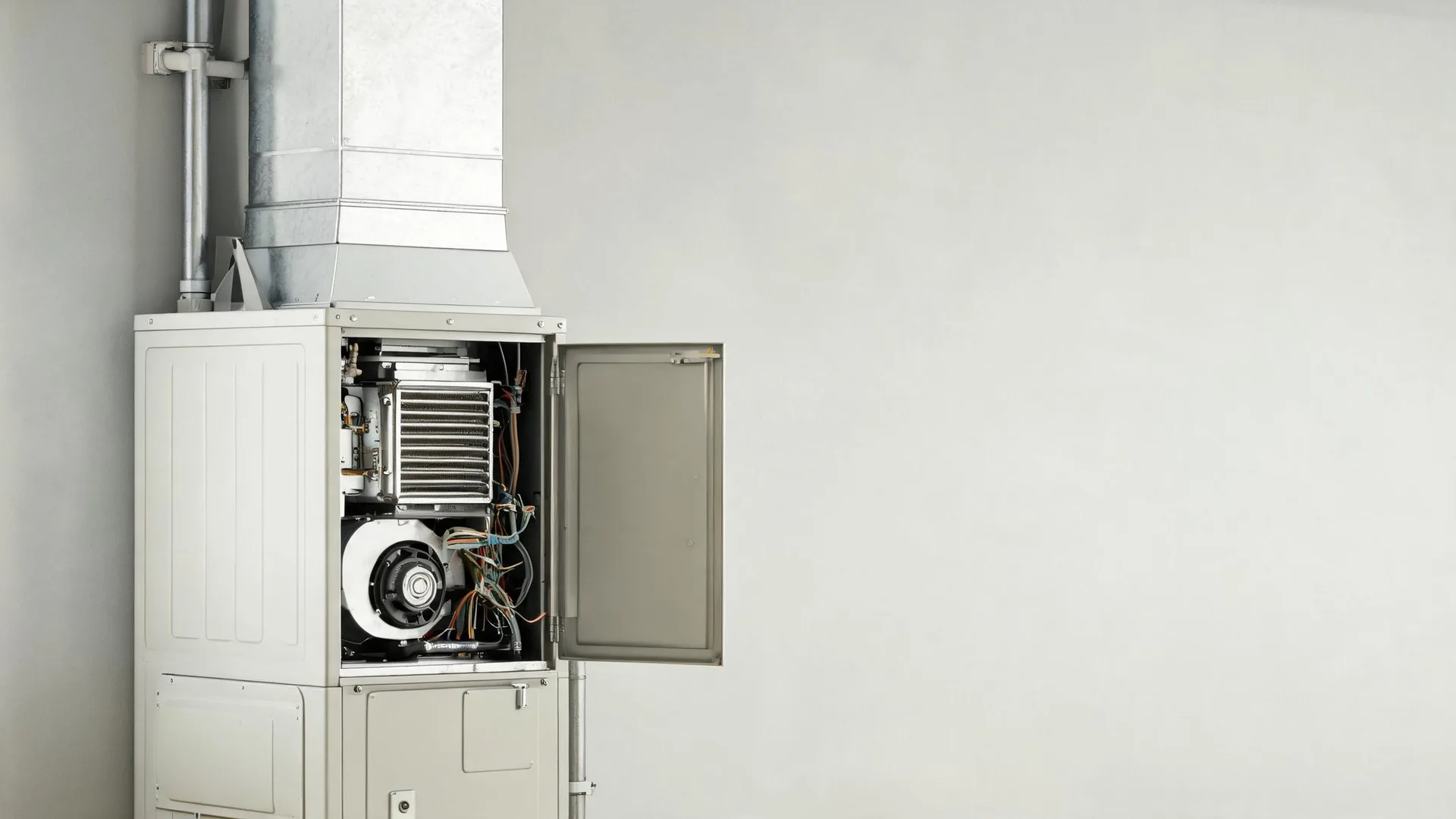
A gray forced-air furnace with ductwork stands in an unfinished concrete basement surrounded by storage items and clutter.

Furnace Repair in Layton, UT

Tell us about the job

Takes about a minute. No obligation.

RepairFurnace or heatingDavis County, UT
Step 1 of 2

What ZIP code is the job in?

Eight months of work a year

A furnace in Layton runs from October through May, and overnight lows average 22°F through December, January and February. That is most of the year spent holding a house well above freezing against real cold, not a mild chill. The parts inside are cycling on and off for that whole stretch.

What that means when yours acts up

A furnace running eight months against lows near 22°F wears parts sooner than one running a few mild weeks a year. When something goes wrong, it is worth finding the actual cause rather than patching the symptom. A system worked this hard will find the same weak point again if the repair does not hold.

8 months
October through May, your furnace is on duty
22°F
the average winter night it heats against
86%
of homes here heat with gas, so most furnaces here burn gas
48 winter storms
in ten years, the nights a failure hurts most
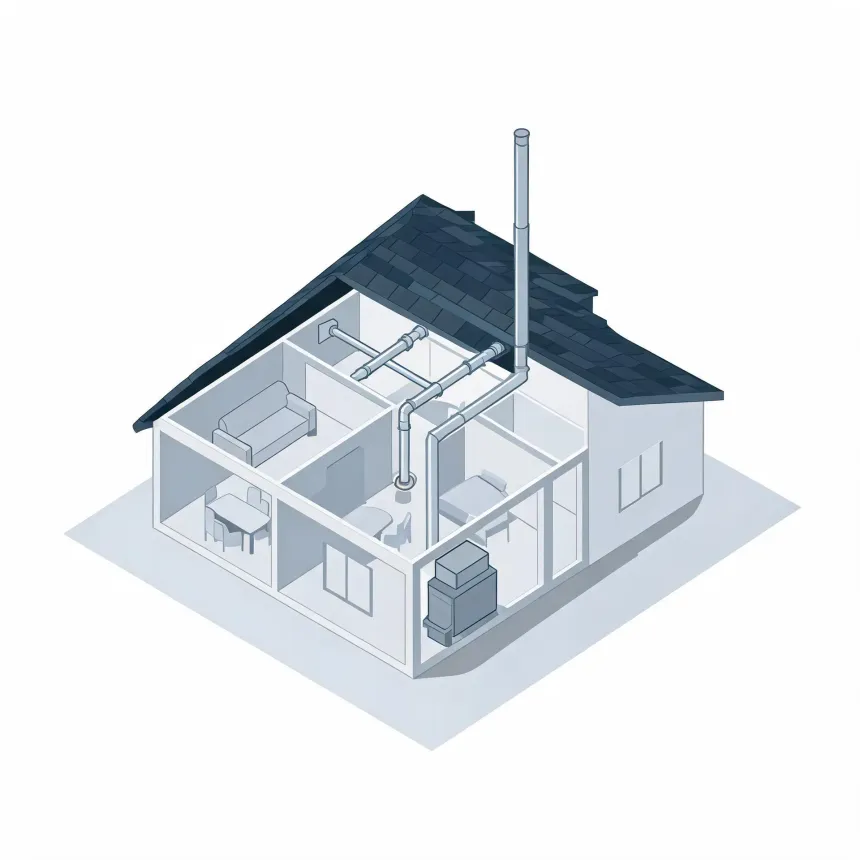
Isometric cutaway illustration of a single-story house showing interior rooms with furniture, ductwork and piping running to a tall vertical flue through the dark shingled roof, and a furnace-like appliance unit on the floor.
Your furnace works hardest from November through March.

NOAA nClimDiv, 1991–2020 normals

Nothing about a Layton furnace is unusual. It fails the way furnaces fail anywhere, from a worn igniter or a dirty flame sensor or a failed capacitor.

So the fix is usually the ordinary one, and a straight diagnosis is what gets it right.

Eight months of heat, and October is when the weak parts show

Heat runs October through May
Climate zone 5B
Winter nights average 22°F

Half the homes in Davis County were built in 1993 or later. If yours is one of them, the furnace inside it hasn't had to survive that many winters yet. A newer furnace acting up is more likely one worn part than a system reaching the end of its life. That points toward repair, not replacement. Mobile homes are a small share of homes here, so most furnaces are sitting in standard ductwork, which also points away from the harder cases.

Find the weak point before it finds itself again

Get the actual cause found before winter puts more hours on it. A straight diagnosis now is what makes a repair hold through the rest of the season.

Find a contractor
A gray residential gas furnace installed in an unfinished basement, surrounded by ductwork, a metal flue pipe, and a gas supply line.

Worth a repair call before you consider anything bigger

If your furnace came with the house, a repair call is the right place to start. Have the contractor check the age tag while they're in there. A system that still has years ahead of it is worth fixing properly, not working around.

A small flame problem turns into a cracked heat exchanger

A furnace that short-cycles or struggles to light is still firing, just poorly. Keep running it and the burner can heat unevenly or soot up, and that uneven heat is what stresses a heat exchanger until it cracks. A cracked exchanger is a different repair entirely, and a much bigger one.

A failing part pulls other parts down with it

A blower motor working harder than it should draws more current than it was built for, and that extra current is what takes out a capacitor or a control board. The part that started the problem is rarely the only part you pay to replace if the furnace keeps running on it.

An unfinished basement interior featuring a large metal furnace unit, exposed ceiling joists, concrete walls, and scattered boxes and cables on the floor.

A new furnace would cut about $110 a year off heating for a typical Davis County home.

  • A new high-efficiency furnace$450 a year
  • An older furnace$560 a year

Estimates for a typical Davis County home, compared with an older unit built to the previous federal minimum, from EIA household energy data, Utah fuel prices and NOAA climate normals. Your home will differ.

Repair makes sense when one part has failed and the heat exchanger is sound.

Replacement makes sense when the heat exchanger is cracked or the furnace keeps needing parts.

Age is the first thing to weigh, but how the furnace has behaved matters just as much. One repair call for one worn part is normal wear. A string of calls, one thing after another over a couple of seasons, is a furnace telling you it's losing ground, even if each fix was cheap on its own. Heat exchanger problems are the other line to watch for. That part is not meant to be replaced on its own, so a cracked one usually means the whole furnace is done, no matter how new everything else inside it is. Short of that, if the cabinet and blower are sound and it's just lighting or control parts failing, a repair that fixes the actual cause is worth doing and should hold.