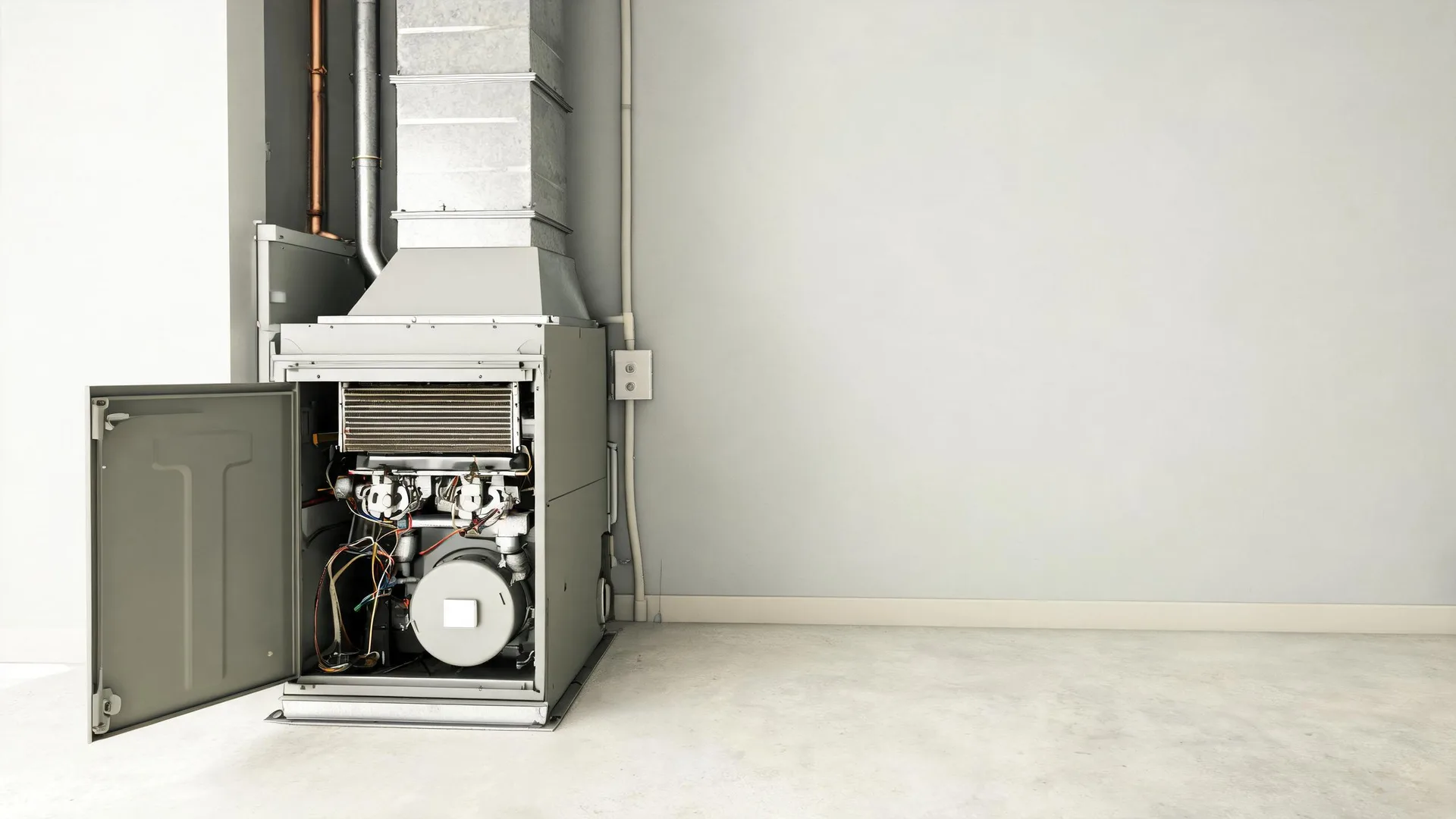
Eight months of heat a year
Furnaces in Huntington run from October through May, with overnight lows averaging 19°F in December and January. That is most of the year spent cycling on and off, night after night, to keep up.
Takes about a minute. No obligation.
Furnaces in Huntington run from October through May, with overnight lows averaging 19°F in December and January. That is most of the year spent cycling on and off, night after night, to keep up.
A furnace running eight months a year puts far more hours on its igniter and blower motor than one that only runs a few months a year. When something goes wrong, it's worth finding the actual cause rather than guessing.

NOAA nClimDiv, 1991–2020 normals
Half the homes in Emery County were built in 1978 or earlier, and the furnace in one of them is often the original.
An older furnace acting up is usually a worn igniter or a tired blower motor, not a sign the whole unit is done.


Most furnace problems in Huntington come down to a handful of parts, and most of them are worth fixing. A furnace that won't light is usually the igniter. One that's blowing cool air off and on is often the blower motor or a clogged filter behind it. None of that means the unit is failing, even in a furnace that's been running for decades. Gas here runs higher than the national average, at $12.55 per million Btu in 2024, so a furnace that's cycling more than it used to is worth a look, both for comfort and for what it's costing to run.
A furnace running eight months a year does not give you many easy stretches to catch a problem early. Huntington has already had its share of winter storms this past decade, and that is not the weather to find out your furnace is behind. Have it looked at now, so whatever is wearing out gets fixed instead of guessed at.
Find a contractorA furnace that's starting to fail rarely just stops. It gives you a few warnings first, if you know what to watch for. It might take longer to catch, with a pause before the burners light. The flame might look more orange than blue, which points to a dirty burner. Air coming from the vents might feel lukewarm instead of hot, or the blower might run but no heat follows it. Some furnaces start short cycling, shutting off a few minutes after they start, which usually means a flame sensor that needs cleaning or a limit switch tripping on a dirty filter. A burning smell the first time it fires up after sitting is normal. A burning smell that lingers or comes back is not. Rattling, screeching or a boom when the burners light are all worth calling in. None of these mean a new furnace. Most are a single worn part doing its job badly, and a tech can tell you which one in a single visit.
The igniter has to get hot enough to light the gas every single cycle. That heating and cooling wears it out over time until it cracks or stops drawing enough current. The flame sensor sits right in the burner flame and builds up a film after enough cycles. It stops reading the flame and shuts the gas off as a safety measure even though everything else is working fine.
The blower motor runs longer than almost anything else in the system, moving air through every cycle. Its bearings wear down over time until it runs noisy or quits. The pressure switch works the opposite way. It does nothing most of the time, then one day it fails to sense the draft that confirms the furnace is venting properly, so the furnace refuses to start at all.
Estimates for a typical Emery County home, compared with an older unit built to the previous federal minimum, from EIA household energy data, Utah fuel prices and NOAA climate normals. Your home will differ.
Repair makes sense when one part has failed and the heat exchanger is sound.
Replacement makes sense when the heat exchanger is cracked or the furnace keeps needing parts.
A diagnostic visit starts at the thermostat. A tech checks that the signal is actually reaching the furnace before opening anything up. Then the panel comes off and the furnace gets watched through a full cycle. Does the igniter glow and light the burners. Does the flame stay lit once it's going. Does the blower kick in when it should. A furnace that tries to light and fails points one direction. One that lights fine but won't stay running points another. The flame sensor gets checked for buildup, the pressure switch gets tested, and the blower motor gets listened to, since worn bearings sound different from a loose panel or a rattling duct. Most of this gets answered by watching the furnace do what it does, not by guessing from a list of parts.