An unfinished basement featuring exposed ceiling joists, a metal HVAC unit with round ductwork, a hanging light bulb, and scattered boxes and debris along the left wall.

Furnace Repair in Brigham City, UT

Tell us about the job

Takes about a minute. No obligation.

RepairFurnace or heatingBox Elder County, UT
Step 1 of 2

What ZIP code is the job in?

The furnace is making a new sound

A bang when it starts usually means gas is building up before it catches instead of lighting right away. A screech points to the blower motor or its bearings. A rattle that wasn't there before can mean a loose panel, but it can also mean something has come loose inside the cabinet. Any sound your furnace didn't make before is worth having checked before it runs again.
The air coming out feels wrong

Air that's lukewarm instead of hot can mean the burners aren't firing fully or the heat exchanger has a problem. Air that smells like burning dust the first few times is normal, but a burning smell that doesn't go away, or smells like something electrical, means it needs to shut off and get looked at. If the furnace runs constantly without the house warming up, it's working to keep up and losing.

8 months
October through May, your furnace is on duty
19°F
the average winter night it heats against
80%
of homes here heat with gas, so most furnaces here burn gas
51 winter storms
in ten years, the nights a failure hurts most
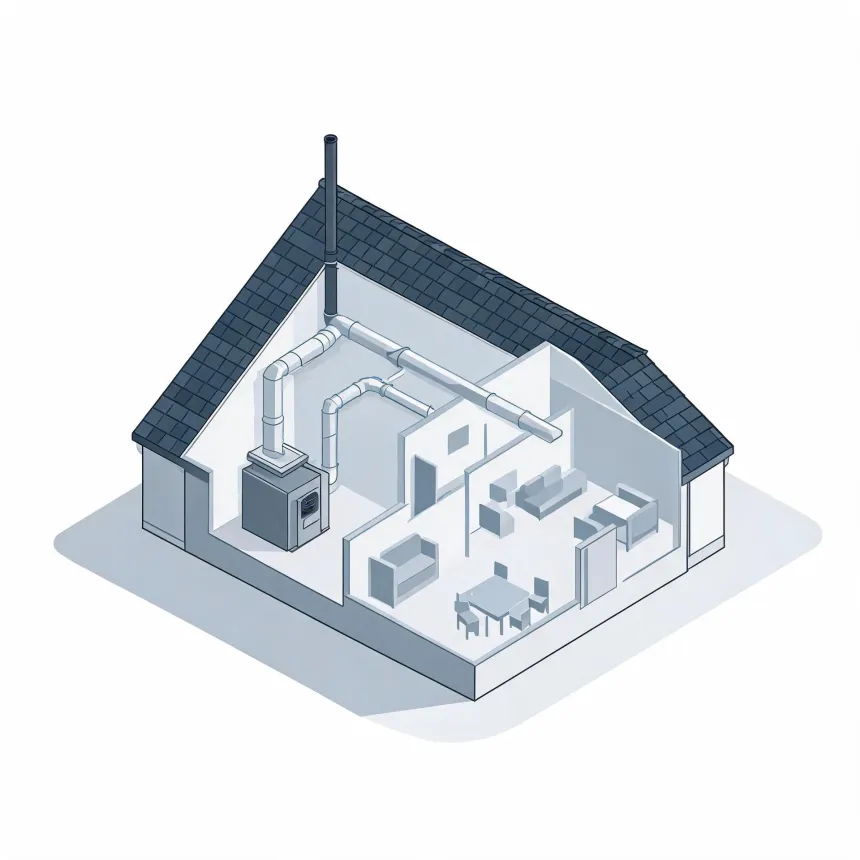
Isometric cutaway illustration of a house with a shingled gable roof, showing a gray furnace unit connected to overhead ductwork and a chimney flue, with simplified furniture in the rooms below.
Your furnace works hardest from November through March.

NOAA nClimDiv, 1991–2020 normals

Box Elder County logged 219 severe weather events between 2015 and 2024, most of them wind and winter storms.

A furnace here is built to handle weather like that, so a breakdown usually comes down to a worn part, not the county it's in.

Heat starts in October. A weak part usually waits that long to fail.

Heat runs October through May
Climate zone 5B
Winter nights average 19°F

Half the homes in Box Elder County were built in 1983 or later. If yours is one of them, the furnace itself may still be the original or close to it, but the house around it isn't old enough to have worn the system down on its own. That matters when something starts acting up. A newer system with a bad igniter or a failed pressure switch is usually worth fixing. The parts around it, the ductwork and the gas line, haven't had decades to develop problems of their own, so a repair tends to just be a repair.

A furnace that's working harder than it should still costs you while it waits

Gas here runs $12.55 per million Btu, so every bit a furnace burns without heating the house right is money going out the vent hood. A worn igniter or a failing pressure switch doesn't fix itself, and it doesn't usually get cheaper to deal with by waiting. Get the part identified and replaced, and the furnace goes back to doing its job.

Find a contractor
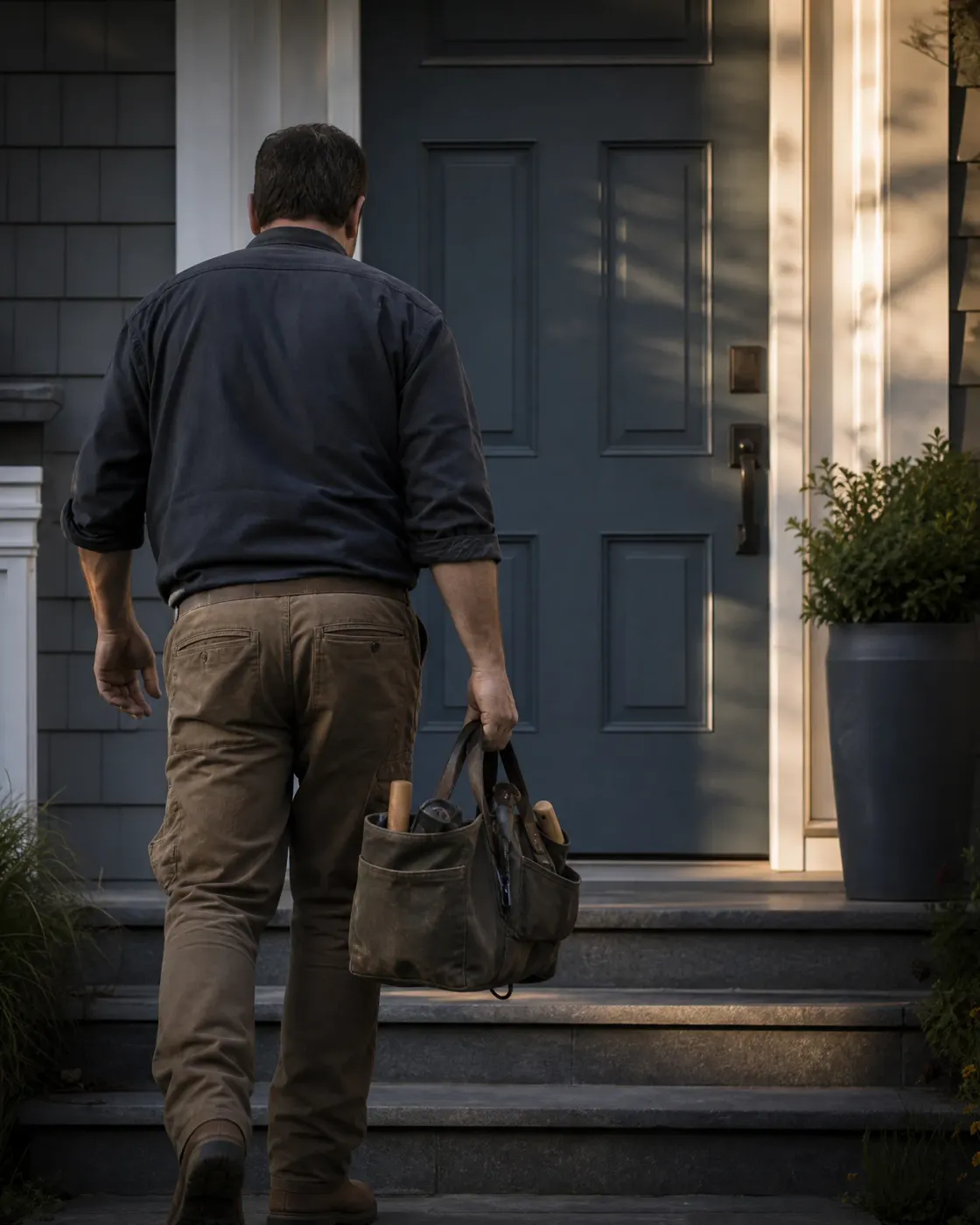
A man seen from behind in a dark shirt and tan work pants carries a canvas tool bag up stone steps toward a gray panelled front door of a shingled house, with a potted shrub beside the entry.
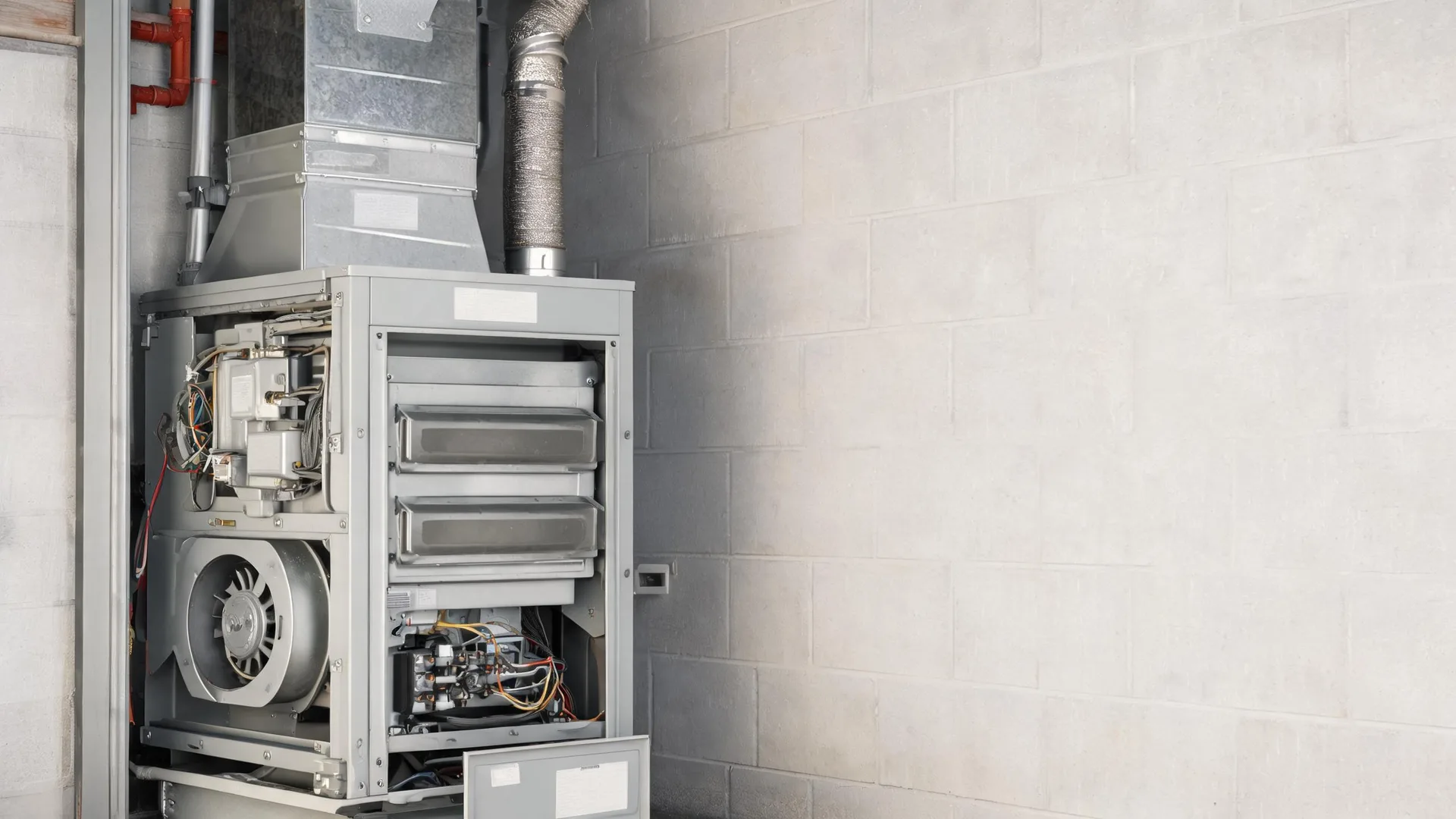
A gray residential gas furnace installed in an unfinished basement, connected to sheet-metal ductwork and PVC pipes.

A furnace with a bad part doesn't heal itself by staying on

A furnace that's struggling still runs. If the igniter is weak or the flame sensor is coated, the furnace doesn't just quit, it tries again and again, cycling on and shutting off short of a full heat cycle. Each failed attempt is wear on the same parts that are already failing. A cracked heat exchanger is the one that matters most here. Heating up and cooling down over and over is what grows a crack in metal that's already weakened, and a furnace left running on a bad exchanger is pushing combustion gas further into the airstream with every cycle, not less. Letting it keep running doesn't give a part time to recover. There's no rest that undoes wear in a furnace. It only runs or it doesn't.

Most failures are one part, not the whole system

An igniter wears out from repeated heating and cooling cycles until it cracks or stops glowing hot enough to catch the gas. A flame sensor coats with a thin layer of oxidation and starts telling the control board no flame is present even when there is one, so the furnace shuts itself down. A pressure switch can fail stuck open or stuck closed, and either way the furnace won't run right until it's replaced. These are small parts, and swapping one is a normal repair, not a sign the furnace is on its way out.

The blower motor and heat exchanger are the ones to watch

A blower motor that's failing usually says so first, with a bearing squeal or a motor that runs slower than it used to. Catching it there is a straightforward fix. A cracked heat exchanger is different. It doesn't announce itself the same way, and because it can let combustion gas mix into the air the furnace is pushing through the house, it's not something to leave alone once it's suspected. That one gets found by inspection, not by guessing from a sound.

An unfinished basement featuring concrete block walls, exposed floor joists, and a metal forced-air furnace with ductwork near a central pillar.

A new furnace would cut about $120 a year off heating for a typical Box Elder County home.

  • A new high-efficiency furnace$480 a year
  • An older furnace$600 a year

Estimates for a typical Box Elder County home, compared with an older unit built to the previous federal minimum, from EIA household energy data, Utah fuel prices and NOAA climate normals. Your home will differ.

Repair makes sense when one part has failed and the heat exchanger is sound.

Replacement makes sense when the heat exchanger is cracked or the furnace keeps needing parts.

A diagnostic visit starts with questions. When the sound started, what the furnace was doing when it did, whether the air feels different than it used to. Then the furnace gets opened up. A tech checks for a flame and watches its color and shape, since a good flame burns steady and blue, not yellow or lifting off the burner. The igniter gets tested for resistance, not just looked at, because one can glow and still be too weak to light the gas reliably. The flame sensor gets checked and often cleaned, since a coated sensor is a common cause of a furnace that starts and then shuts itself off a few seconds later. Pressure switches and safety controls get tested under actual operation, not just eyeballed, because a switch can look fine sitting still and still fail once the furnace is running. If the heat exchanger is in question, that gets inspected directly rather than guessed at, since it's the one part that affects whether the furnace is safe to run at all.