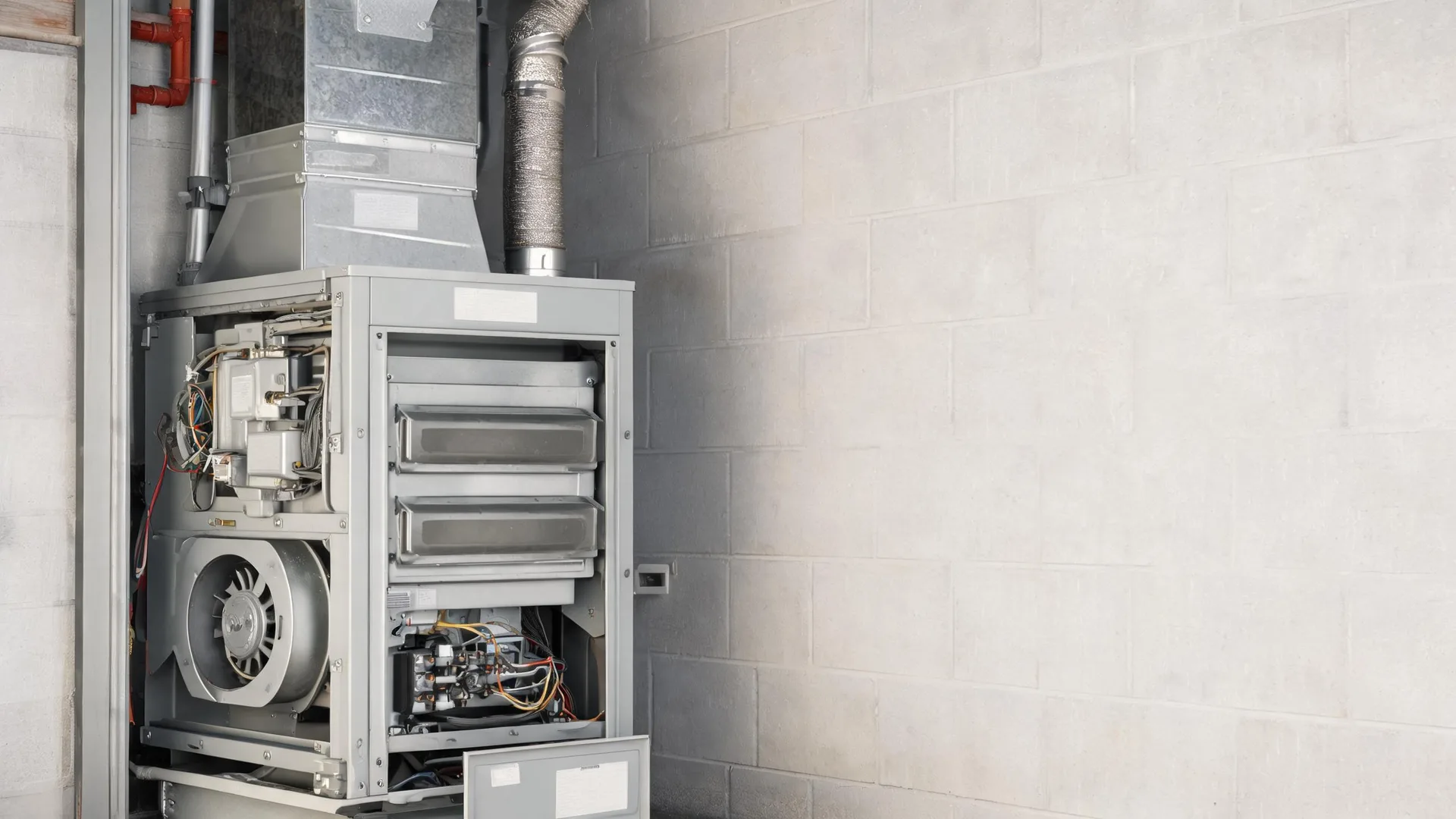
Eight months of work a year
Furnaces in San Juan County run from October through May. Nights average 23°F through December, January and February, so a furnace here spends most of the year cycling on and off to keep up.
Takes about a minute. No obligation.
Furnaces in San Juan County run from October through May. Nights average 23°F through December, January and February, so a furnace here spends most of the year cycling on and off to keep up.
San Juan County saw 77 winter storms between 2015 and 2024. A furnace running through heavy snow and ice gets pushed harder than one in a milder place, and that strain is often what's behind a breakdown. A proper diagnosis finds the real cause instead of just treating the symptom.
NOAA nClimDiv, 1991–2020 normals
September is the last quiet month before your furnace starts its eight-month run.
Get a weak part checked now, because October's cold is what finds it.


If your furnace is original to the house, its age is a good sign, not a question mark. A newer furnace has had less time to rack up cycles, and fewer cycles means less wear on the igniter, the blower motor, the heat exchanger. When something does go wrong in a system like that, it's usually one part failing, not the whole unit giving out. Worth having a technician look at it and name the part, rather than assuming the furnace is done.
Your furnace works hard here, and that's usually what's behind the problem. Have it diagnosed properly so the fix lasts.
Find a contractor
A furnace that's struggling doesn't fail all at once. A cracked heat exchanger flexes under heat every time the burner fires, and each cycle opens the crack a little more. A weak igniter that glows dull orange instead of bright white will keep trying and keep falling short, until the day it doesn't light the burner at all. A blower motor running on a worn bearing grinds a bit longer each cycle, and the heat from that grinding is what finally seizes it. Even a dirty flame sensor gets worse left alone, since soot builds on soot until the sensor can't sense the flame and the furnace shuts itself down. None of these get better by running more. They just get further along toward failing.
Look at the thermostat setting before anything else. Make sure it's set to heat and set above room temperature, and check if the batteries need replacing. Then check the air filter. A filter clogged with dust chokes off airflow, and a furnace starved for air can overheat and shut itself down as a safety measure. Walk around the house and check that supply vents and return grilles are not blocked by furniture or rugs.
Check the furnace switch, the one that looks like a light switch near the unit, to make sure it hasn't been bumped off. Look at the breaker for the furnace in the electrical panel. If you have a gas furnace, check whether the pilot light or igniter sequence is lighting at all, and note any smell of gas, which means you leave the house and call the gas company, not a repair line. Telling a technician what you saw, a light blinking, a clicking sound, no airflow at all, gets the right diagnosis faster.
Estimates for a typical San Juan County home, compared with an older unit built to the previous federal minimum, from EIA household energy data, Utah fuel prices and NOAA climate normals. Your home will differ.
Repair makes sense when one part has failed and the heat exchanger is sound.
Replacement makes sense when the heat exchanger is cracked or the furnace keeps needing parts.
At some point every furnace owner asks whether a repair is worth it or whether it's throwing money at a dying unit. Age and history matter more than the symptom in front of you. A furnace that's had one issue in years of running is a good candidate for a straightforward repair. One that's had a string of different parts fail over a short stretch is telling you the whole system is wearing out at once, not that it had bad luck. The heat exchanger is the one part that changes the answer by itself. A cracked heat exchanger means the furnace has to come out, no matter how new anything else is, because that part isn't something a technician patches. Everything else, the igniter, the blower motor, the flame sensor, the control board, can usually be replaced on its own without touching the rest of the system.